

Written by Angela Izzo
What I love most about shooting with Polaroids is the instant gratification of getting a print the moment you take the photo. I love how physical it feels, almost like handling a deck of cards, and how a pack naturally turns into its own little mini-series.
I’m also drawn to its timelessness. Polaroids date back to the 1950s, and my grandmother always had them around, so using one makes me feel connected to that history and almost like I’m stepping back in time.

Why I Love Shooting Polaroids
Polaroids give every image this beautiful, vintage analog look. Watching the photo expose itself on the film right in front of your eyes is always captivating to me.
When I’m shooting fashion or photographing models, I love how soft and porcelain the skin looks, and how the overall effect feels dreamy and forgiving. They don’t always come out perfect, so understanding light and positioning makes a big difference in getting a strong shot.
Everyone has their own approach to using a Polaroid because it’s such a versatile way to shoot. I’ve used Polaroids in so many different ways, but my favorites are for fashion and artistic portraits, while traveling, at parties or events, and for more experimental ideas.
I love bringing a Polaroid on a trip and focusing on the eight images I’ll get and how they can tell the story of my experience. For fashion and art shoots, it’s always fun to see the looks and characters we create appear right in front of us on the film. It feels like creating a story within a story that lives on physical film.
I connect with the colors and overall feel of Polaroids much more than Instax. Instax is more affordable, you get more frames for the price, it’s easier to find, and it develops faster, but there’s something about Polaroid color that feels nostalgic to me.
I also love shooting with expired Polaroid film because the unexpected flaws can be beautiful. Sometimes the film looks like it’s melting or little spots appear. Some people see that as a problem, but I think it adds an artistic look that Polaroids can create in a way Instax doesn’t.
Find Polaroid cameras and film on Amazon.


Photographer: © Angela Izzo
Polaroid 600 & i-Type Film
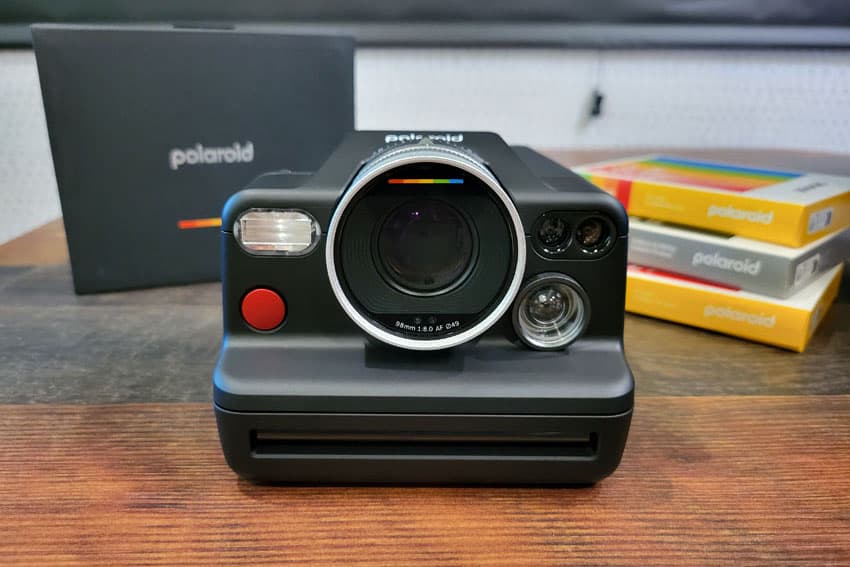
Polaroid 600 film and i-Type film look very similar, but the main difference is that 600 film has a built-in battery to power vintage Polaroid cameras. i-Type film doesn’t need one because modern Polaroid cameras have rechargeable batteries inside.
Because of that, 600 film costs a little more, but it works in both vintage and new cameras, while i-Type only works in newer models.
The image quality is basically the same and has that classic Polaroid look. i-Type is just the more affordable and eco-friendly choice since you’re not throwing away a battery with each pack.
For me, I prefer the 600. When I’m on the go, the camera is always ready because of its built-in battery, and I appreciate how sturdy the vintage models are. With the i-Type cameras, in my experience they’re not built as durably, and if you forget to charge the battery before a shoot, running out of power on location can be a real drawback.


Photographer: © Angela Izzo
Related: An Intro to Polaroid Cameras & Film
Pros & Cons of Polaroids
Shooting Polaroid film has a kind of magic you don’t get with 35mm or medium format. The instant gratification is a huge part of it since you watch the photo develop right in your hands, and that makes the process feel more personal.
Polaroids also have their own aesthetic with soft colors, gentle contrast, and those little quirks that make each print unique.
The limited number of shots forces you to slow down and be intentional, and that mindset changes how you shoot. And because each print is one of a kind, it becomes a little piece of art you can hold or display in a way that feels very different from getting scans or negatives back.


Photographer: © Angela Izzo
One of the hardest parts about shooting Polaroid film is how unpredictable it can be. It’s sensitive to light, temperature, and how you handle it when it first comes out of the camera, so little mistakes can affect the final image.
It’s also much more expensive than 35mm or medium format, and you only get a few exposures per pack, so every shot counts.
Most Polaroid cameras don’t offer much control over settings, so you rely a lot on available light. And since you only get one print, there’s no redoing a photo that didn’t turn out the way you hoped.
These things can make Polaroids challenging, but for a lot of people, that unpredictability is part of what makes them special.


Photographer: © Angela Izzo
Tips for Getting Better Polaroid Images
One of the best ways to get better results with Polaroids is to pay close attention to light. Polaroid film works really well in bright, soft light, so shooting outdoors in open shade or indoors near a window usually gives the nicest results.
Always shield the photo as soon as it comes out because the film is very sensitive during those first few seconds.
Keep your film at the right temperature since cold film can make the colors look washed out, and warm up the pack in your hands if you need to.
When shooting portraits or fashion, step back a bit farther than you think, because many Polaroid lenses struggle with very close focus.
Since the number of frames is limited, take a moment to compose your shot and check your light before pressing the shutter.
Over time, you get to know how your camera behaves, and that consistency helps you get more reliable results.


Thank you so much, Angela! Angela is a regular contributor here at Shoot It With Film, and be sure to check out her other articles here, such as Getting Started with Editorial Photo Shoots and Lomo’Instant Wide Camera Review: Double Exposures, Retro Style, & Endless Creativity.
You can also check out more of her work her website, Instagram, and YouTube.
Leave your questions about shooting Polaroids below in the comments, and you can pick up a Polaroid camera and some film on Amazon here.


Leave a Comment
Shoot It With Film on Instagram


Blog Comments
John Bennett
January 16, 2026 at 12:27 pm
I have loved Polaroid for a long time, and had great fun with my One-Step back in the 80s.
Like many others, I mourn the loss of Fujifilm’s peel-apart film that worked with my Land 100. Oh, well. I get it.
The latest version of Polaroid film, which I shoot in my 600, is very unpredictable. It makes my Holga seem like a Leica.
Fujifim’s current Instax line gives me the “Polaroid experience” with more consistently statisying results. That said, nice pix!
Curtis Heikkinen
January 19, 2026 at 10:25 am
Wonderful piece! Loved the images. Excellent work!