

Written by Angela Izzo
The Holga is often dismissed as a toy camera, but for me, it’s one of the more creatively freeing tools I use. It’s simple, unpredictable, and full of character, and it encourages experimentation in a way few other cameras do. Over the years, it’s helped me create images that feel raw, dreamlike, and deeply personal.
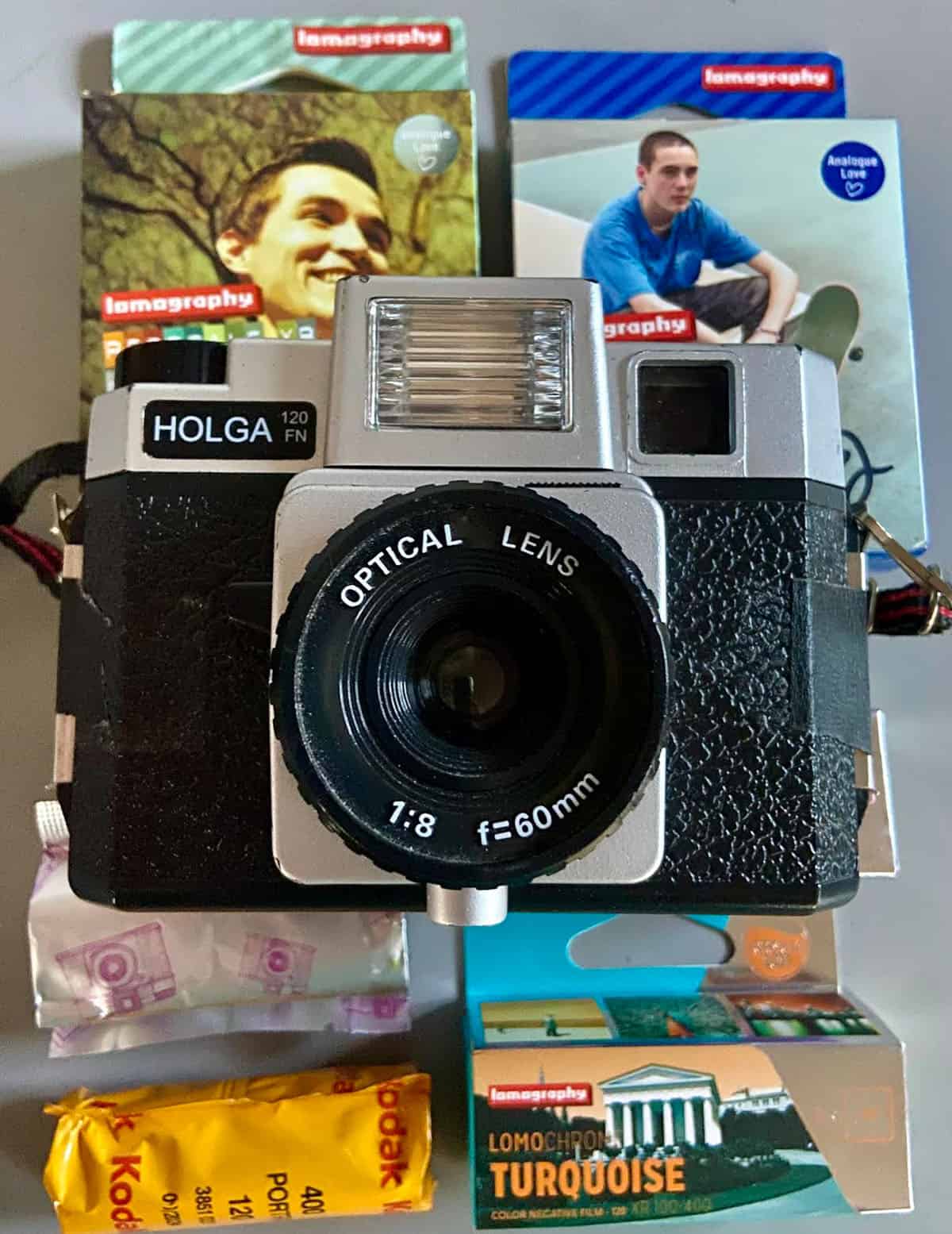
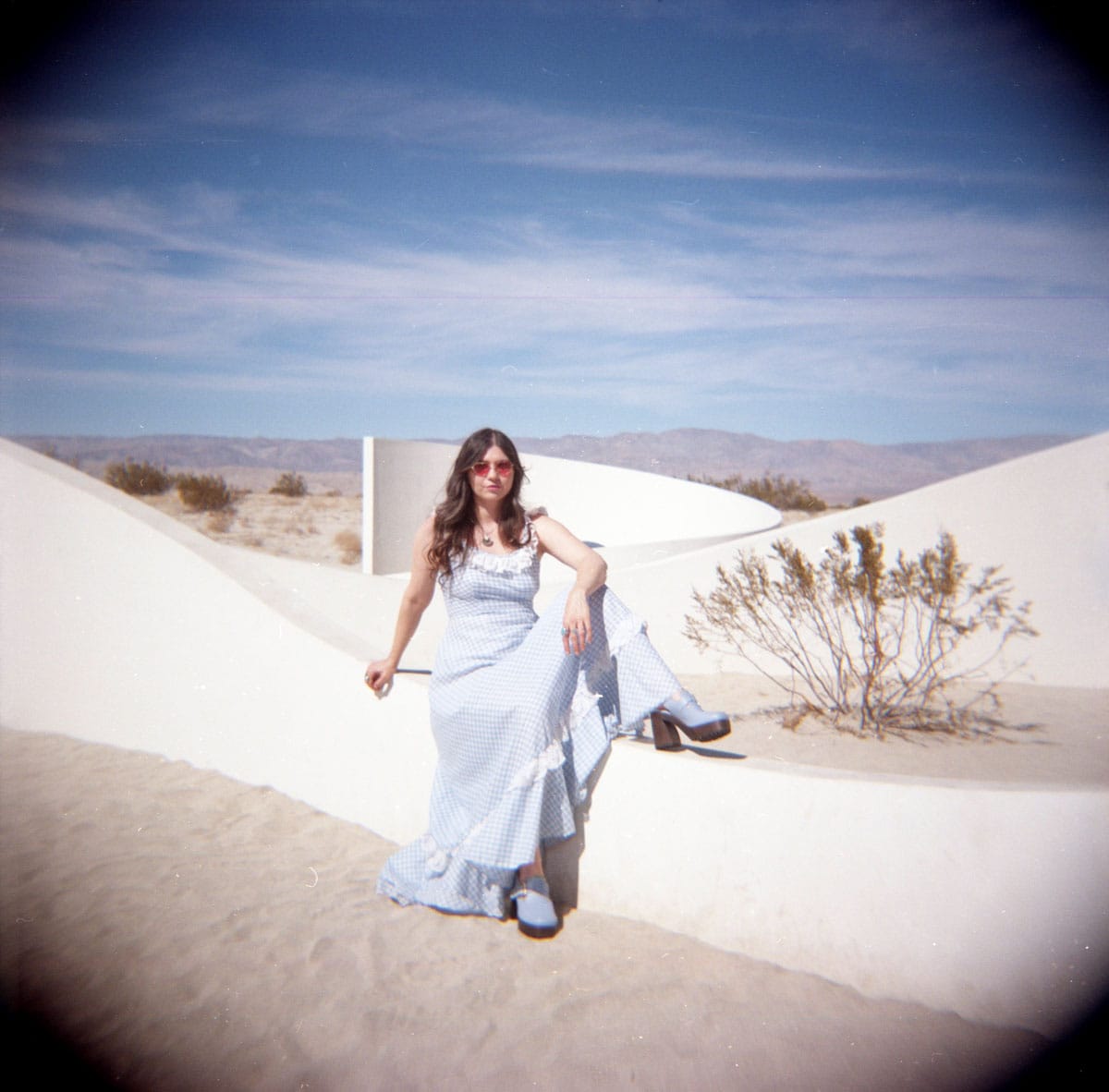
The Holga I’ve been using the longest is the traditional medium-format black-and-silver 120 film camera. I bought it in 2015 at Freestyle Camera in LA, and I still use it to this day. It has traveled the world with me. I love its heavy vignetting and sharper focus, which make it especially great for portraits and street photography.
Experimental Photography with the Holga
For me, the Holga is a simple yet versatile camera. I’ve captured so many amazing images with it by working in an experimental way using a variety of techniques.
To start, the camera takes 120 film. With two film backs, you have the option to set the camera for 16 6 x 4.5cm images or 12 6 x 6cm images. This immediately slows you down and makes each frame feel intentional.
Lomography offers some fun film stocks I like to collect and use to achieve dreamy effects, and I also load film from dubble Film, which adds even more variety to my results. These film pair perfectly with the Holga to get fun and experimental images.
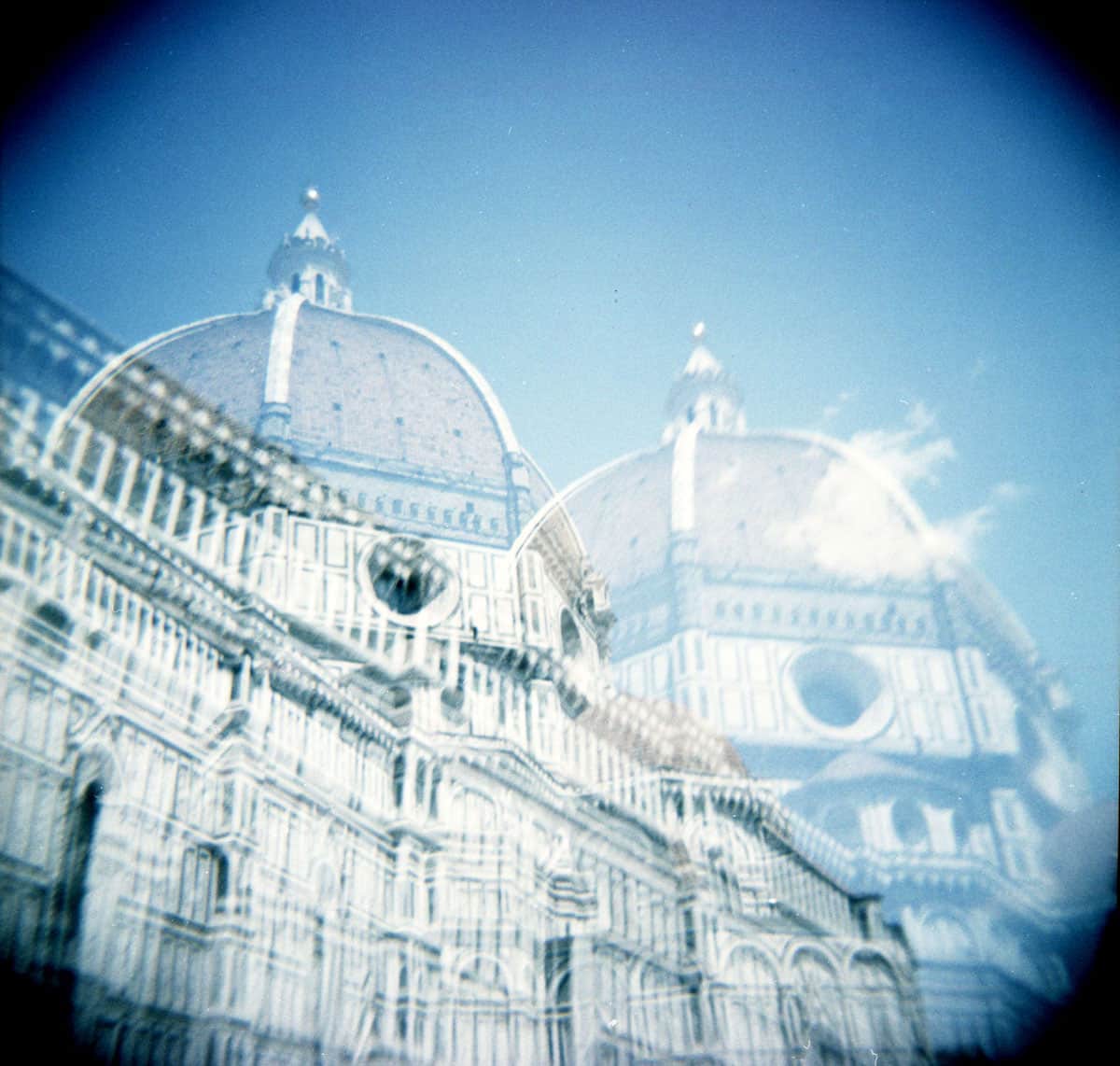
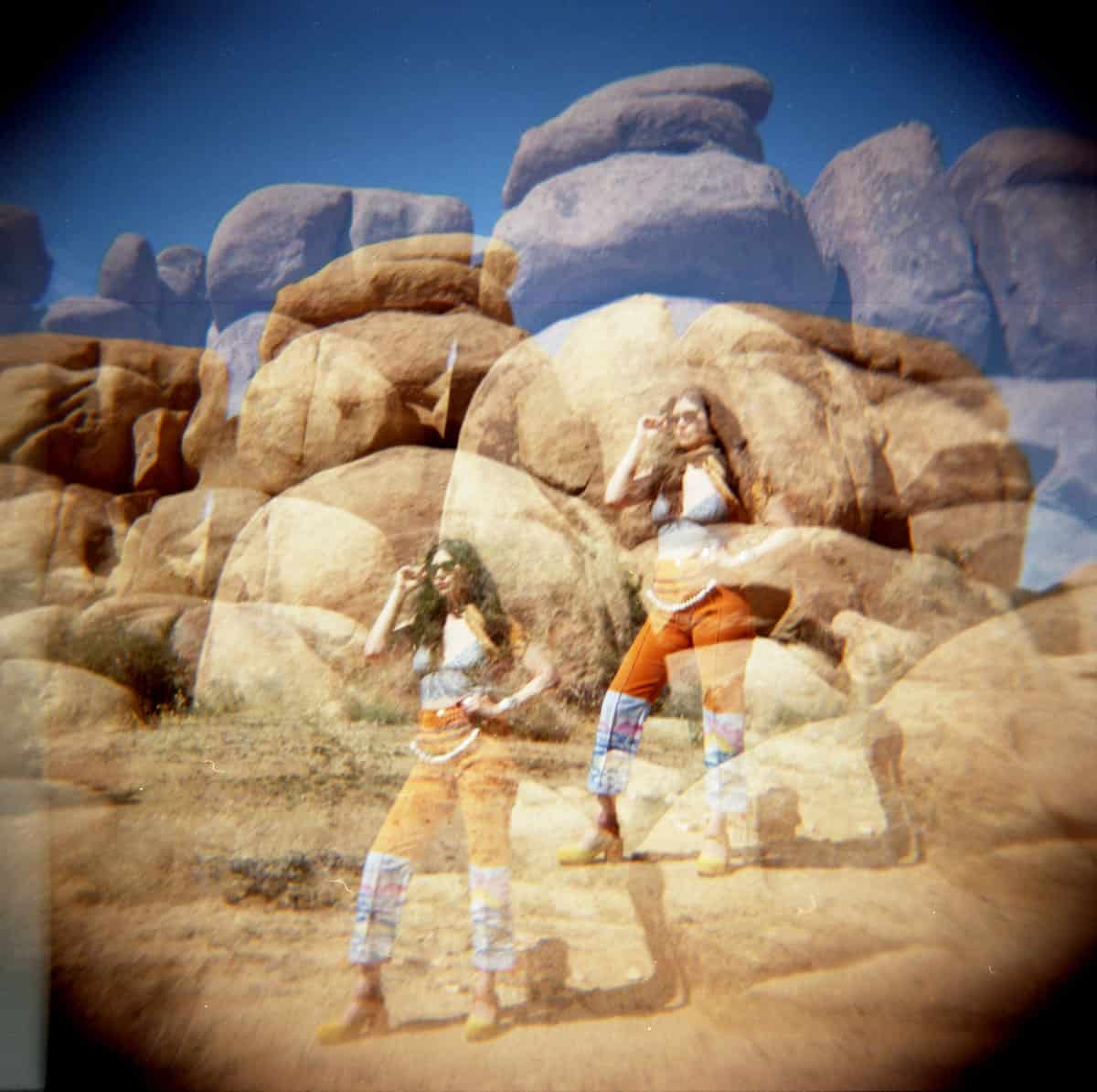
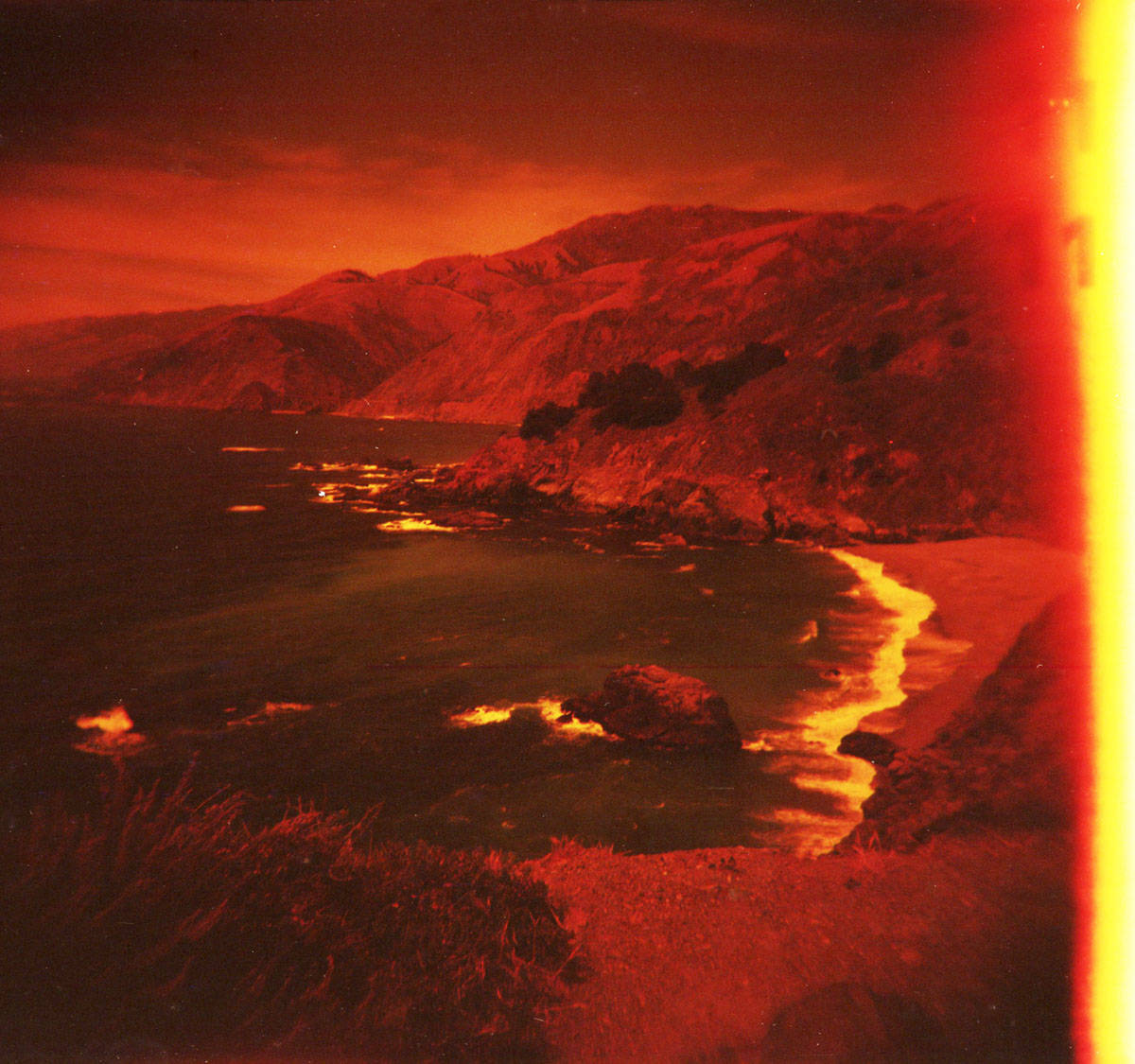
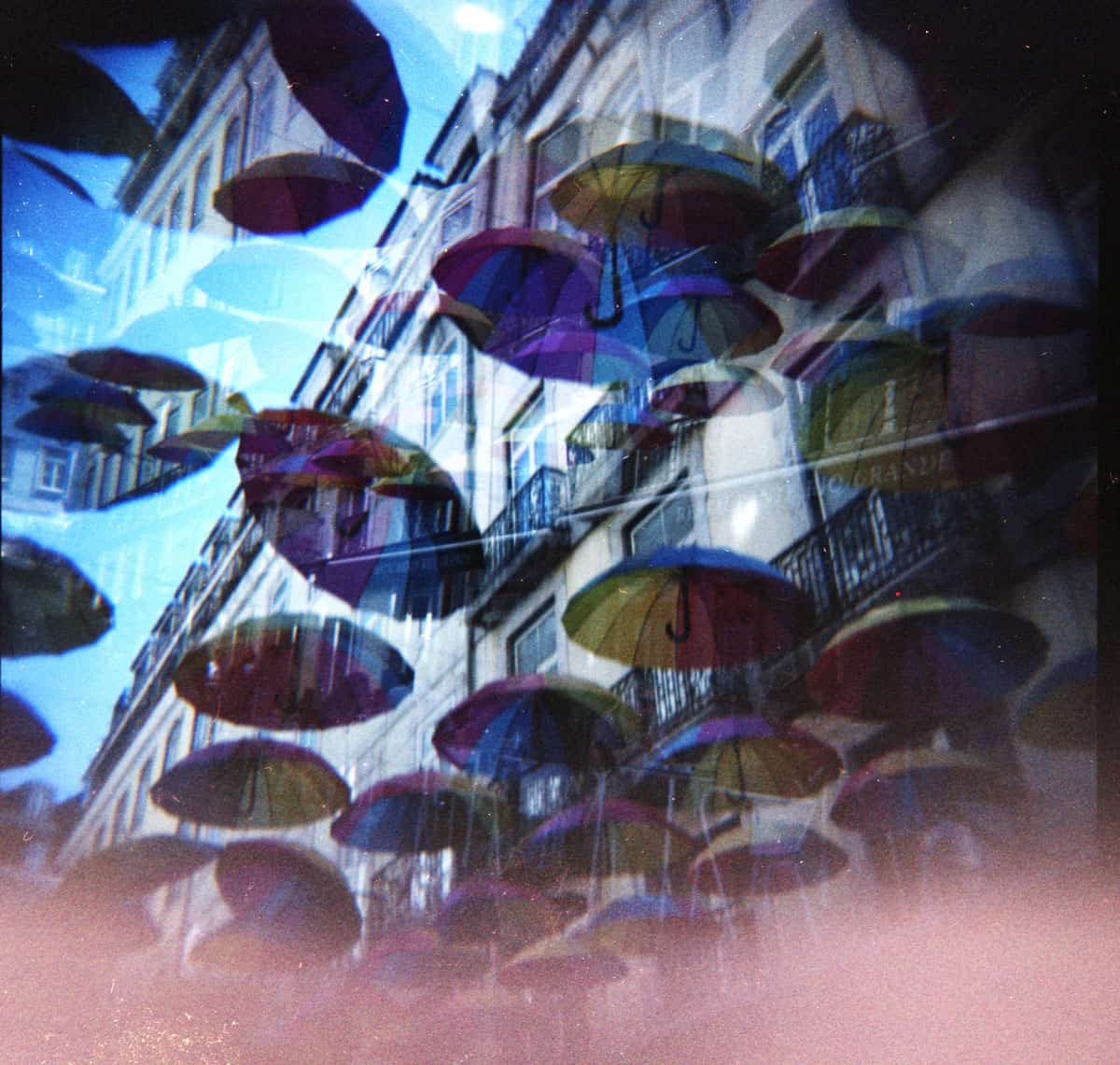
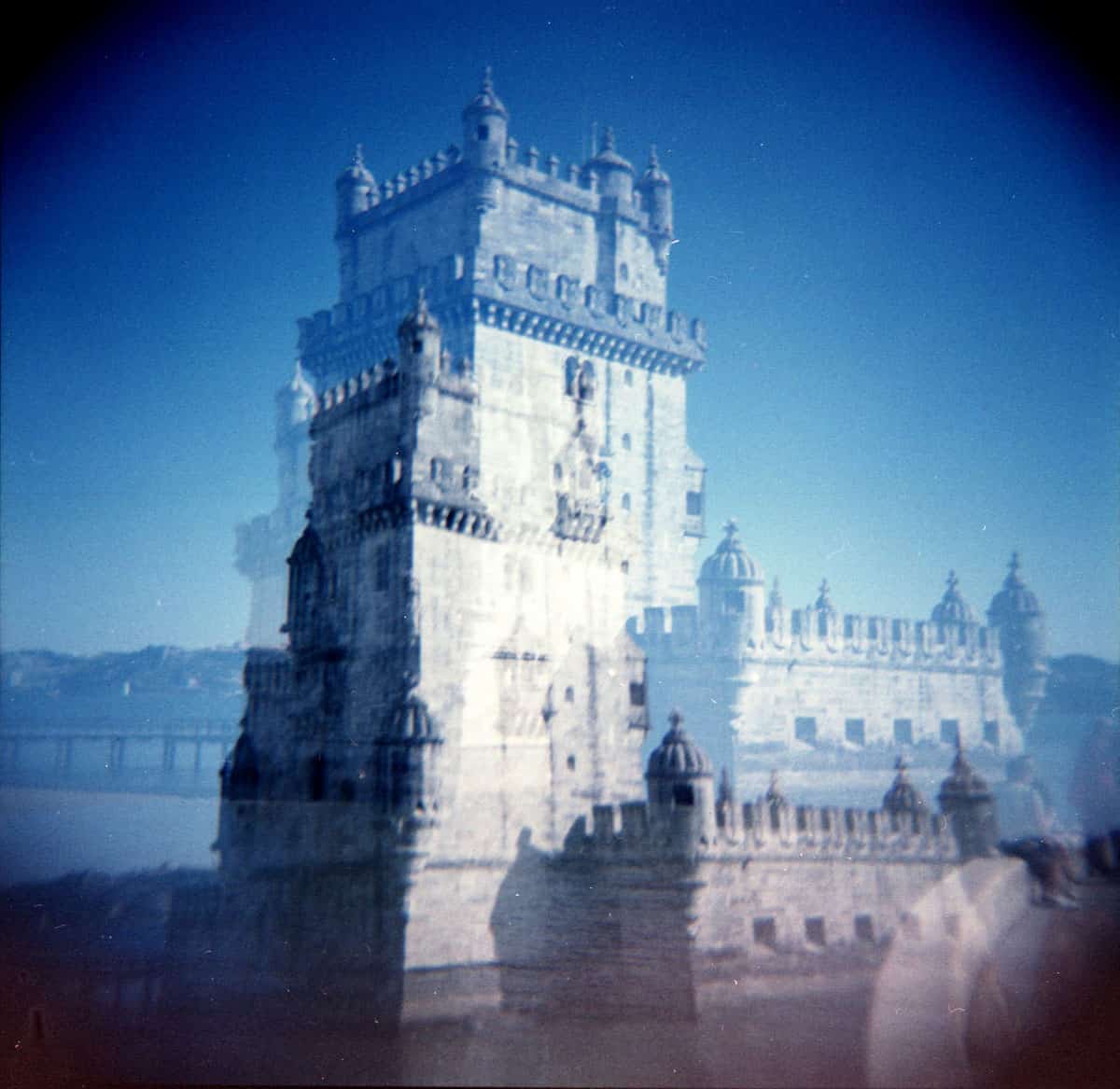
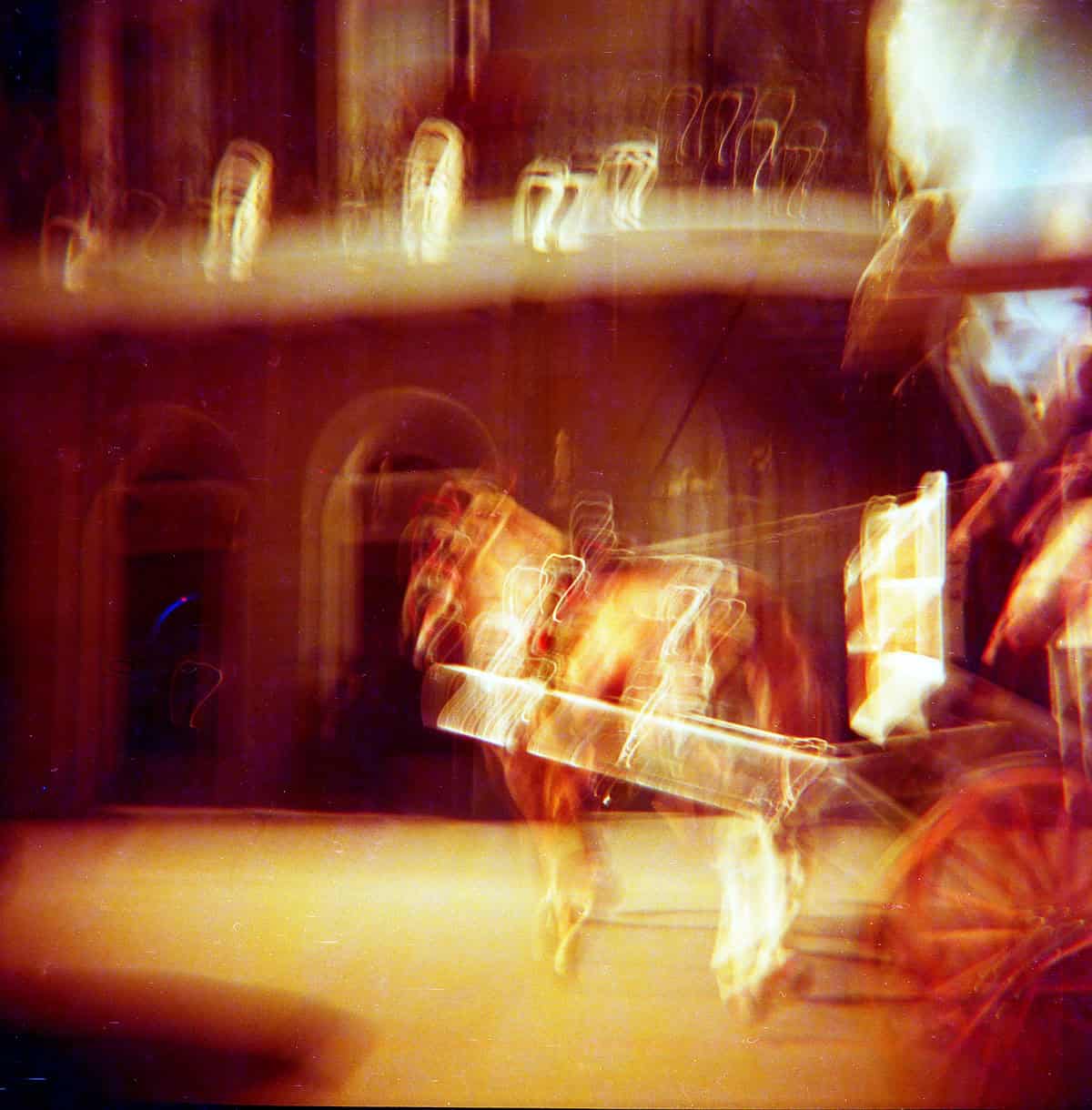
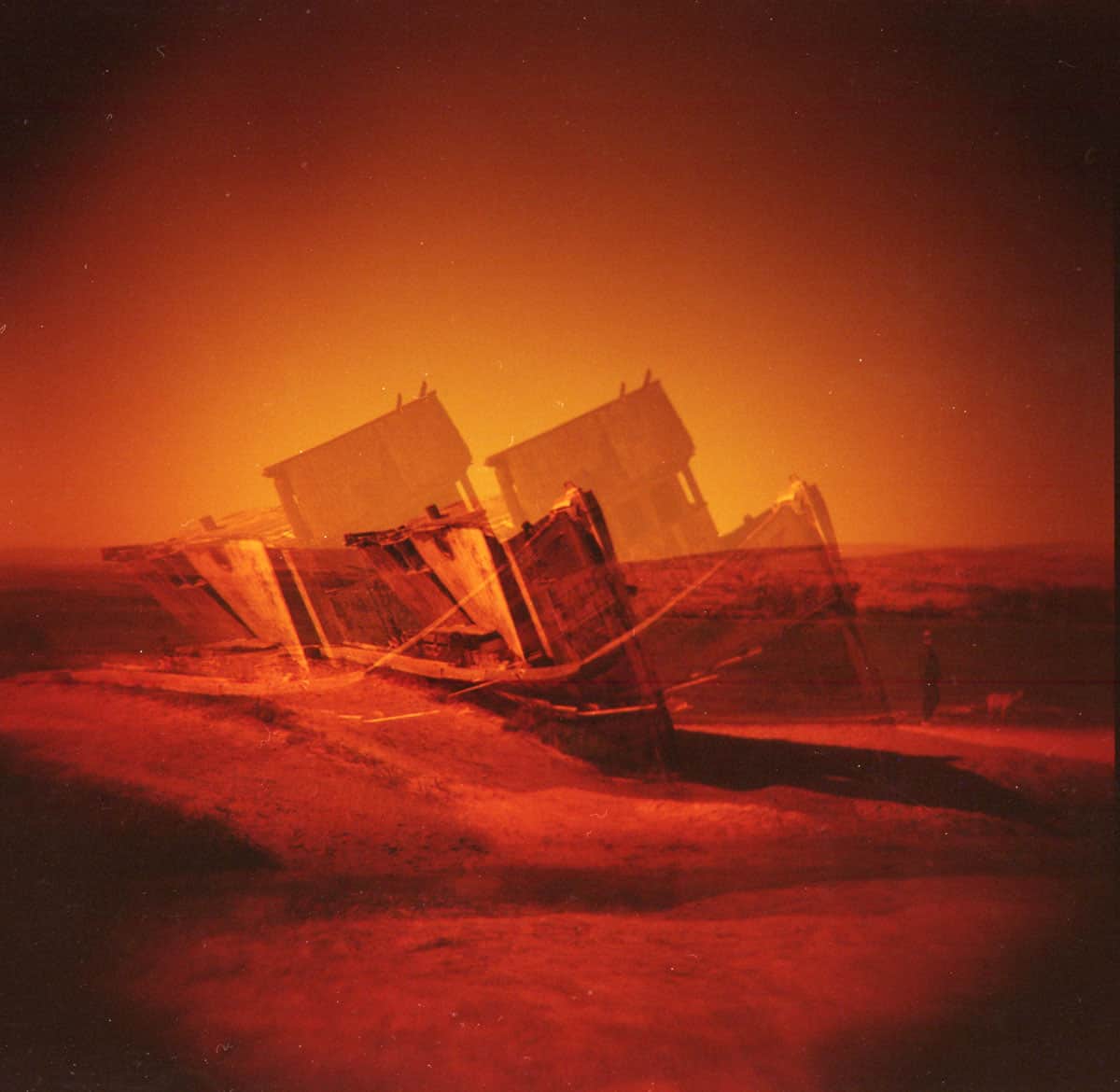
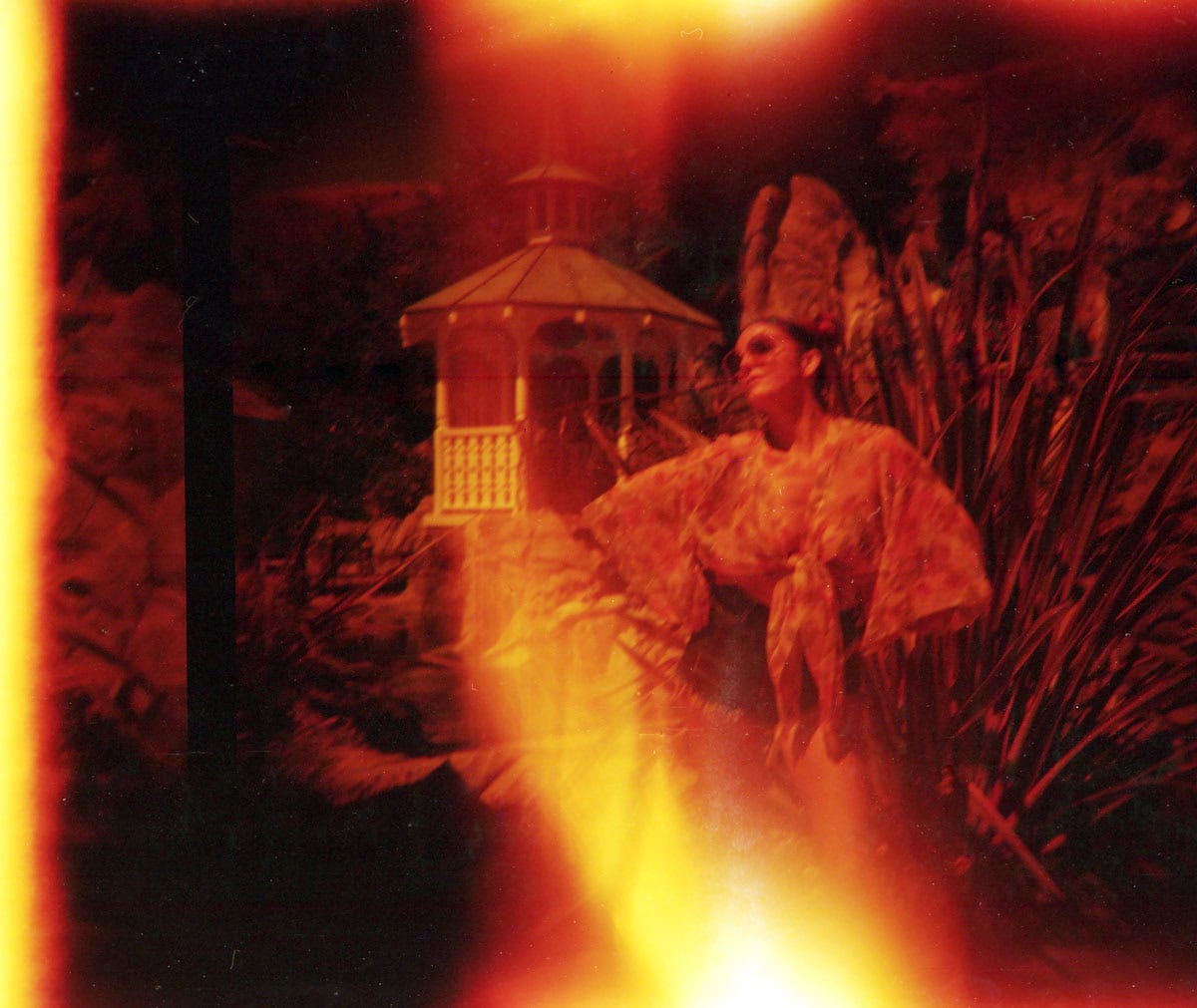
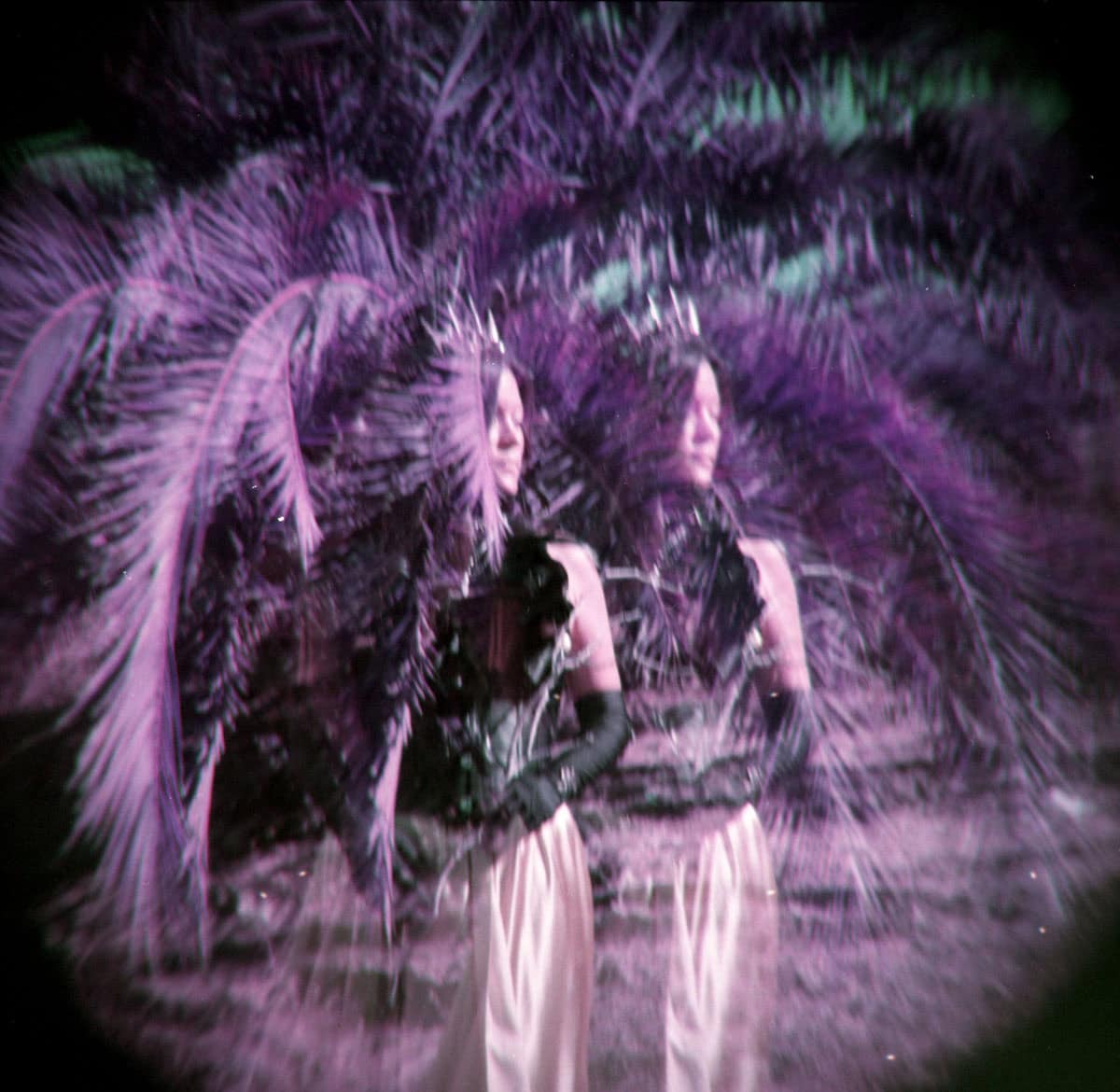
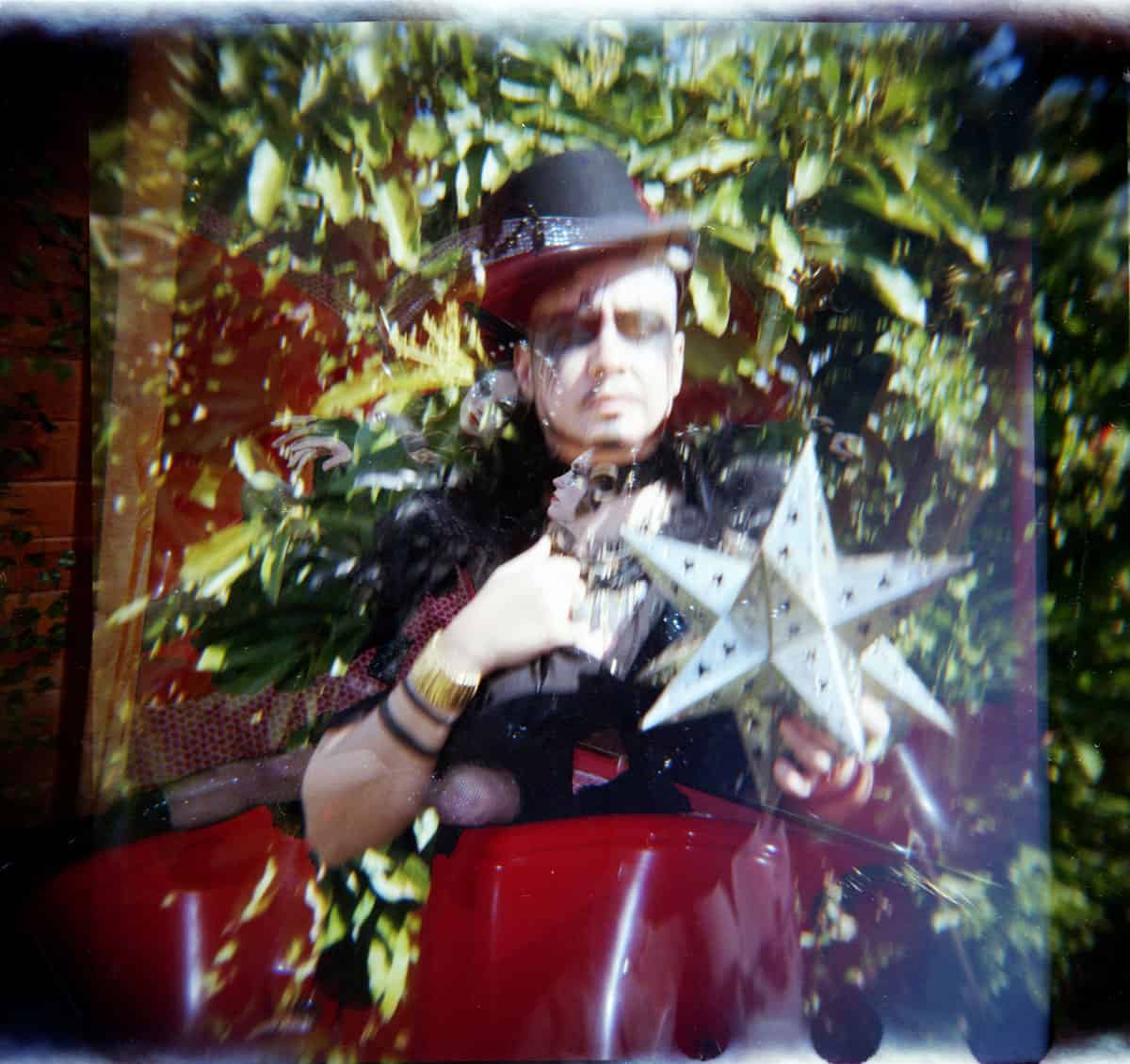
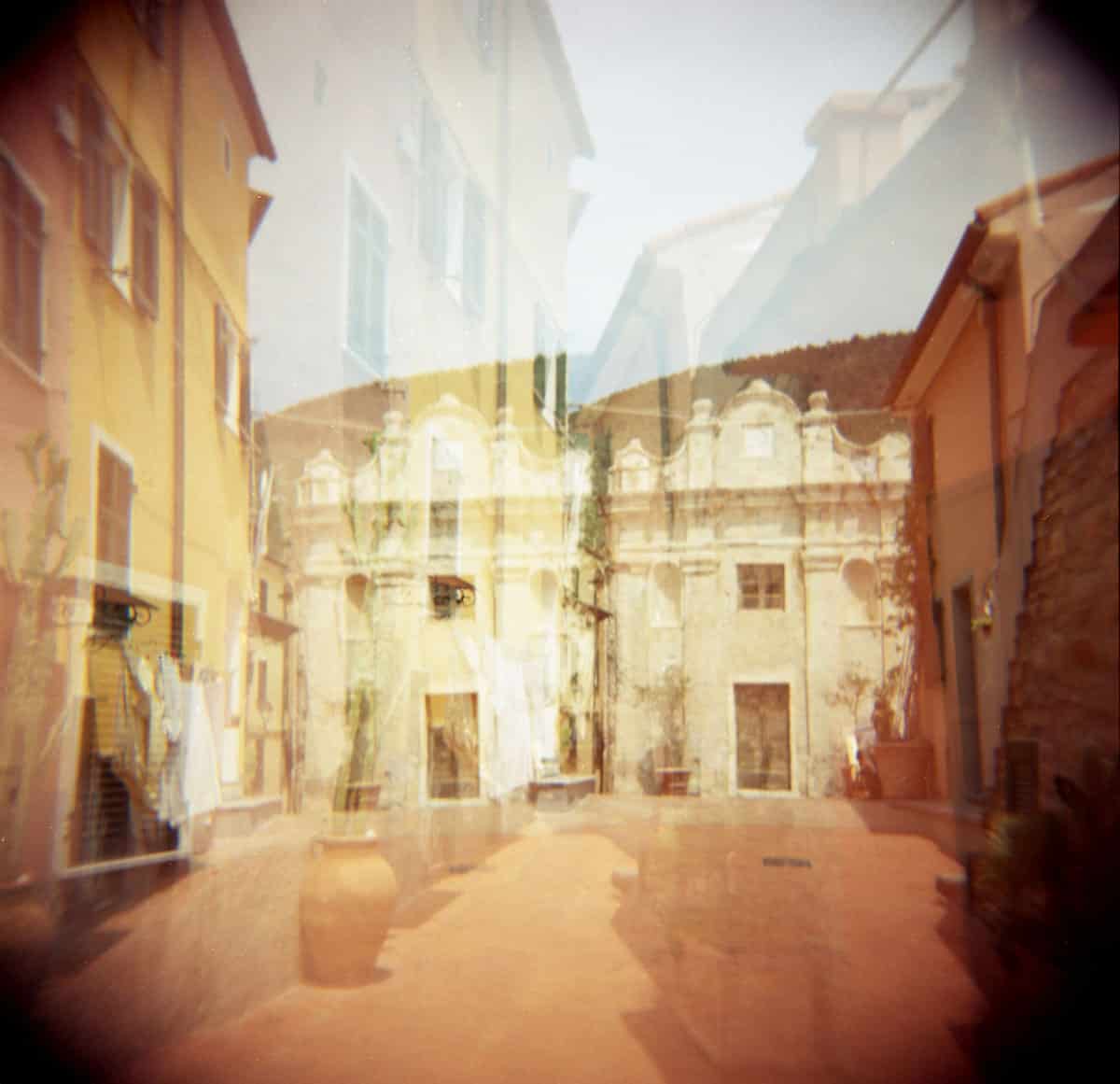
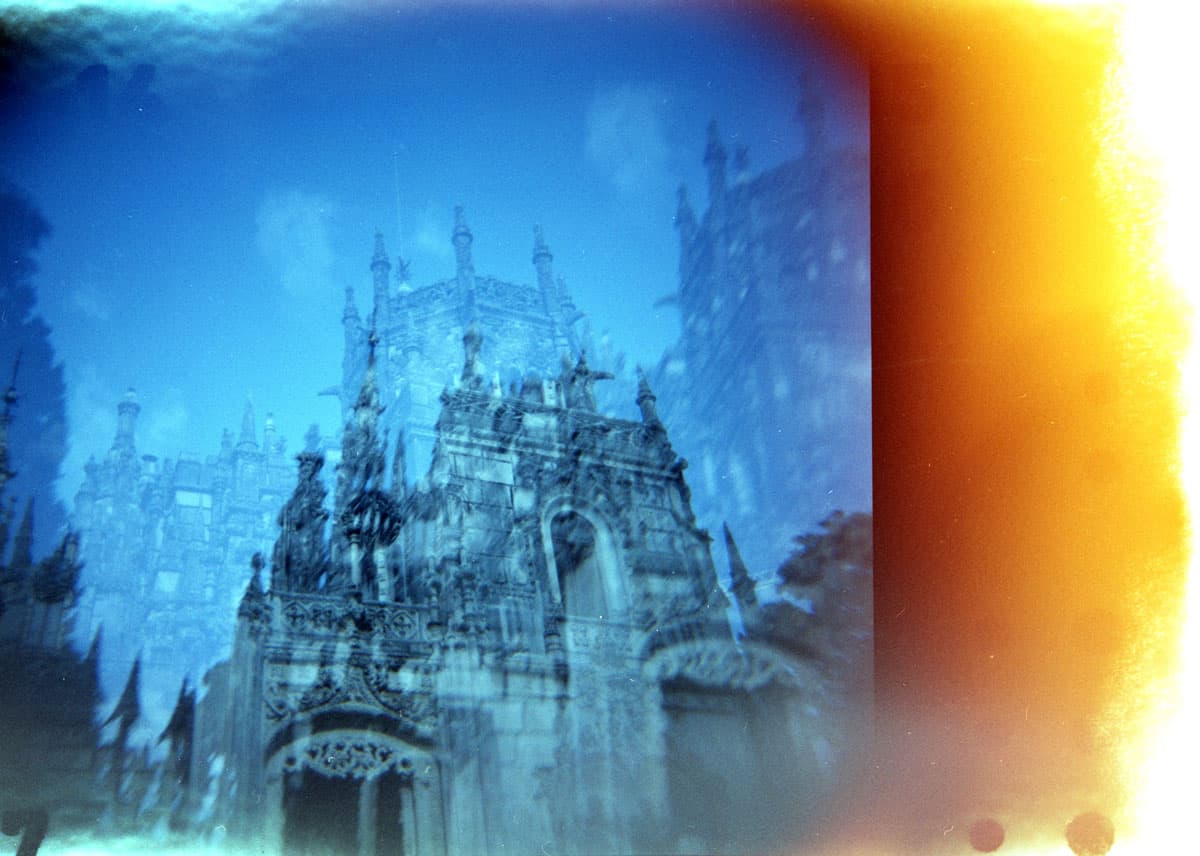
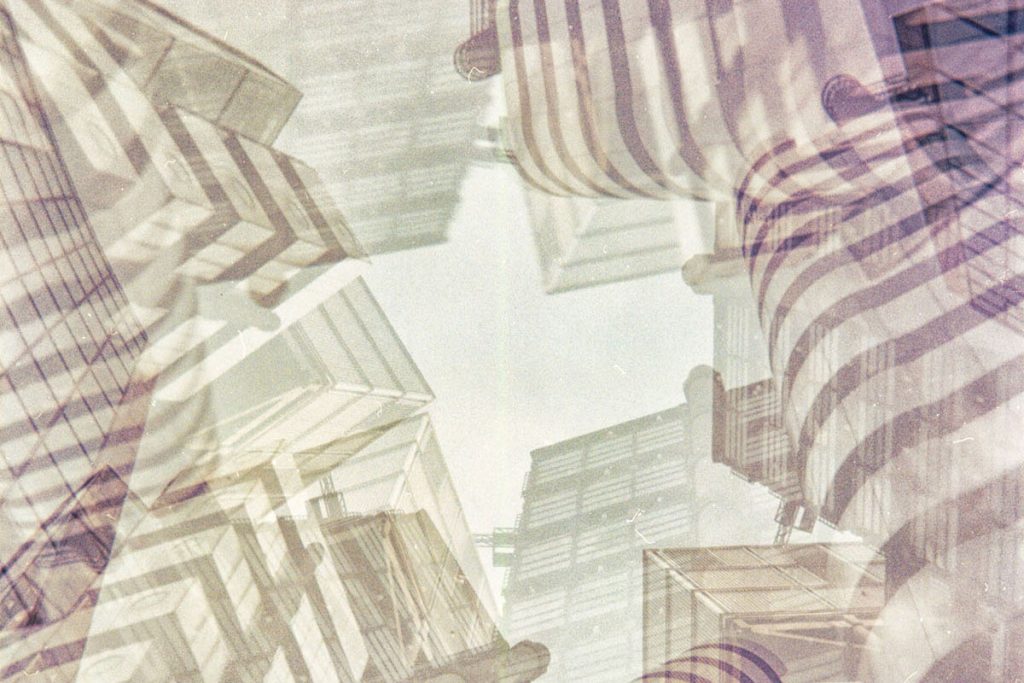
With a simple side trigger, I can create multiple exposures, giving the images a lucid, layered look. Another experimental element comes from accidental light leaks. Loading and unloading the film can be a bit tricky, and sometimes light leaks onto the film, creating unexpected flares, streaks, or washed-out edges.
While some photographers try to eliminate these entirely, I often embrace them as part of the Holga’s character. This turns each roll into a small experiment, where surprises are not just possible but encouraged.
Tips for Using the Holga
As with most cameras, the more you shoot, the more you learn how to create consistent images. One of the simplest ways to do this is by always checking your settings before taking a photo.
Since the Holga has only a few settings and allows just 12-16 images per roll, it can be disappointing to realize you did something like accidentally leaving the bulb setting on and overexposed a shot.
Focus is also key. Images can become blurry or out of focus if you’re not standing at the correct distance from your subject, especially when shooting portraits or full-body shots.
The Holga offers four focus settings on the focus ring around the lens. The symbol with one person is a focus distance of 3.25 ft, three people is 6.5 ft, a group of people is 20 ft, and the mountains is 33 ft.
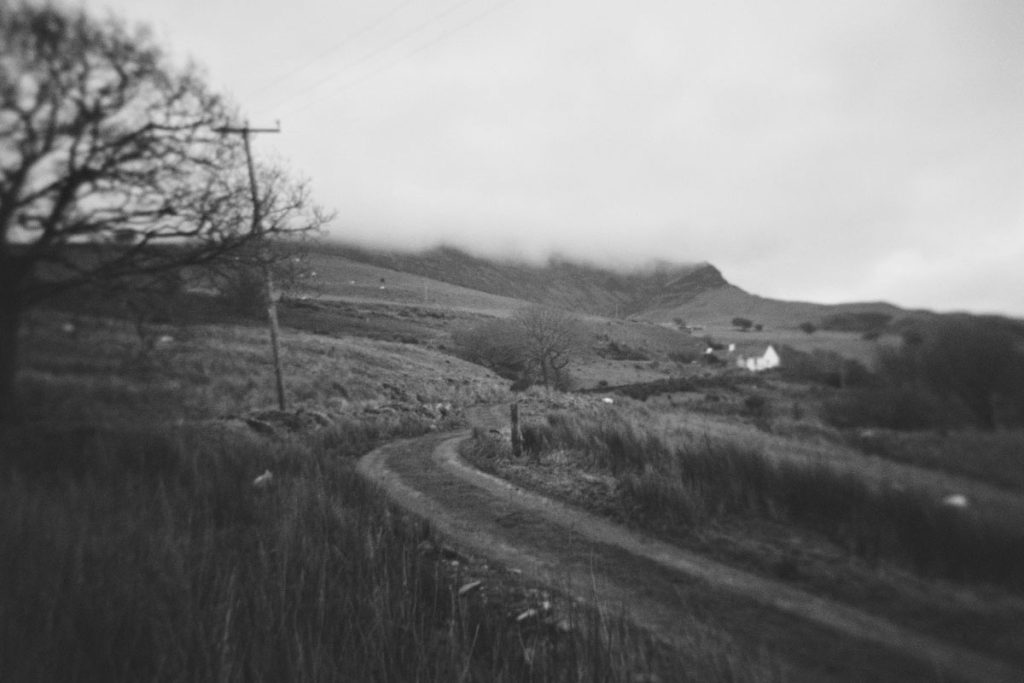
I particularly enjoy photographing architecture and landscapes with the Holga. It’s much easier to nail focus, and when you want to experiment with landscapes, this camera produces an eccentric look that I’ve actually used in several art shows.
While the Holga may never be a precision tool, learning its limits helps you push them more intentionally.
Photographer: © Angela Izzo
A Few Problems I’ve Had With the Holga
One problem I’ve had with the Holga is the clip-on straps that hold the camera back in place. There have been several moments when I’ve had it on my shoulder and the latches came undone, causing the back to fall off and expose the film—the drama!
From this mistake, I learned to use black tape to secure the side clips so the back stays firmly attached and doesn’t fall off.
Another tip I picked up from other photographers is to place black tape over the back window where the frame numbers show, which helps prevent light leaks.
As mentioned before, keeping an eye on your settings is essential to avoid too many mishaps. I’ve lost more shots than I can count from not paying close enough attention, but sometimes those mistakes are okay, and can even result in a surprisingly great image.
Photographer: © Angela Izzo
Accessories I Love to Pair with the Holga
The Holga isn’t a camera you accessorize to fix—it’s one you accessorize to engage with. The best pairings either lightly guide its unpredictability or deliberately amplify it.
Color filters and close-up diopters work especially well with the Holga’s low-contrast plastic lens, producing dramatic tonal shifts and surreal softness, while an external light meter adds just enough control to make intentional over- or underexposure feel purposeful.
A tripod or cable release opens the door to long exposures, ghosted movement, and glowing night scenes without sacrificing the camera’s lo-fi character.
Other accessories lean fully into experimentation. Cheap manual flashes create harsh falloff and heavy vignetting and tape and masks turn light leaks and framing into creative tools.
Different film stocks even function as accessories themselves—black and white for mood, expired film for instability, slide film for high-risk color. Even shooting 35mm through adapters embraces rule-breaking with sprockets and overlapping frames.
In the end, the Holga shines when accessories balance a touch of control with a lot of chaos, shaping accidents rather than eliminating them.
Photographer: © Angela Izzo
Final Thoughts
Whether you’re chasing consistency or leaning fully into chaos, the Holga offers a creative experience that feels increasingly rare in modern photography.
If you enjoy working with its flaws instead of against them, the Holga can become one of the most expressive cameras in your collection.
Thank you so much, Angela! Angela is a regular contributor here at Shoot It With Film, and be sure to check out her other articles here, such as Lomo’Instant Wide Camera Review: Double Exposures, Retro Style, & Endless Creativity and Polaroid Film Photography: The Look, the Process, and the Magic.
You can also check out more of her work her website, Instagram, and YouTube.
Leave your questions about the Holga 120 below in the comments, and you can pick one up on Amazon here.


Leave a Comment
Shoot It With Film on Instagram


Blog Comments
Neal A Wellons
March 13, 2026 at 11:06 am
Thanks for a great article. Your photos are wonderful and you are a master of double exposures.
I love Holgas too, have a dozen of so 120s plus some 35mm and 110 versions. I shoot about 50 rolls/year. I have never taped my cameras, either cracks or window and find all my light leaks are from loading/unloading.
I’m not sure about the need for a light meter as they are only two settings and both often seem to have the same f/stop hole size. The only adjustment I have is whether to push or pull in development and that just depends on whether the day is sunny or cloudy.
Thanks again for your great work and I look forward to more.
Eddy
March 13, 2026 at 12:04 pm
Nice work. My favorites are the Umbrellas and Horse and carriage photos.I have a few 120 Holgas and a 35mm one. I tape my holgas up like fort knox. I do not like light leaks. And I am not afraid to use flash as many film photographers on youtube seem to be. They would rather pull out highlights in lightroom or photoshop because they are underexposed from not using fill flash, opening up the fstop or slower shutter speeds. I use my late dads brownie Bullseye. Love that camera and I usually use it for long night exposures. I can add filters and accessories to it.