

Written by Tomás Hernández Ruipérez
Bilbao, located in northern Spain, is a city that has redefined its identity through architecture. What was once a grey industrial heartland is now a fascinating mix of futuristic design and deep-rooted Basque heritage. For a photographer, this city is a playground of textures, especially when the weather—typically rainy and overcast—turns the sky into a giant softbox.
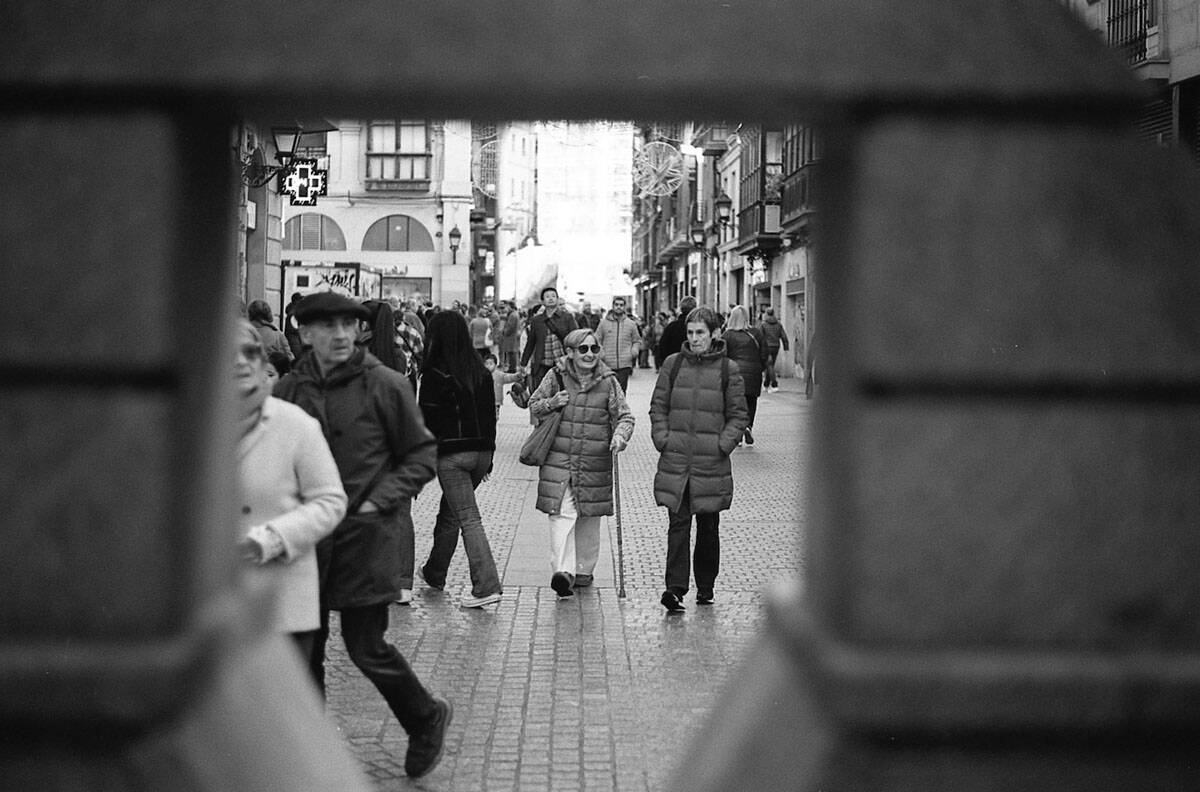
Recently, I decided to take a walk along the Bilbao estuary with my Nikon F100 (find on eBay) and two trusted prime lenses: the Nikkor 50mm and Nikkor 28mm. My goal wasn’t just to capture the city, but to conduct an experiment: comparing two black and white film stock emulsions with vastly different “personalities” under the same flat, diffuse light.
In one pocket, I carried the modern, technological Kodak T-Max 400 (2TMY). In the other, the high-contrast, idiosyncratic Rollei Superpan 200.
Find Kodak T-Max 400 on Amazon, and find Rollei Superpan 200 at B&H Photo.
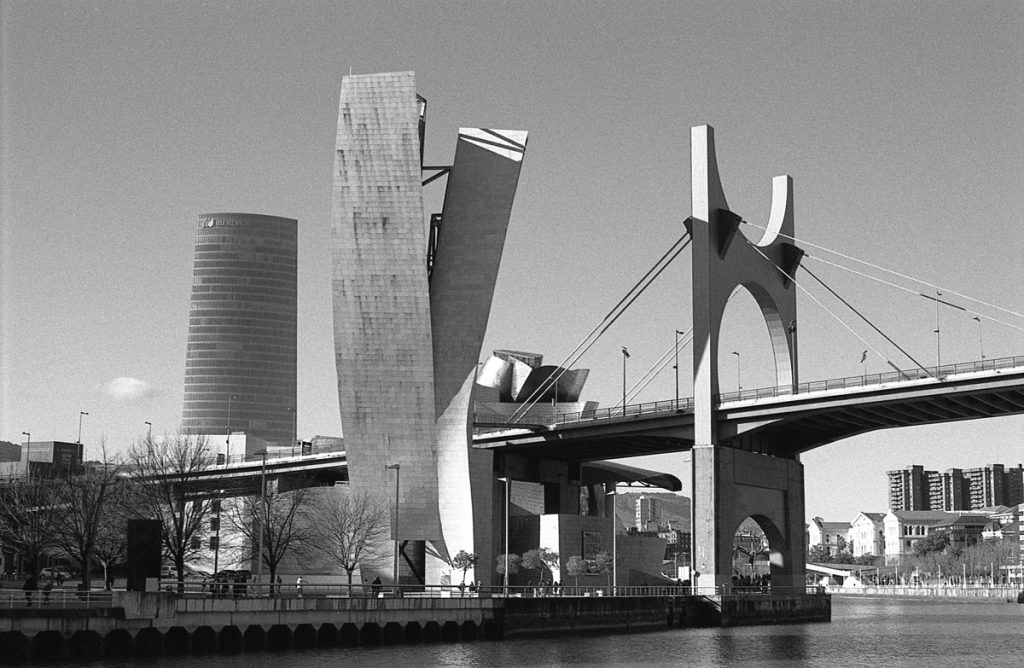
Part 1: The Smoothness of Titanium (Kodak T-Max 400)
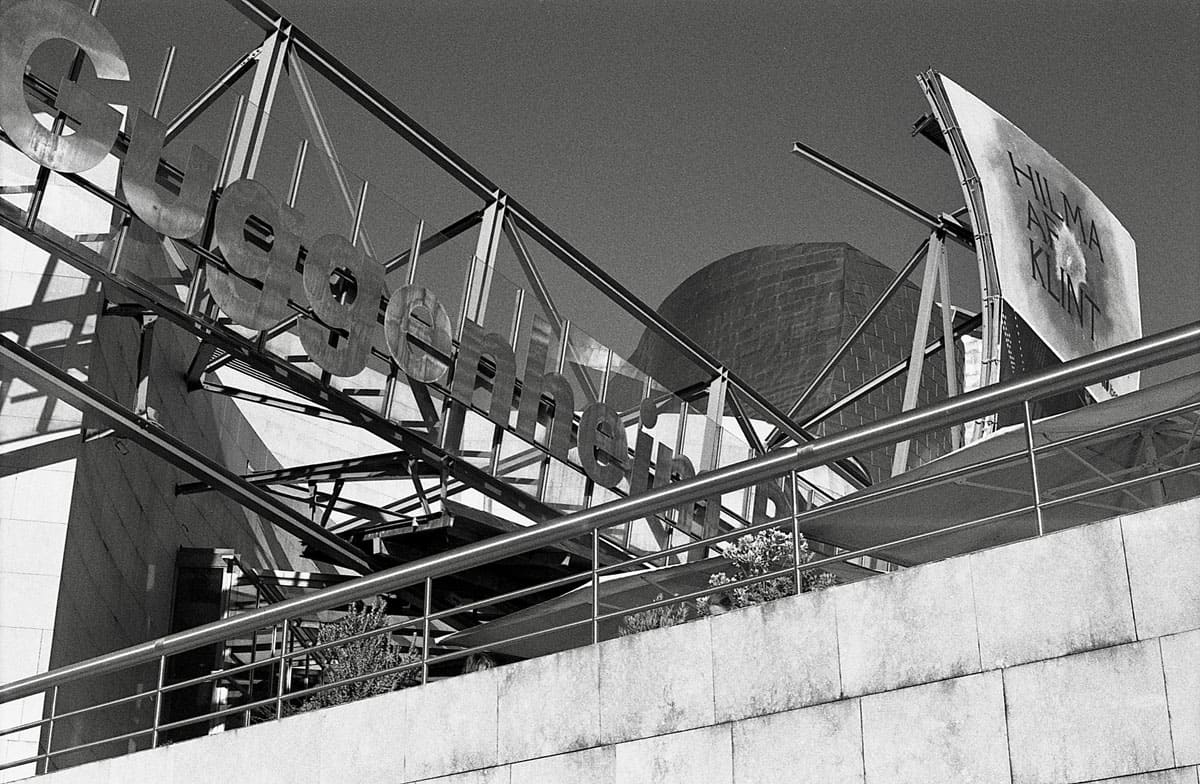
I started my walk around the Guggenheim Museum. Frank Gehry’s titanium plates are a challenge to photograph; on a cloudy day, they can look flat, and in the sun, they can blow out. They require a film capable of separating subtle shades of grey without muddying the details.
Shooting with Kodak T-Max 400, the result was pure smoothness. This film demonstrated exactly why it is a professional standard: it possesses incredible exposure latitude. In the shots of the museum and the fountains, T-Max captured the damp atmosphere of Bilbao with amazing fidelity, retaining detail in the shadows of the water and the highlights of the metal.
It felt like a “transparent” film. It didn’t impose a heavy style; it simply captured the reality with fine grain and a perfect tonal scale, making the titanium look almost liquid.
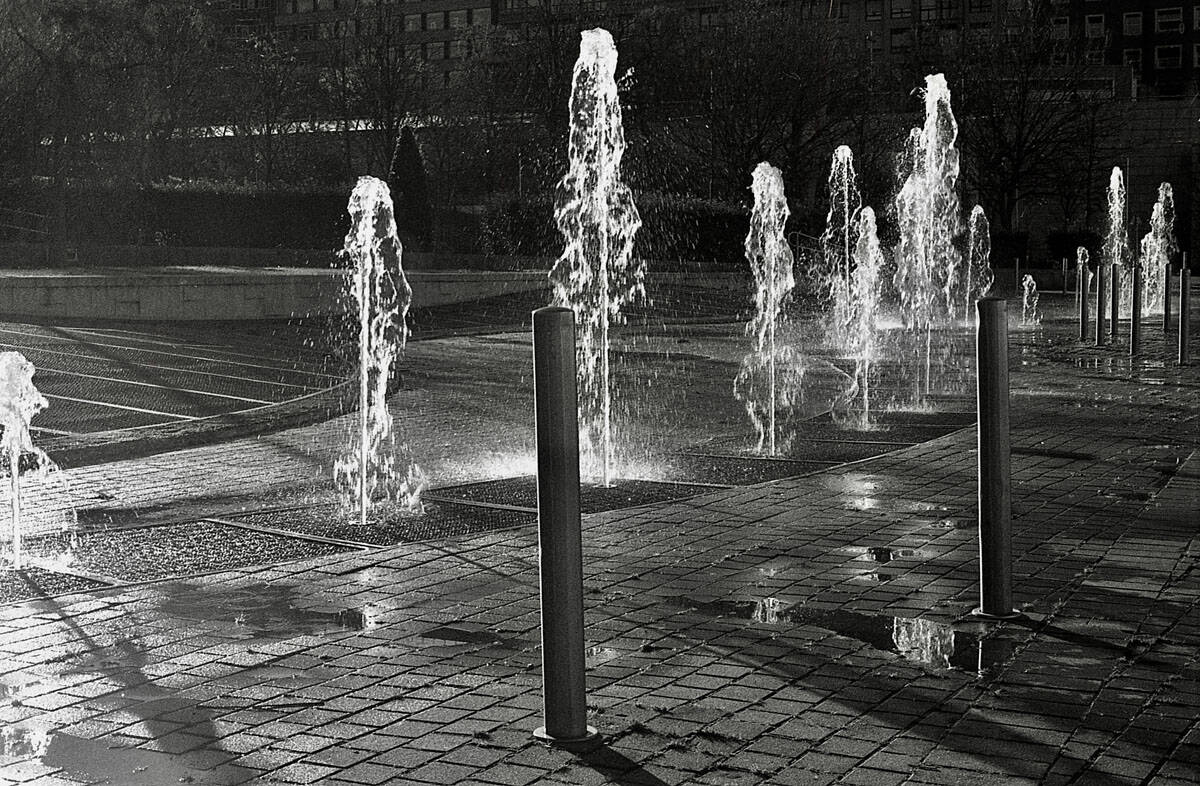
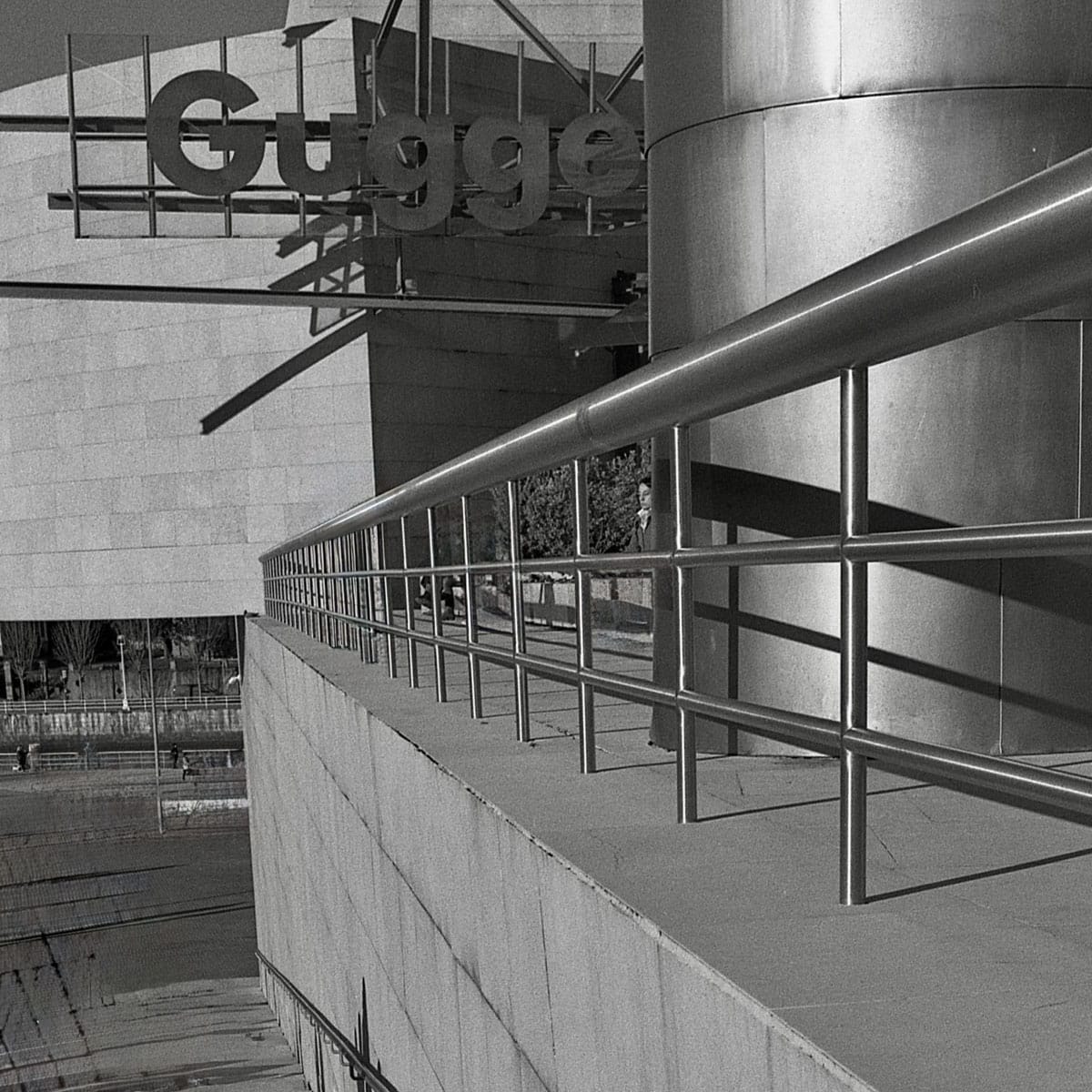
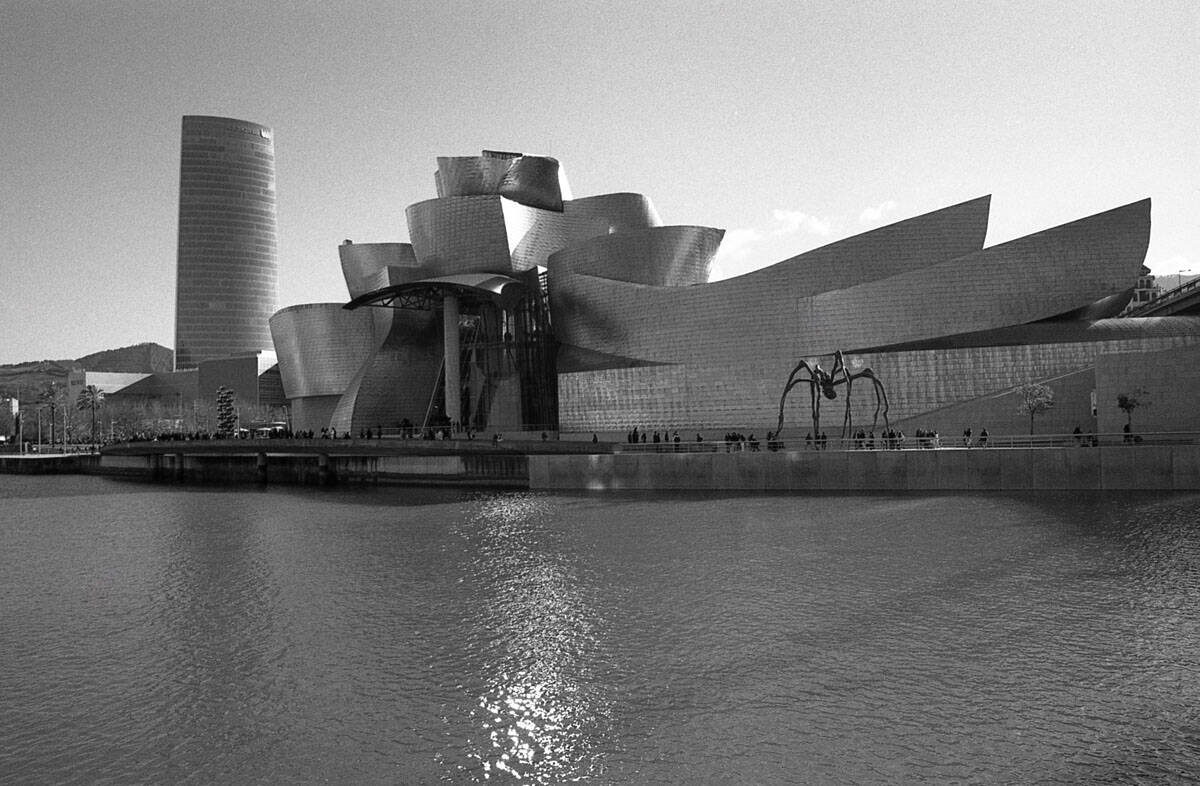
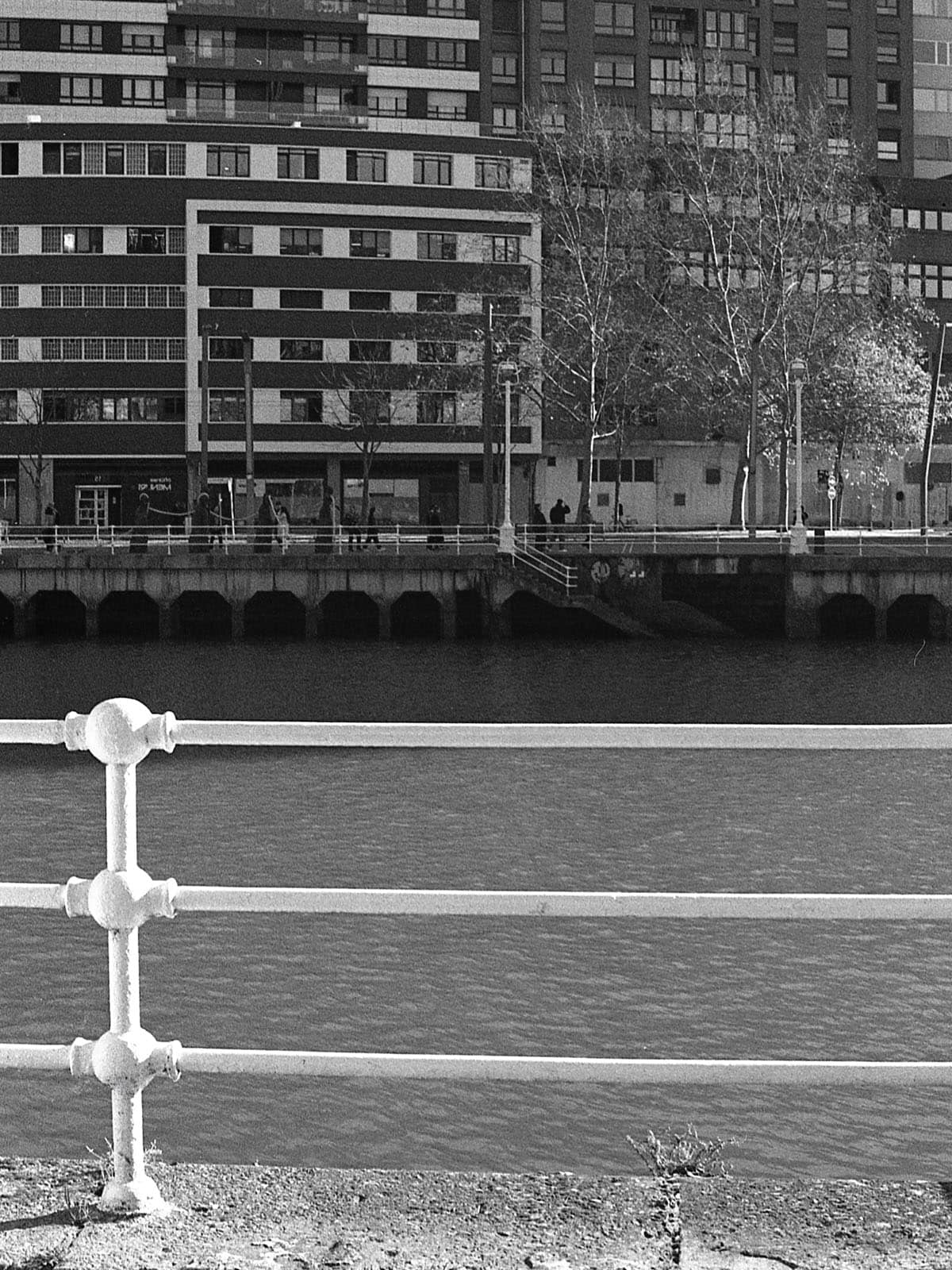

Part 2: Drama and Geometry (Rollei Superpan 200)
As I moved towards the Old Town (Casco Viejo) and the bridges, I loaded the Rollei Superpan 200. The change in character was immediate and radical.
Superpan 200 doesn’t seek technical perfection; it seeks drama. As a film derived from aerial surveillance stock with extended sensitivity into the near-infrared spectrum, its interpretation of the city is much more graphic.
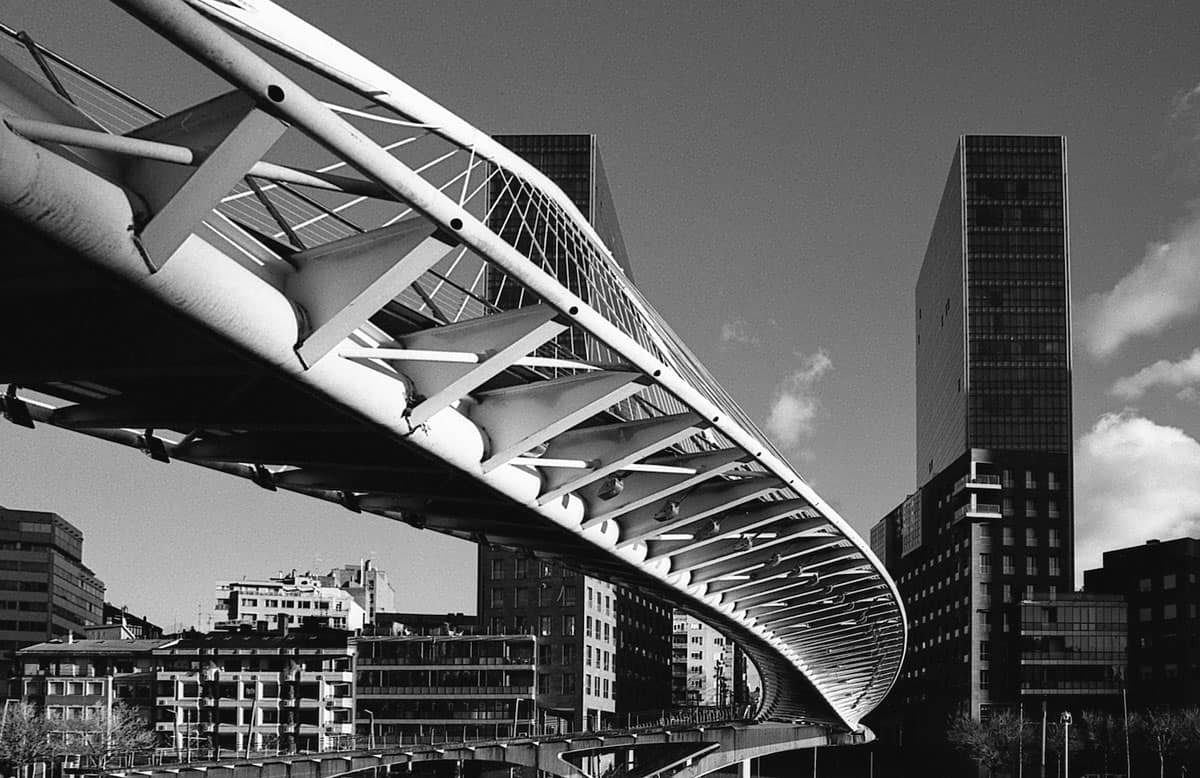
- Architectural Contrast: In the shot of Calatrava’s Zubizuri bridge, the film cut through the atmospheric haze, creating a punchy contrast between the white structure and the grey sky—separation that T-Max might have rendered more softly.
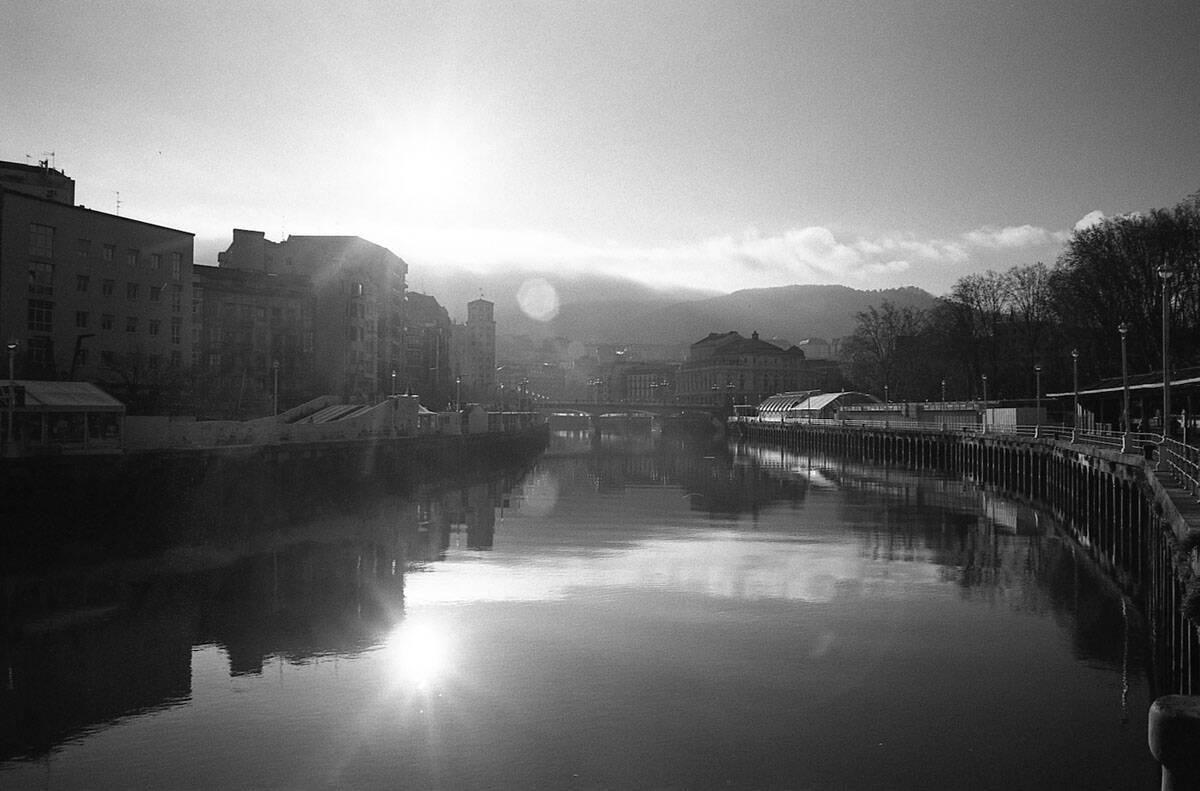
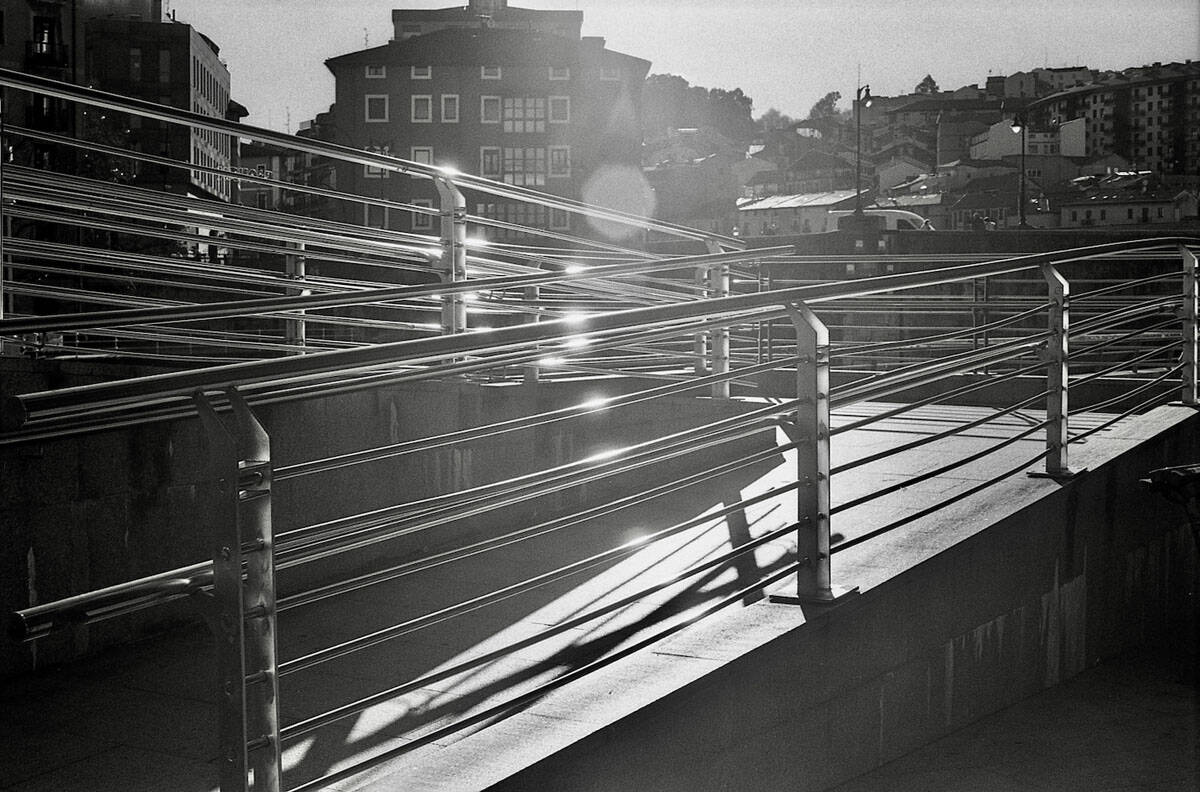
- Light and Shadow: This film shines in backlit situations. In the photos of the metallic railings and the reflections on the estuary, Rollei turned the light into solid, tangible elements. The blacks are deep, almost like ink.
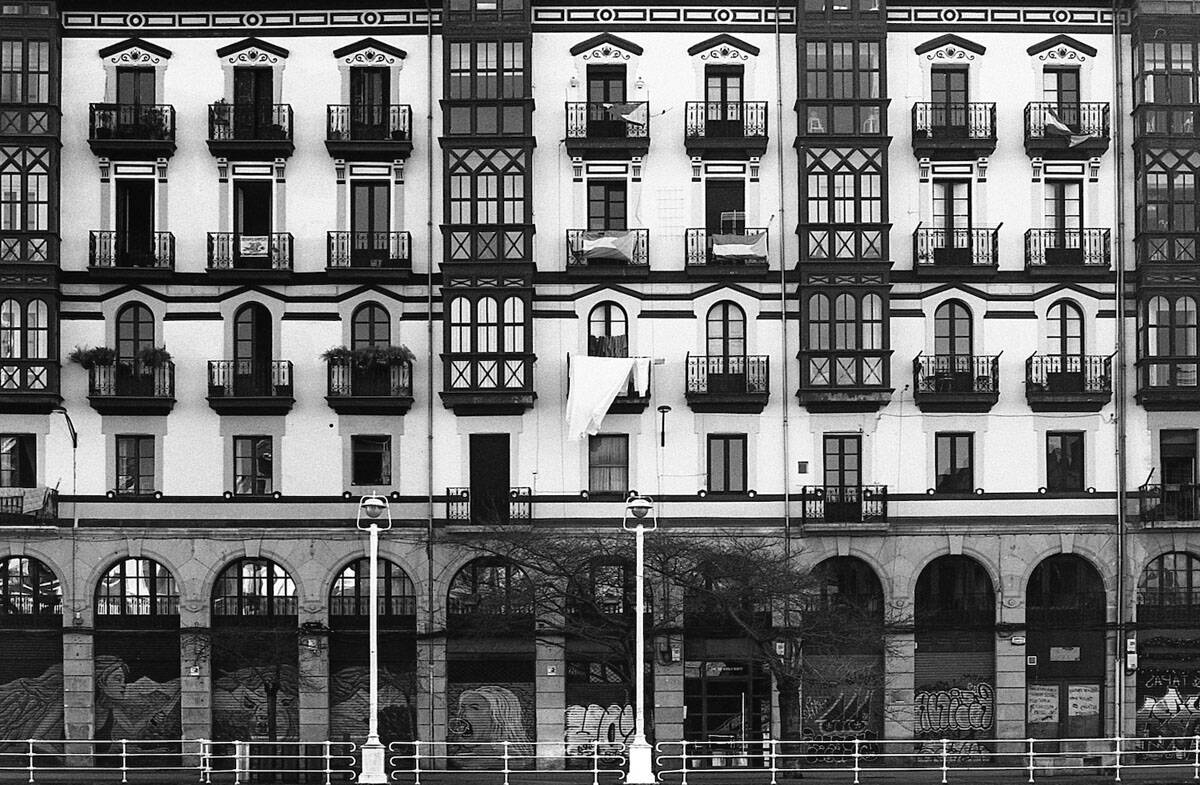
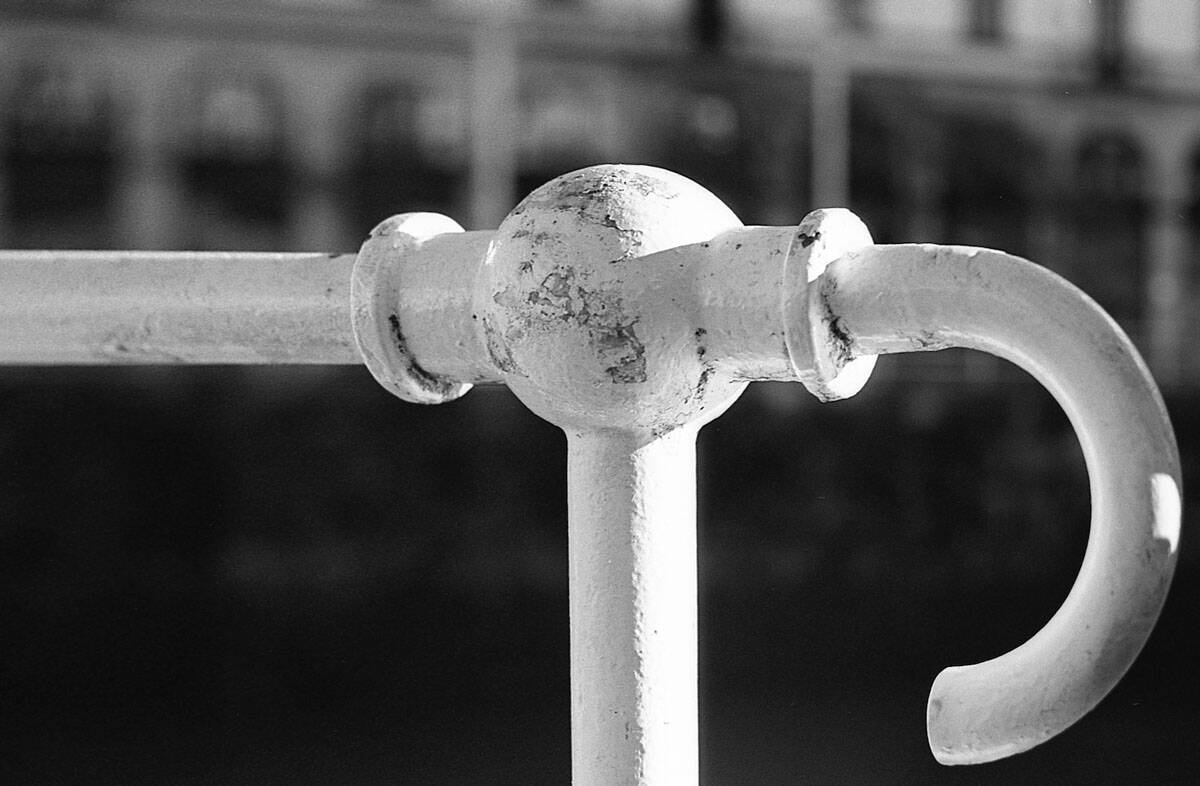
- Urban Texture: Even in photos of traditional architecture, like the facade of the balconies, Superpan 200 eliminated unnecessary mid-tones, delivering an image with significant “bite” and character.
Conclusion
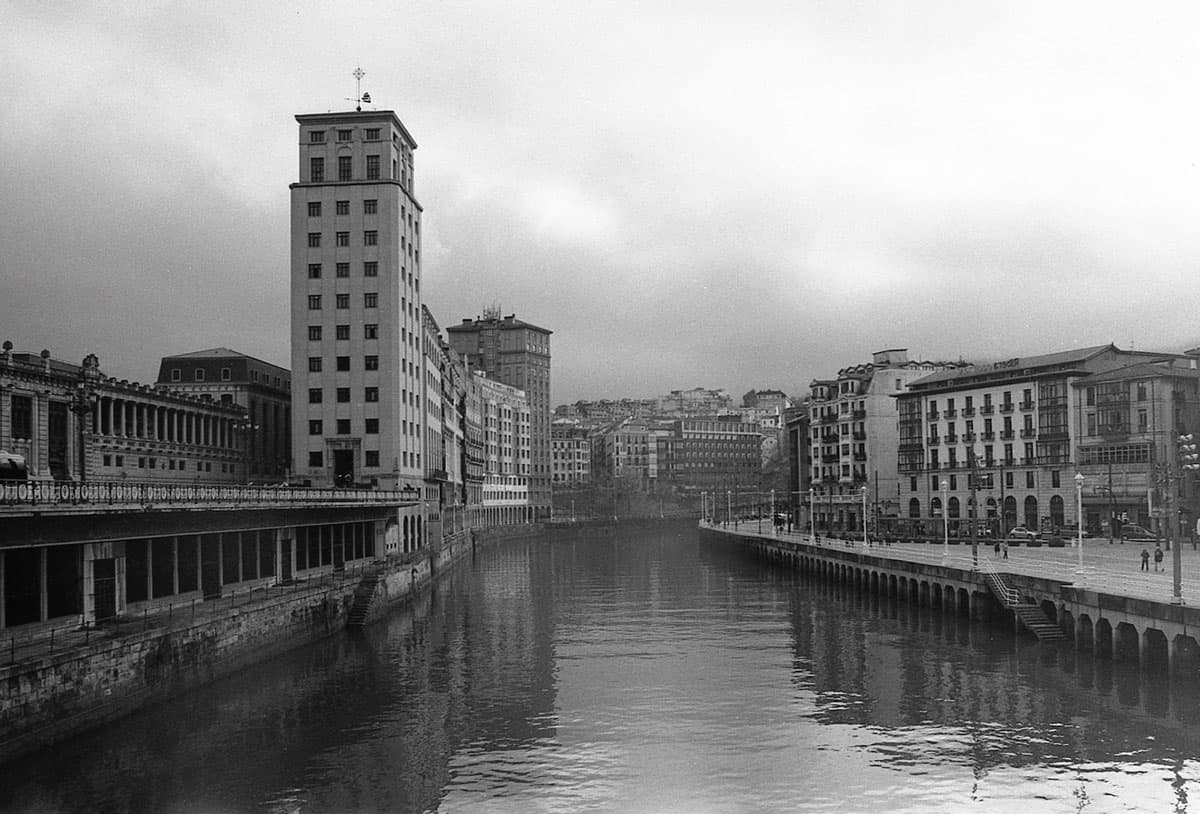
Walking through Bilbao with these two films was a lesson in how the choice of emulsion dictates the narrative of the final image.
While the Kodak T-Max 400 acted as a faithful documentarian, capturing the curves of the Guggenheim with subtle elegance, the Rollei Superpan 200 behaved like a graphic artist. The Rollei transformed the city into a stage of high contrast, where architectural lines and silhouettes took the leading role.
For a day in Bilbao, which one should you choose? If you want to capture the texture of the titanium and the soft rain, bring the T-Max. But if you want the industrial architecture and the city’s bridges to jump off the page with strength, the Rollei Superpan is unbeatable.
Thank you so much, Tomás! You can find more of Tomás’s work on Instagram here.
Leave your questions about Kodak T-Max 400 and Rollei Superpan 200 below in the comments, and you can pick some up for yourself here: Kodak T-Max 400, Rollei Superpan 200




Shoot It With Film on Instagram


Leave a Comment