

Written by Hansel Ong
It is easy to bypass film photography for the technological edge of digital. Having unlimited rolls of “film” liberates the photographer from waste and mental pressure. A small squeeze of dopamine flows through the brain every time the rear screen provides instant feedback. Whatever was missed during the moment can be fixed in post-processing, allowing full creative control and ensuring pixel-to-pixel perfection for each shot.
These are all good things. I think It is good that people waste less through digital photography. I think it is good when full and part-time photographers edit their images and deliver beautiful photos. I also think it is good for people to practice photography if it makes them happy–to the joy of everybody who will see those shots. I see the good things digital photography gives.
What I did not see are the hidden costs of digital opulence.


A Short Story: Comparing Film & Digital Images
Summer 2025–I spent one morning for a photography hike, which is not unusual for me, though this one is slightly different. This time I brought not only my digital camera but also my film camera: a beaten but perfectly working Pentax 645n, a roll of Kodak Portra 400 and Portra 160, a sturdy tripod, and a Sekonic L-308X-U light meter. My aim was simple: setup my film camera, stand next to it with my digital, take two exposures, and compare side-by-side.
I saw my digital exposures that night and was not shocked. I took photos that look alright, but nothing special. Perhaps some editing can enhance the image, but overall it was just another hike. Then, I sent my films to a professional photo lab and waited impatiently between two and three weeks.


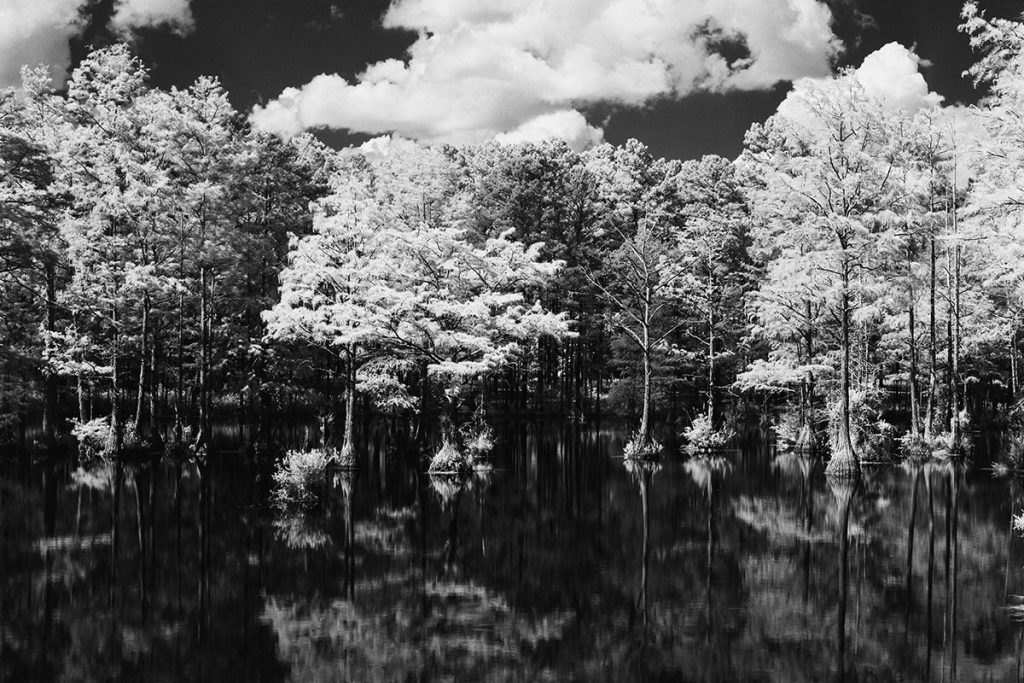
When I received my scans, I was caught off guard by how they looked. I thought the magentas were strong, way too strong. The images are too pink, the greens are too blue, the shadows are too dark, I thought to myself. It was not how I remembered the colors. I thought the lab made a mistake–I thought I made a mistake.
But as I culled through my scans, something clicked in my brain: looking at these images brought me back to the quiet serenity of that summer morning, the sparse interruption of the loud vehicles, and the glow of the morning sunlight. Film photography brought back to how those moments were felt, not seen.
Suddenly, a dazzling spell of film landscape photography rushed inside me–I wanted to recreate the same experience all over again.
Throughout summer and fall, I eagerly made more landscape photographs purely for the sheer joy. Over the course of weeks, I wondered what was different. Why did I keep doing it?
I did not think it was simply for the image quality. I would have replicated the look with digital if image quality was all I am after. Besides, it would have been more practical. So there must be something beyond the superficial, something more than the schema of the image that I was chasing. I am not sure what it really is, but I would like to summarize some of the reflections I have about it since then.


Shooting Film Added Value to My Photography
Film photography added value to my craft. I no longer took for granted the shutter clicks, knowing each exposure cost me money specially over time.
I relearned to see the value of my work in a different light. For every roll of 120, I get 16 shots. For 35mm, I get 36 shots. For contrast, I usually take hundreds of shots when using digital cameras on each hike, all in the name of “productivity.” Anything less than that and I consider the trip a waste.
With film, I know each photograph cost me something, and the restrain made me appreciate each exposure I took. By recognizing this added value, my excitement to create revitalized, and any jadedness I was feeling disappeared.

Shooting Film Cultivates Mindfulness in My Practice
Because film photography is costly, I became even more conscientious about how I spent my time and money.
Before film, I would gullibly travel to any location, surprise myself with whatever I find, and shoot away. With film, I tend to be more picky. I research the most personally interesting place using online maps, plan my routes, and schedule the time of day I will be shooting.
Of course, this also includes shopping for rolls of film ahead of time, and predict what days I can send my film and receive my scans back.
So what happened? Photography became more than showing up and clicking the shutter: it became a practice of mindfulness, of increasing attentiveness, and stretching my patience.
This is significant for my life on many levels. As a digital native, I am striving to increase my attention span and often challenged by my own shortsightedness. It steals my joy and robs me of the higher things in life. But I realized mindfulness can restore these things, and film photography became the avenue.
This brings me to my next point: because film made me mindful, I began to experience a deeper kind of happiness.

Shooting Film Guarantees Enduring Joy
With digital photography, I experienced a kind of euphoria with my personal work that lasted about 24 hours. 48 hours if I am lucky. I would edit my raw files, feel good, and move on.
Most of my images are stored on my hard drives–I remember some of them, but for some reason I do not take the time to look and appreciate them. Hundreds of thousands of photos–just sitting in hard drives.
But film ages like wine (or like 90s nostalgia). For one, I seem to remember each roll I shot, or when I shot it. Second, I tend to reverse course when I review some of the film photographs I initially disliked.
Is it because I remember the time and place I took them, which creates a beautiful experience of memory? I do not exactly know. However, I can say for certain that the joy I experienced with film photography is far more profound and lasting than my digital work.


Conclusion
I did not write this article because I wanted to sideswipe digital photography. As I mentioned prior, I think digital photography is a good thing. I learned photography using digital cameras and even built a part-time business with it. Two of my personal projects (Foreigner and Birthplace) are completed using digital photography. It is one of the most useful things that was made in the world.
But what is useful should not necessarily replace what is beautiful. After shooting film photography consistently for the last 5-6 months, I realize that beautiful things touch our souls in a way useful things do not. Film photography reopened avenues I never realized closed down.
Beautiful film photographs are not just photographs: behind each negative is a real person who aspired to create beauty, who calculated the cost and determined it was worth paying, and who engaged in a deeply satisfying creative process.
My hope is that these words and photographs found a way to edify your soul. Keep shooting film.
Thank you so much, Hansel! You can find more of Hansel’s work on his website and on Instagram.
Leave your questions and thoughts about film photography below in the comments!


Leave a Comment
Shoot It With Film on Instagram


Blog Comments
Jon
January 23, 2026 at 11:25 am
I have shot on film since the 80s. As such it’s what I learned on. Went to digital in the late 90s. Then back to film. Now both. There is no rational reason to use film. But we’re not rational.
A £10 watch will keep better time than a £20000 watch. A classic car is worse in every way than a cheap modern one. Some things don’t make sense practically or financially. Just use what makes you happy even if it makes no sense.
Hansel
January 25, 2026 at 7:10 pm
Jon, exactly. The important thing is getting joy happiness out of the process. No point in proving anything “just because.”
Eddy
January 23, 2026 at 11:42 am
Nice photos. So you said that people waste less through digital photography. So spray and pray is a good thing? You take 100s or even 1000s of photos at a wedding. You have to upload them. Look at each one and then edit each one.That’s a time consuming waste of time in my opinion. I spoke to someone who was taking a digital photography class. The teacher said shoot as if you were shooting a 36 exposure roll of film and that less is more when it comes to photoshop
Hansel
January 25, 2026 at 7:12 pm
Hi Eddy, is spray and pray a good thing? Seems like justifying a certain work habit or technique is not the point of my article, as I made in the introduction and conclusion.
Tim
January 23, 2026 at 2:53 pm
I love your insight on film vs digital. I started in photography in the early 70s as a kid using a Polaroid, then 35mm and darkroom work in high school. I shot a lot of film in the 80s and 90s. I bought a Pentax 645n new when it came out, loved it. I sold all of my film equipment when I switched to digital early on in the transition, all my Nikons and the Pentax. I shot Nikon digital exclusively, now with a great Z5, until 2017. I bought an Old F3 & 50 1.4 at a “white elephant” fundraiser for $50, I was hooked again. Now I shoot both, for different reasons and purposes, both are great. I have also accumulated a large vintage Nikon film assortment. Digital is good, however, there is nothing like processing the negs, then spending a rainy day in the darkroom printing for hours. Enlargers are fairly reasonable. What used to be work as a teen is so relaxing at 63. I am so thankful that I now have the time to slow down shoot some film, and listen to some vinyl. Some things get better with age.
Tim
Hansel
January 25, 2026 at 7:14 pm
Hi Tim, thank you for reading the article and sharing your own experiences. It gives me meaningful experience when I resonate with another photographer. I wish you continued happiness in photography.
Benny
January 24, 2026 at 10:00 am
Great photos! I totally agree with your comments.
I grew up shooting with film cameras, my dad’s Leica M3 and Rolleiflex 2.8F. After a while, I learned not to shoot at just anything in sight, because every shot cost money, and even worse, every mistake is a throw away. I now own a Nikon D90 digital, and a Leica M6. I always use the Leica, and sometimes use the Nikon in parallel to appease some family members. I especially like the way film renders my fill-flash photos better. I like the look of film. My heart is with film, always!
Hansel
January 25, 2026 at 7:16 pm
Hi Benny, I have the same experience although I honed my practice mostly with digital. Film has a superior look, for sure.
Gary
February 12, 2026 at 2:07 am
The Lumber River photograph is outstanding. I’ll have to try the Portra 160.