

Written by Brendan Kragel
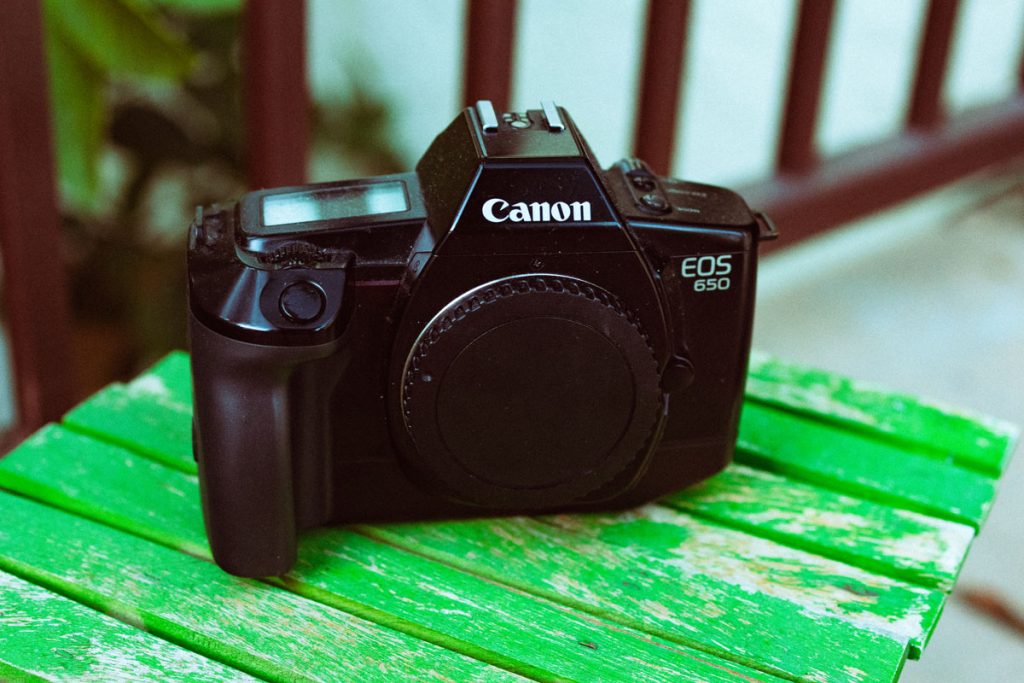
There are easier ways to photograph fast-moving subjects on film than using Canon’s first EOS camera.
That’s probably part of why I wanted to do it.
The Canon EOS 650 is not a sexy camera. Let’s just get that out of the way. It doesn’t have the mechanical charm of an older manual SLR or rangefinder. It doesn’t have the mystique of a high-end Leica or Nikon. Even inside Canon’s own family tree, it gets buried under cameras like the EOS A2 and EOS-1V. The 650 is the camera you scroll past.
It’s black, made of mostly plastic, electronic, and usually cheap. There is a decent chance you’ve seen one sitting in a camera-store case with some forgotten EF zoom attached and barely gave it a second look.
I get it.
But I also think we’ve been overlooking one of the more interesting 35mm SLRs out there. Buried underneath all that late-’80s plastic is the camera that started EOS. After actually shooting one… not collecting it, not admiring it, but using the thing I realized is that it’s far more capable than its reputation would have you believe.
Find the Canon EOS 650 35mm film camera on eBay.
History of the Canon EOS 650
Canon introduced the EOS 650 in March of 1987, and with it came the beginning of the EOS system and the EF mount. Canon was scrapping the old playbook. The FD mount was out. Fully electronic communication between the camera and lens was in. Autofocus motors moved into the lenses. Canon was not just gently updating its system. It was betting on what photography was going to become.
We know how that bet turned out.
That’s what makes the 650 so cool to me. It isn’t some final perfected version of a camera system. It’s the rough draft. You can hold this thing and see the beginning of the ideas Canon would spend decades refining. That alone makes it historically important. But history doesn’t make a camera fun to shoot. That is exactly where the EOS 650 surprised me.

Specifications
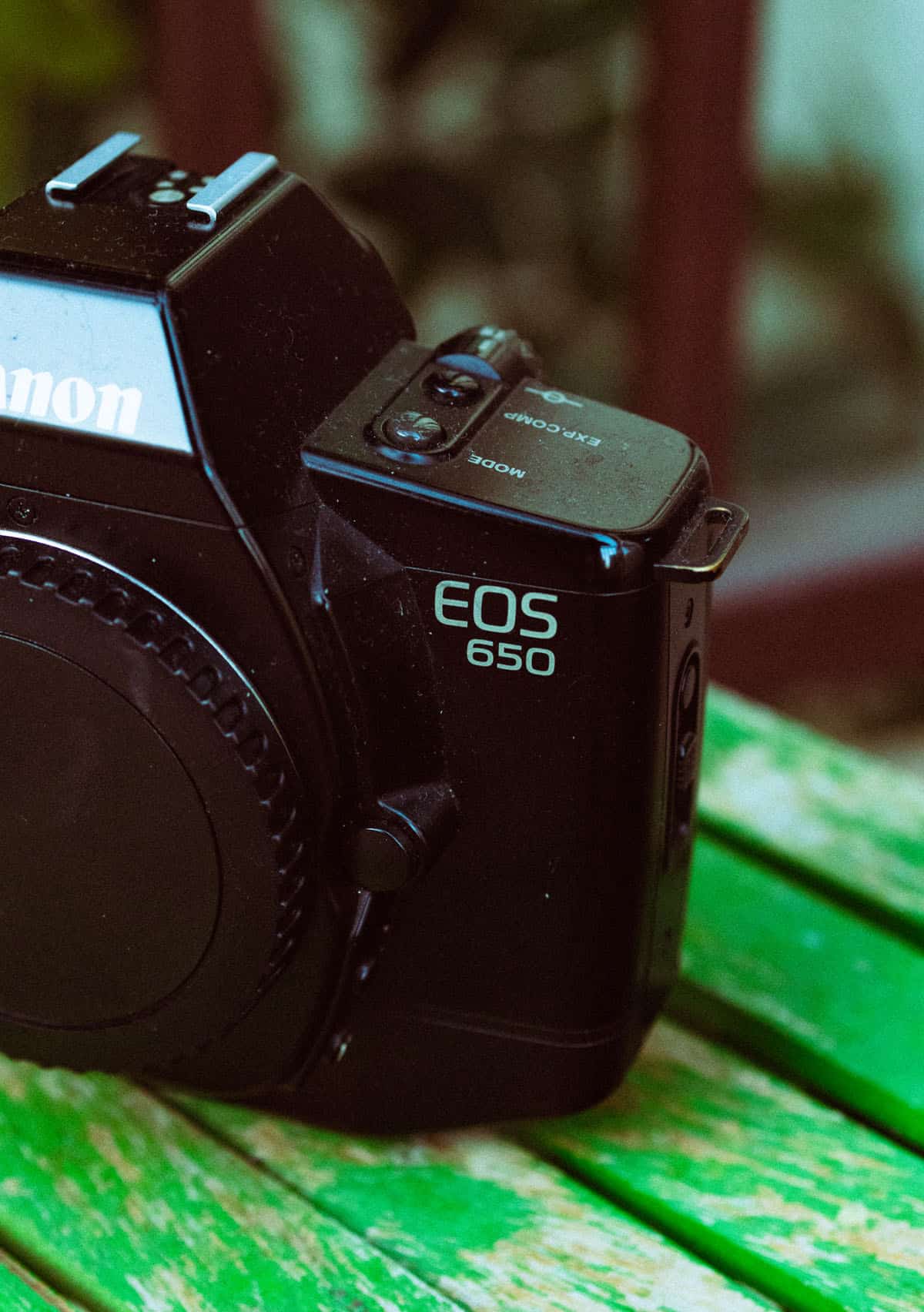
On paper, the specs sound almost adorable by modern standards. The Canon EOS 650 a 35mm autofocus SLR with shutter speeds from 30 seconds to 1/2000, continuous shooting at roughly three frames per second, One-Shot and Continuous AF, six-zone evaluative metering, partial metering, and Program, shutter-priority, aperture-priority, and full-manual exposure modes.
Format: 35mm film (24 x 36 mm)
Lens Mount: Canon EF mount
Focus: Auto
Shutter Speed: 30 sec to 1/2000 sec, plus Bulb
Flash Sync: 1/125 sec
Exposure Modes: Shutter-Priority AE, Aperture-Priority AE, Intelligent Program AE, Depth-of-Field AE, Flash AE, and Manual
ISO Range: ISO 25 to 5000 (DX-coded)
Battery: One 2CR5 lithium battery
Dimensions: 148 × 108.3 × 67.5 mm / 5.8 x 4.25 x 2.7 inches
Weight: Approx. 660g / 23oz (body only)
Film loading, advancement, and rewind are all automatic. It runs on a 2CR5 battery. There’s even Canon’s wonderfully strange Depth-of-Field AE mode, which feels like engineers in the 1980s sitting around a table asking, “Okay, what else can we make electronics do?”
None of this is going to impress someone coming from a modern mirrorless camera.
But I also don’t care.
Comparing a camera from 1987 to what we have now misses the entire point. The question I care about is much simpler: Can I still make photographs with it?
The answer has been an easy yes.
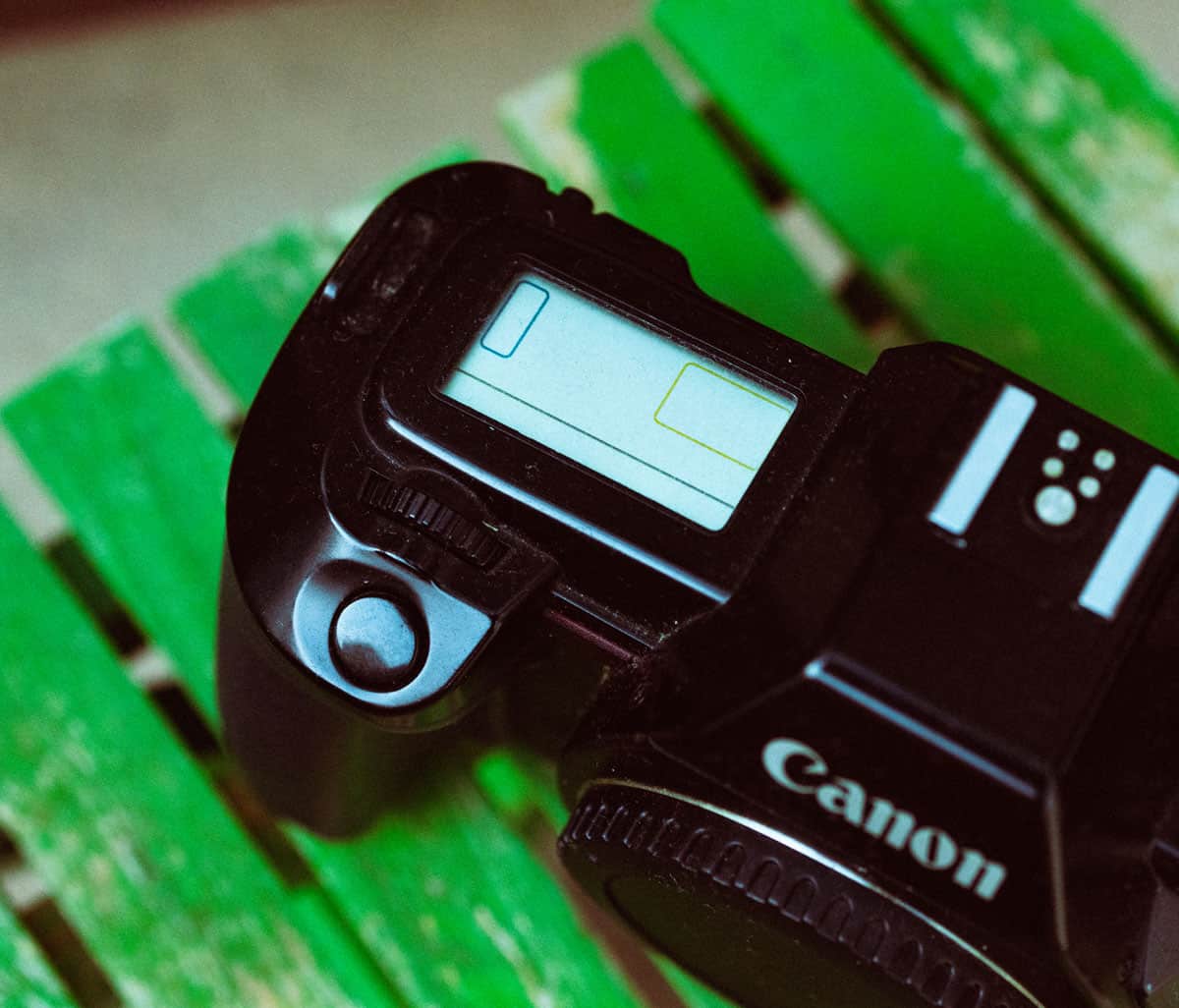
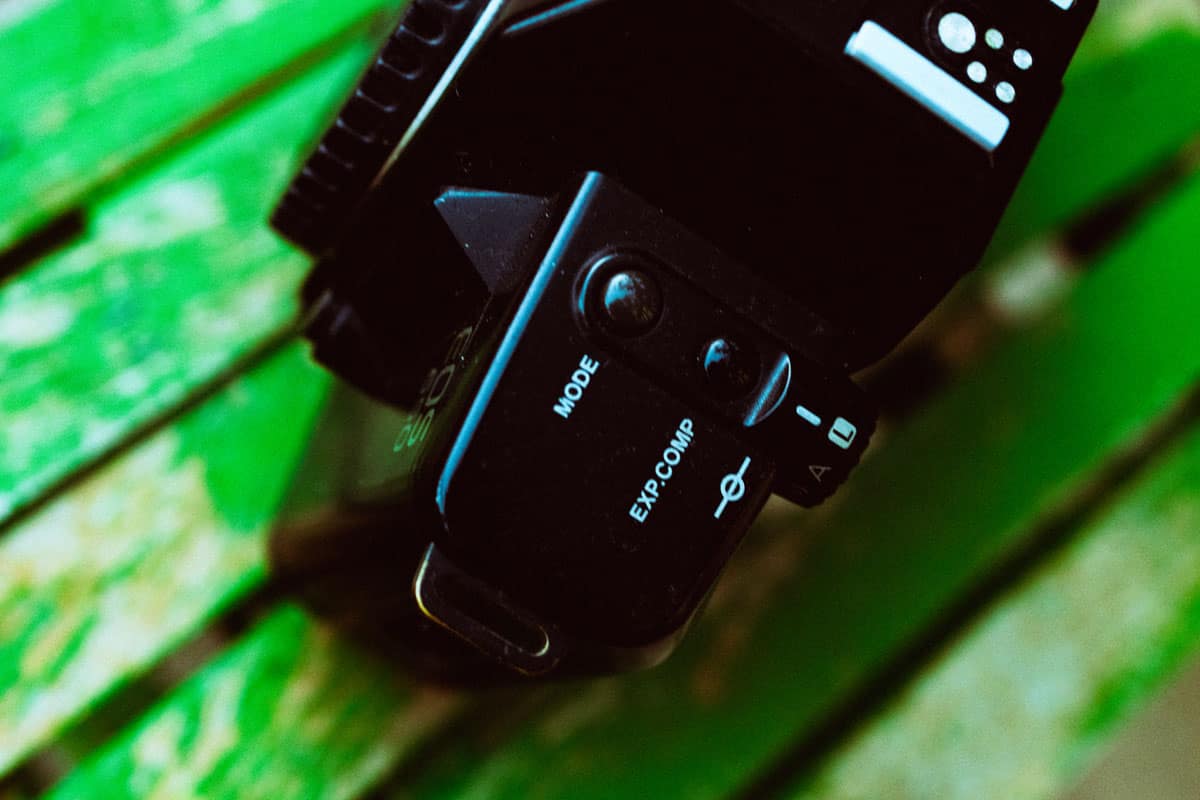
Using the EOS 650
A huge part of that answer comes down to the EF mount. This is where the EOS 650 starts feeling less like an old curiosity and more like a legitimate tool. You aren’t buying into some weird dead-end lens system with three overpriced lenses nobody can repair. You’re buying into decades of EF glass.
Put a small prime on it and the 650 becomes an easy walking-around camera. Put serious telephoto glass on it and suddenly this cheap old body starts doing things people probably don’t expect from it.
That’s exactly how I’ve treated mine.
I don’t baby it. I don’t put it on a shelf and admire its historical significance. I load film into it and go make photographs.
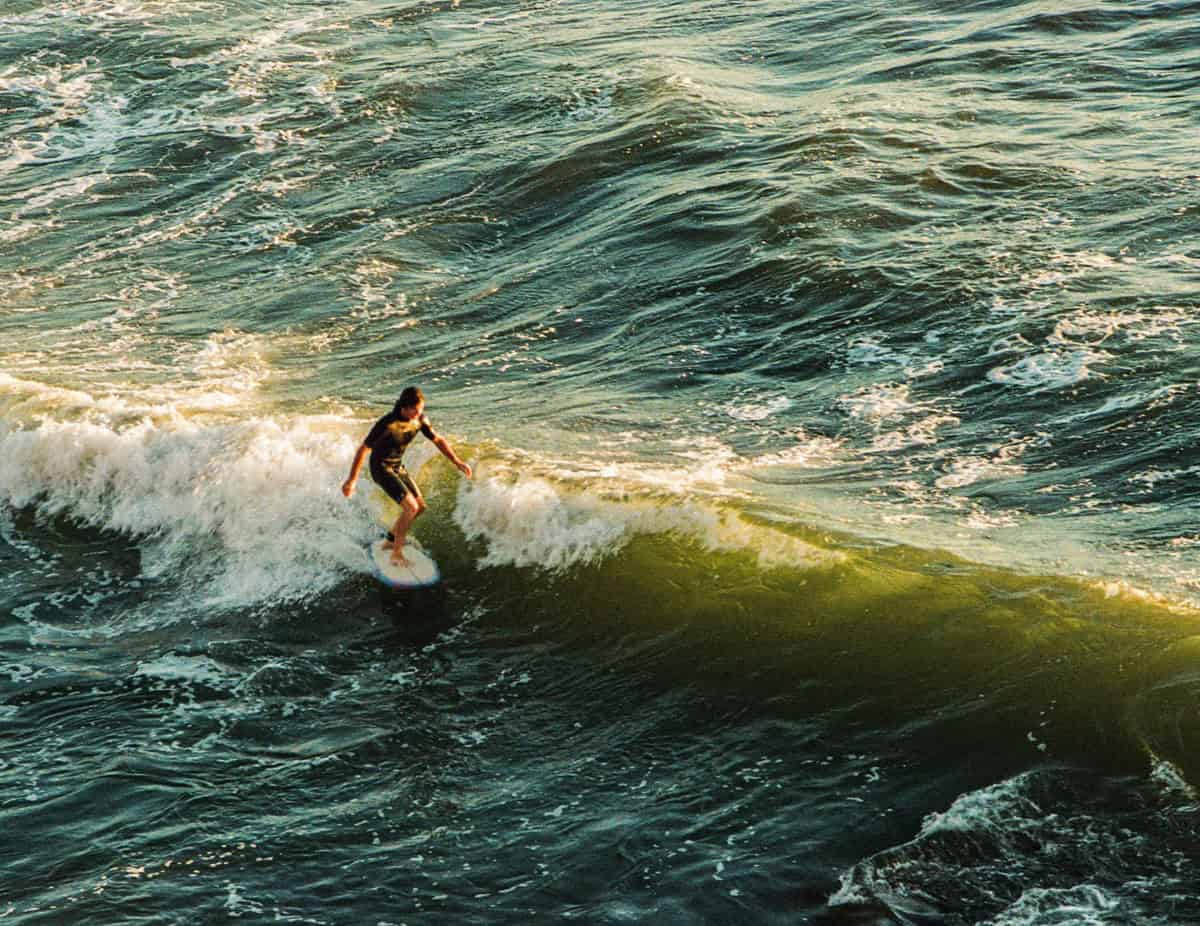
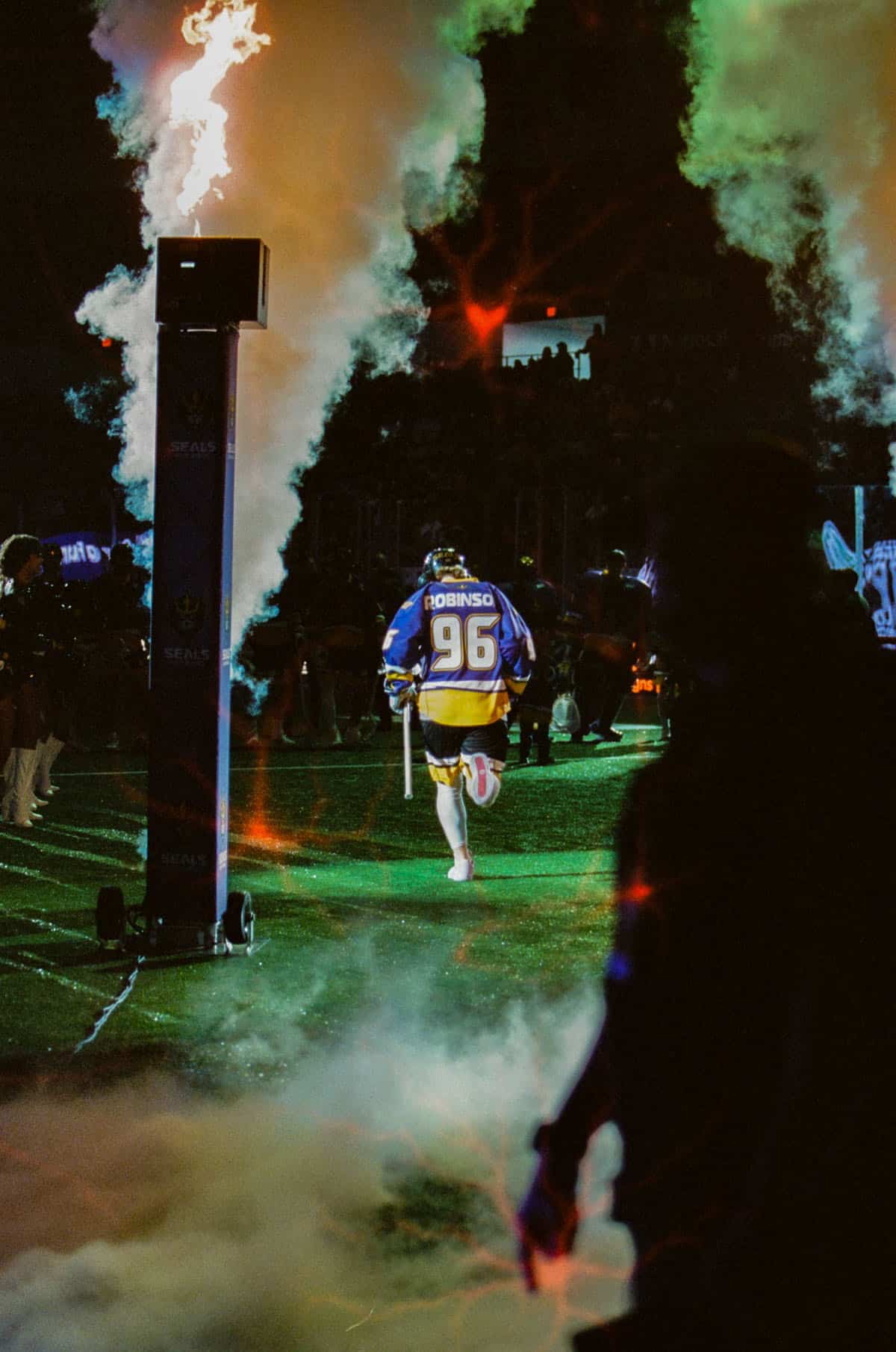
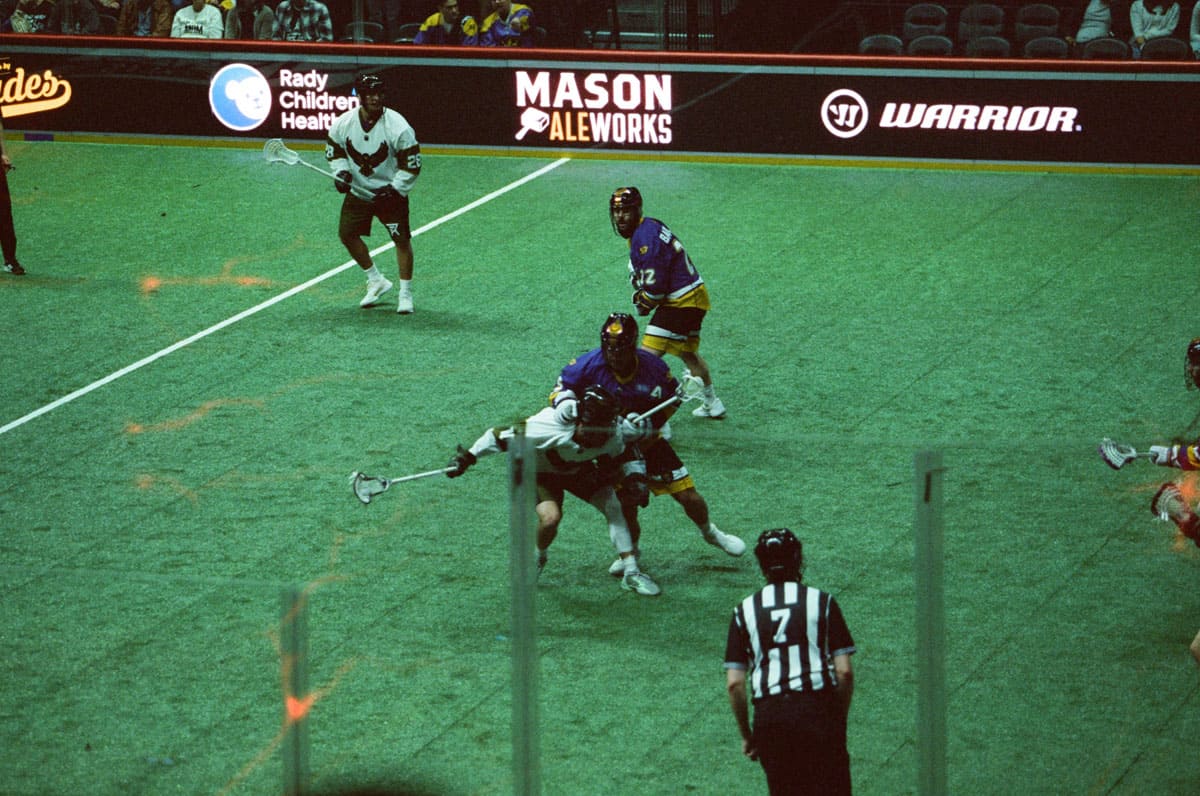
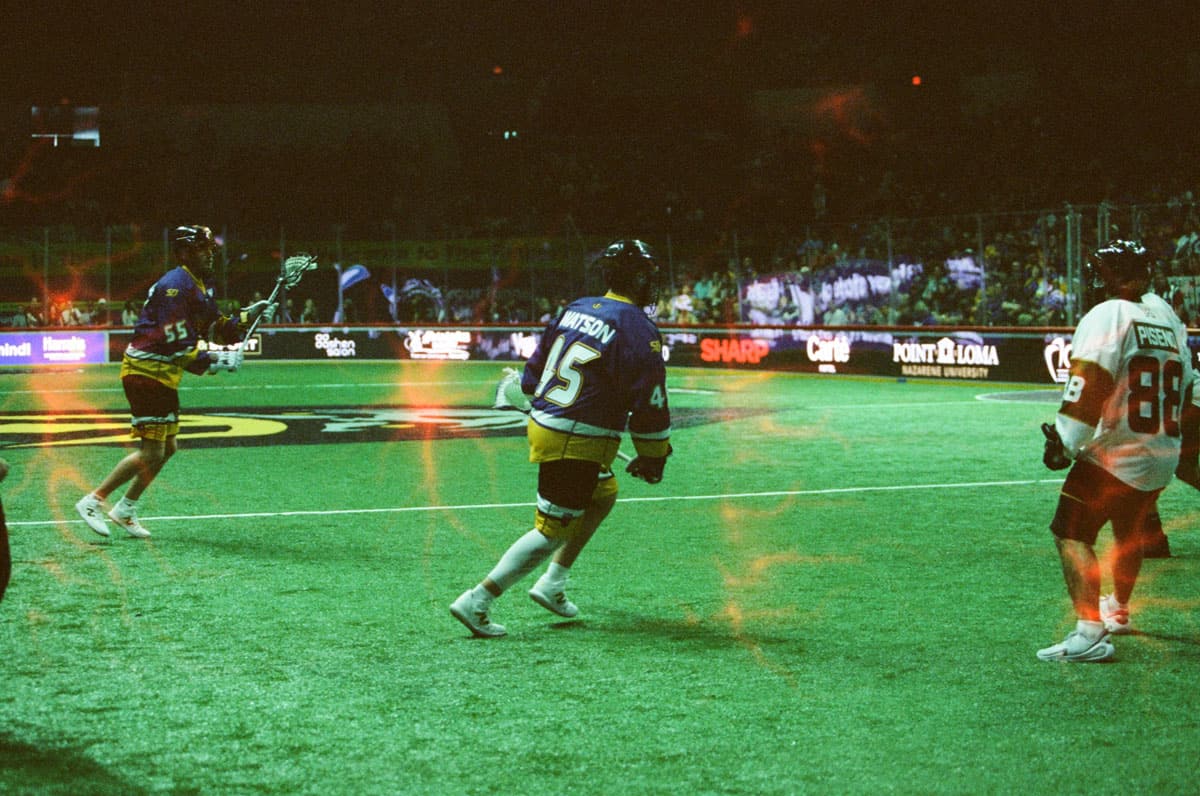
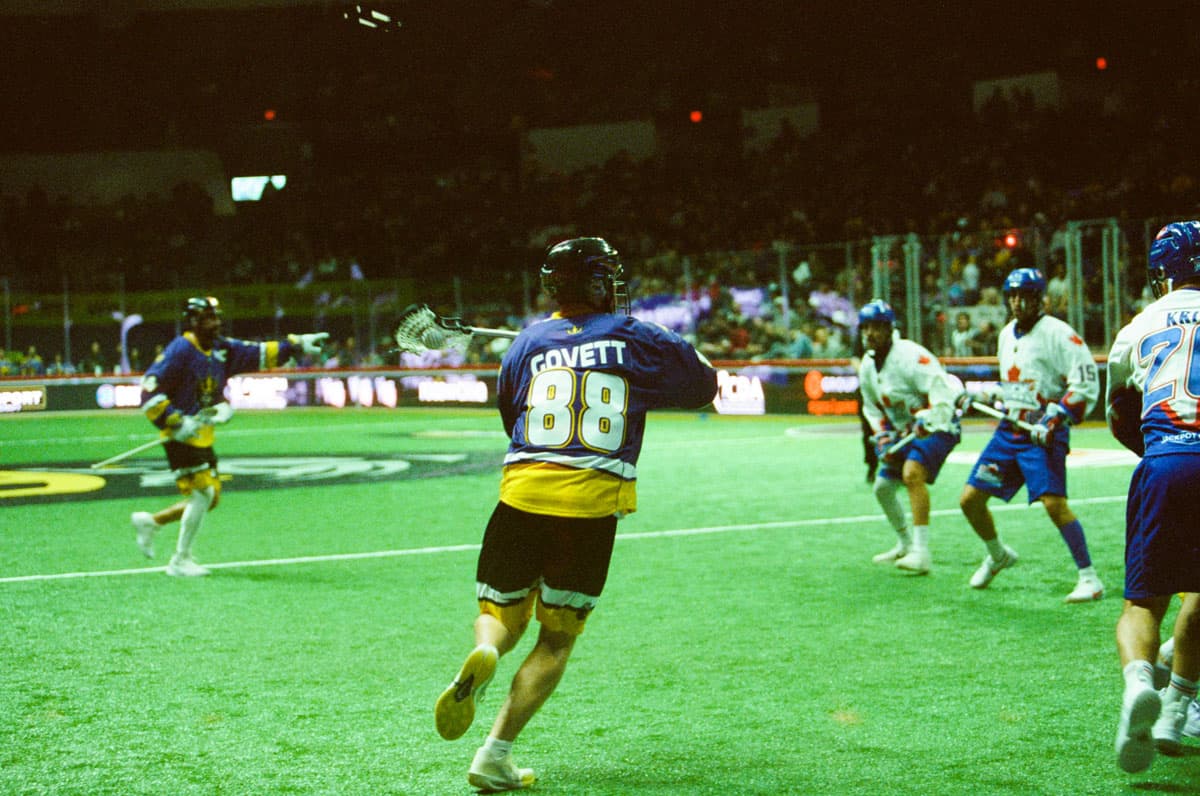
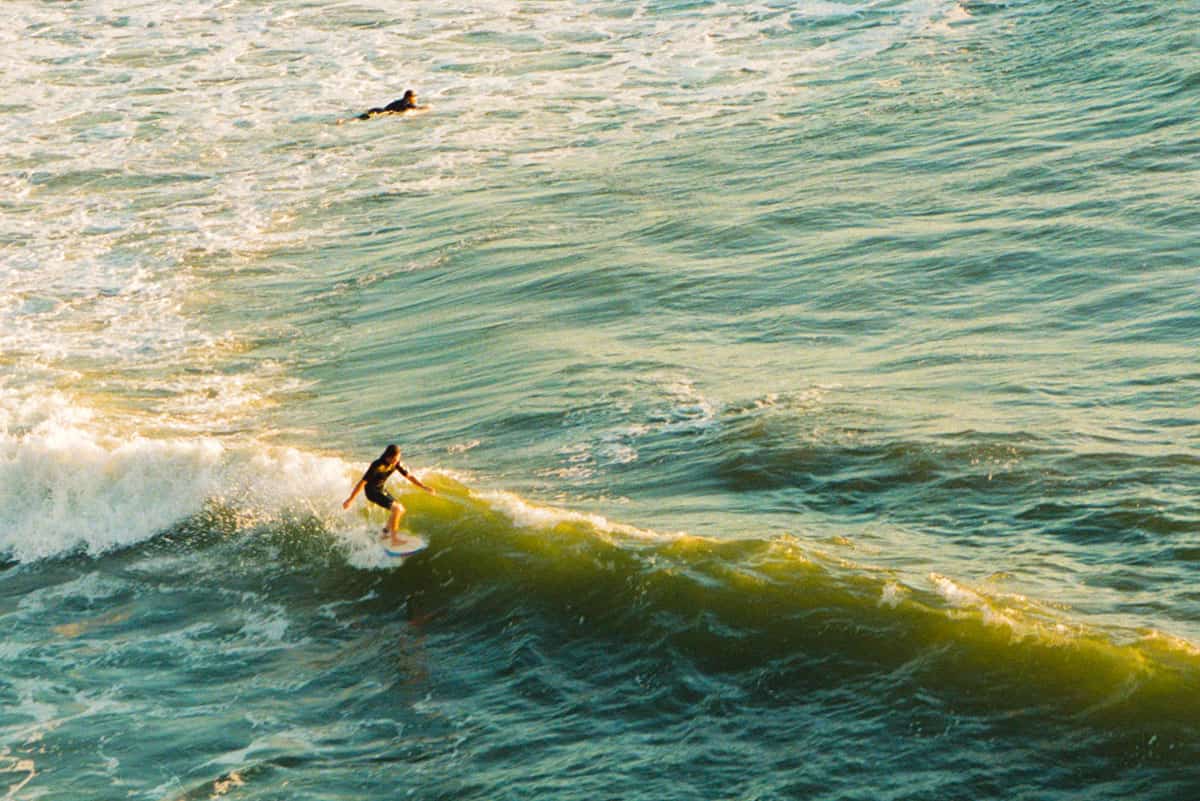
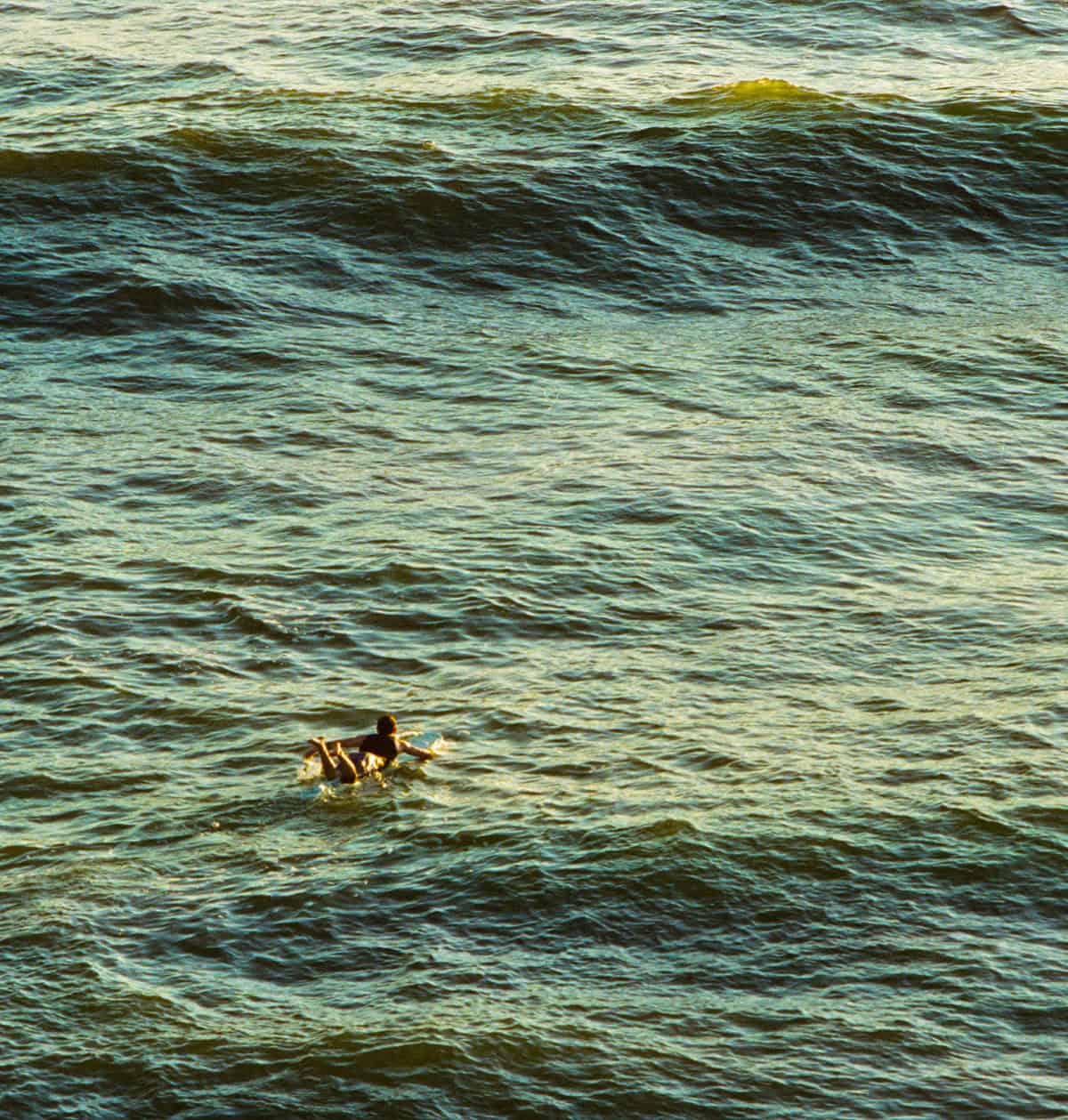
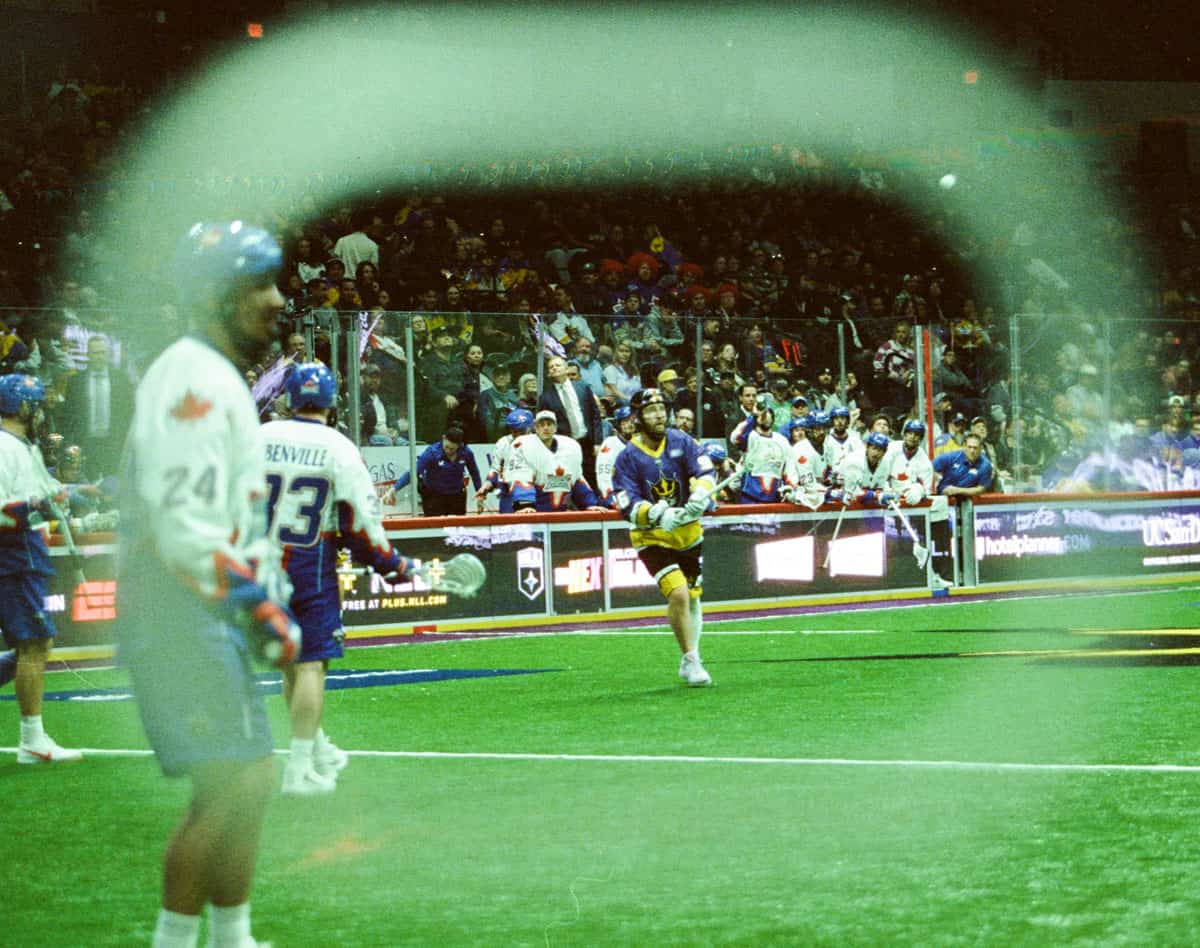
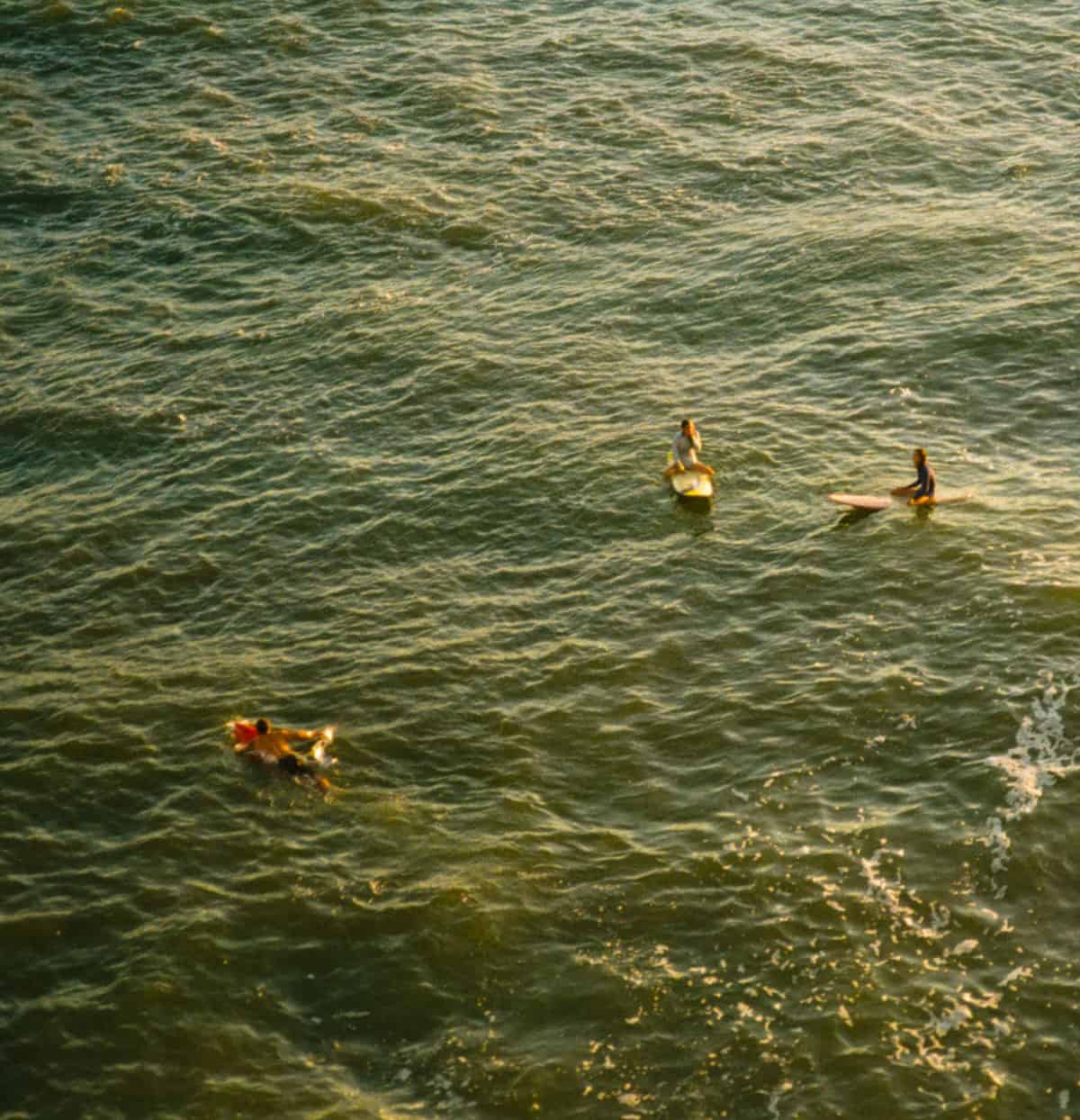
I’ve taken it out to photograph surfing. I’ve taken it into professional lacrosse. Two situations where an early autofocus film camera probably has no business being comfortable.
And that’s where I started really loving it.
Surfing and lacrosse are both chaotic in completely different ways. With surfing, you’re dealing with movement, distance, water, changing light, and a subject that might give you half a second before the moment disappears. Lacrosse is even more frantic. Players cut hard. Bodies overlap. Plays develop instantly. The ball moves fast enough that sometimes you’re just trying to keep up with what the hell is happening in front of you.
A modern sports camera is designed to remove a lot of that uncertainty.
Tracking. Subject detection. Insane burst rates. Autofocus systems that can basically recognize what you’re trying to photograph before you’ve completely figured it out yourself.
The Canon EOS 650 gives you… considerably less. I kind of love it for that. I had to pay attention.
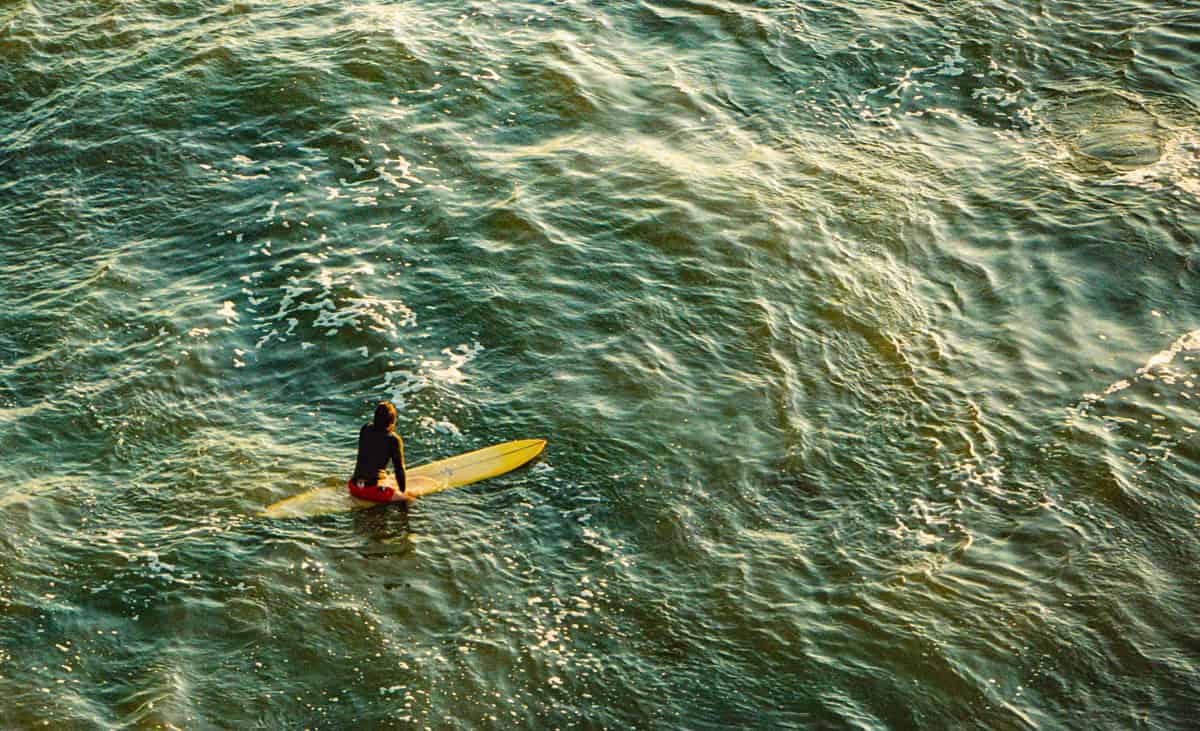

With surfing, I had to read where the surfer was headed instead of waiting for the camera to save me. With lacrosse, I had to anticipate where the play was developing and decide when it was worth burning a frame.
That part matters on film.
You don’t have 1,500 photographs waiting on a memory card at the end of the game.
You have a roll. Sometimes 36 chances.
That changes things. I missed photographs. Absolutely.
Some were probably my fault. Some were definitely the camera’s fault. And I’m sure there were moments where the autofocus system had absolutely no idea what I was asking it to do.
But I also made photographs I’m proud of.
And that’s really the entire argument.
Nobody looks at a finished photograph and says, “Yeah, but how many autofocus points did the camera have?”
The photograph either works or it doesn’t.
Working with Limitations
That experience has also reinforced something I’ve been thinking about a lot lately: photographers are really good at confusing limitations with incapability.
They’re not the same thing.
The EOS 650 has limitations. A lot of them.
One basic autofocus area. Three frames per second. A 1/2000 maximum shutter. 1/125 flash sync. Electronics that are now getting dangerously close to forty years old.
But none of those things mean you can’t make great work with it. Sometimes they just mean you have to participate more.
That’s not necessarily a downside.
The Canon EOS 650 also sits in this weird middle ground where it doesn’t really satisfy the romantic version of film photography.
There’s no advance lever to flick after every shot. No rewind crank. No beautiful metal shutter dial. Nothing about it screams “analog lifestyle.”
It has an LCD. It makes electronic noises. It loads your film for you. It winds your film for you. It rewinds your film for you.
Honestly, if your favorite part of shooting film is the ritual of operating a mechanical camera, the EOS 650 might bore you.
And that’s fair. I love that ritual too. But sometimes I don’t want to think about the camera that much. Sometimes I just want to photograph.
That’s where this thing shines.


A Film Camera that Gets Out of the Way
Loading it is stupidly easy. Drop in the roll, pull the leader to the mark, close the back, and the camera takes over. The viewfinder is clean. The metering is straightforward. The controls are very much from their era, but once you spend a little time with them, the camera mostly disappears.
That may be the biggest compliment I can give it. It gets out of the way.
There are still some wonderfully weird first-generation-EOS touches. Depth-of-Field AE is probably the best example. It’s an ambitious little feature that feels like a relic from an era when manufacturers were still trying to figure out what electronically controlled cameras could become. Partial metering is genuinely useful. The top LCD looks old because, well, it is old. The whole camera feels like the bridge between two different eras of photography.
You can almost feel Canon figuring it out in real time. And yet somehow, despite being historically significant, the EOS 650 is still cheap. Really cheap.
That might be one of my favorite things about it.
Film photography has gotten very good at turning ordinary old cameras into expensive personality traits. A camera shows up around the neck of the right photographer, gets hyped enough online, and suddenly something that cost $80 six months ago is worth $400 because apparently we all lost our minds together.
The EOS 650 mostly escaped that. I hope it stays that way.
Cheap cameras get used. They get thrown in bags. They go to beaches. They get dragged to games. They get scratched. They make photographs. That is what cameras are supposed to do.
Final Thoughts
If you already own Canon EF lenses, the EOS 650 makes almost too much sense. It’s an easy way into 35mm without rebuilding an entire system. For beginners, it removes enough friction that you can focus on actually making pictures instead of learning twenty new mechanical rituals at once. For experienced photographers, I think it becomes even more fun because you understand exactly what it lacks and realize how little of that actually matters once you start shooting.
Would I recommend an EOS 650 over an EOS-1V to someone who needs the absolute best autofocus film body Canon ever made?
No. That would be ridiculous.
The EOS-1V is objectively a far more advanced camera.
That’s not the point. The point is that most of us probably don’t need the best version of everything to make photographs we care about.
And I think film photography could use a little more of that attitude.
The EOS 650 will never be glamorous. It probably won’t become the next overpriced personality trait. Nobody is going to confuse it with a beautifully machined mechanical SLR.
But it started EOS. It introduced the EF mount. It helped define what Canon cameras would become.
And nearly forty years later, I can still put a roll of film in mine, point it toward a surfer moving across the face of a wave and come home with photographs I’m excited about.
I’ve missed shots with it. I’ve fought with it. I’ve learned when to trust it and when I need to do more myself.
And I keep loading film into it.
That probably says more than any spec sheet ever could.
The Canon EOS 650 is historically important because of where it sits in camera history.
But that isn’t why I love it.
I love it because it’s overlooked.
Because it’s cheap.
Because it’s imperfect.
Because it asks me to do a little more.
And because after all these years, the damn thing still makes photographs.
What more do I really need from a camera?

Thank you so much, Brendan! You can find more of Brendan’s work on his website and Instagram.
Leave your comments and questions about the Canon EOS 650 35mm film camera below in the comments, and you can pick one up for yourself at on eBay here.



Leave a Comment
Shoot It With Film on Instagram


Blog Comments
Eddy
September 25, 2026 at 1:28 pm
Nice Photos.I have a few of those and the 630. I bought them at a monthly camera show I used to help promote. I think I paid $5 for the bodies or $2.50. I am on my Fourth EOS A2. And an EOS 5 body which I heard is the same as an a2. That was the year of the sticky plastic bodies of all brands of camera companies at the time. I have so many cameras. Either they were free or $25 and under. You forgot to mention the camera can rake multiple exposures as I see in some of the photos you had in the article.