

Written by Derrick Buckner
The Nikon F mount is my preferred film camera system. I shoot with a handful of Nikon bodies and many lenses. Adding another system to the collection is not easy.
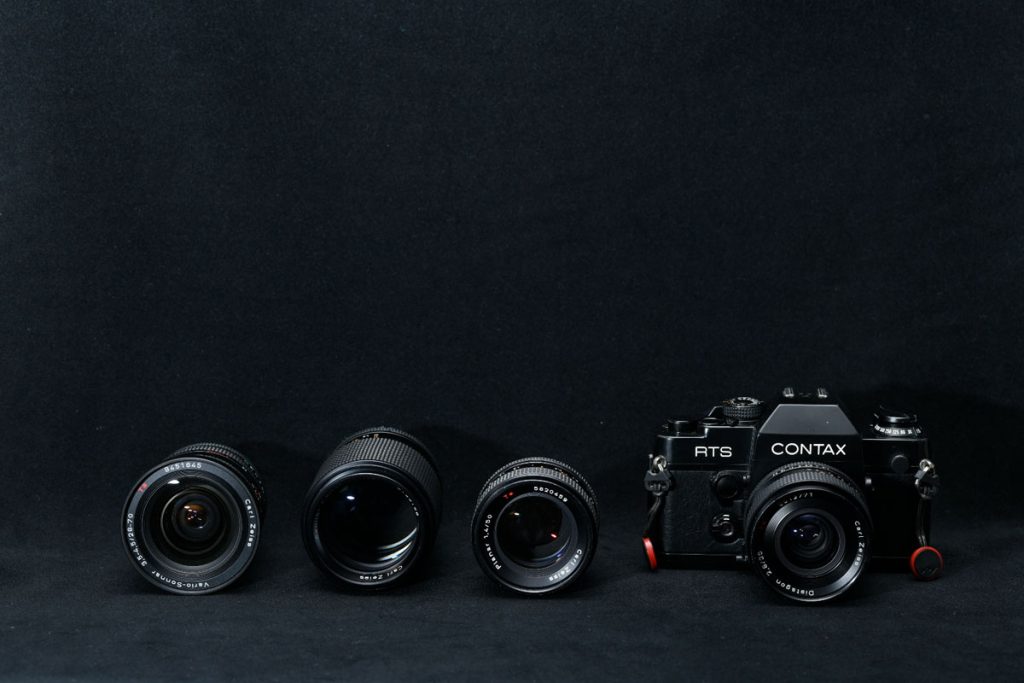
The Contax RTS II deserves its own place.
Find the Contax RTS II at KEH Camera or on eBay.
Why Add a Different Camera System?
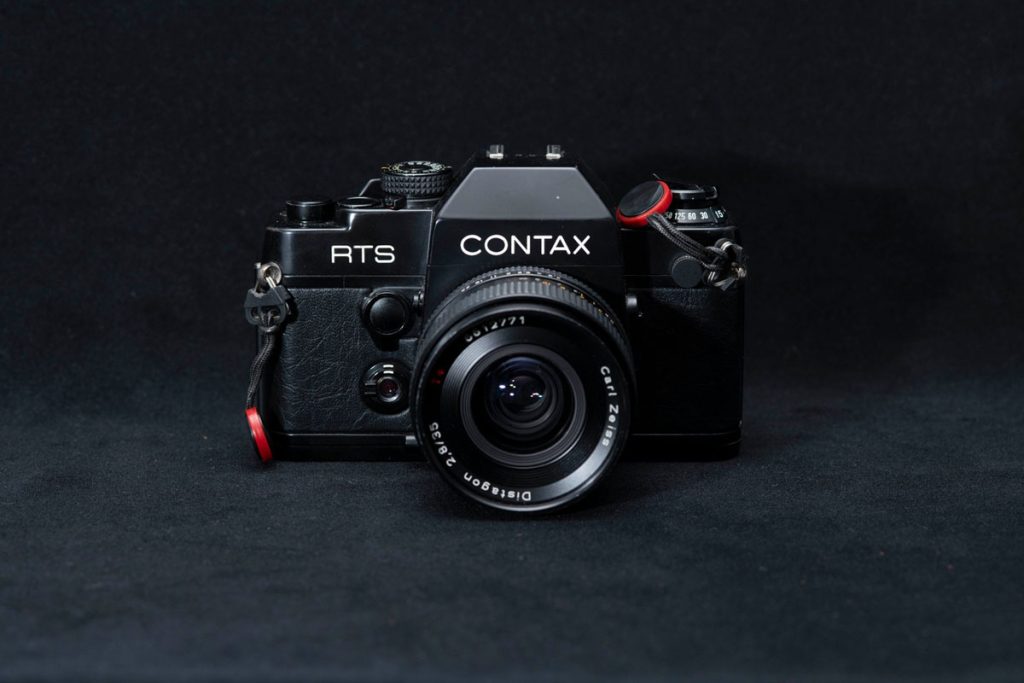
I could stick with my current system and not lose any image quality. The Contax RTS II offers a different way to capture images, and to understand that, we’ll have to look at Contax’s entire line of cameras.
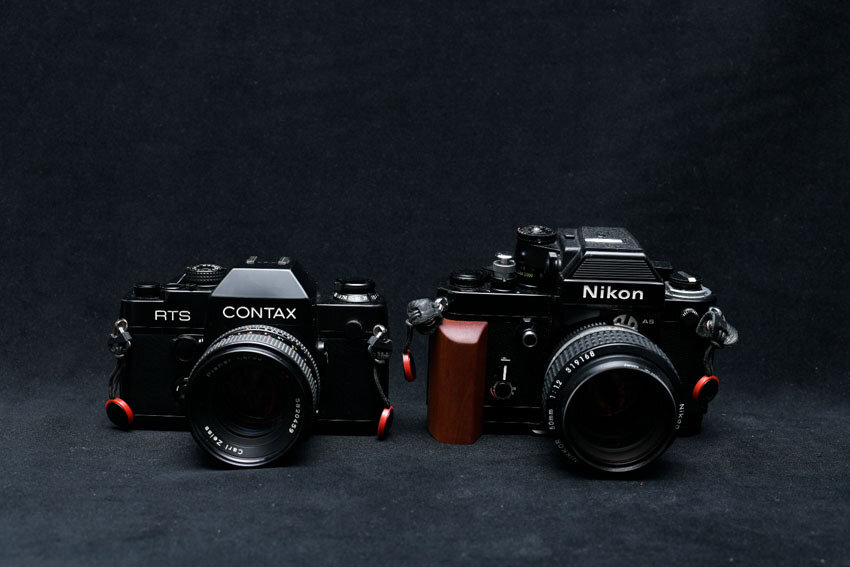
The Contax RTS II is the successor to the RTS. The original RTS was made by Porsche Design Studio and released in 1975. The goal of the RTS was to take on the Leica R Series. The RTS II was manufactured between 1982 and 1990 and competed against the Nikon F3 and the Pentax LX.
Other improvements over the original RTS included a 97% viewfinder and a titanium shutter. The RTS II also featured an AE lock, which was improved over its competitors’ AE locks of the time, because theirs didn’t keep the exposure locked indefinitely.
About the Contax RTS II: Features and Controls
Contax cameras are no longer in production, which means that all models are vintage. Bodies of the camera can be found on eBay. The condition of the body plays a large factor in price, but many cameras require repairs, which can quickly increase the cost of a camera.
The condition of a camera can vary, but mirror slip is a common issue. A defective camera can actually end up being more expensive due to necessary repairs.
The Contax camera system has a small variety of lenses and accessories. I have no experience with the accessories, but a motor drive and real-time winder are a few of the accessories that were made during production. A data back can also be found on the market.
The RTS II has an auto shutter speed that ranges from 16 seconds to 1/2000 of a second. There are 16 manual settings that range from 1/2000 of a second to 4 seconds, a bulb setting, and a flash sync speed of 1/60 of a second.
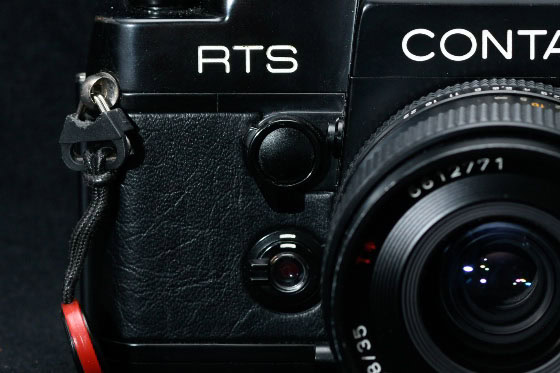
If the battery dies, the shutter can still fire at a mechanical 1/50 of a second, but not from a top plate control. A small lever near the lens mount, next to the DOF preview button, engages it: push the lever forward, then press the DOF preview button to fire the shutter.
The RTS II has a 10-second self-timer controlled by a quartz timer. Mechanical cameras use a ticking sound for the countdown, but the RTS II uses a red LED. The LED flashes to show how much time is left on the countdown.
The RTS II has simple manual controls for film speed and no DX coding. For film speeds, you simply have to turn a crown. The speeds range from ISO 12 to 3200.
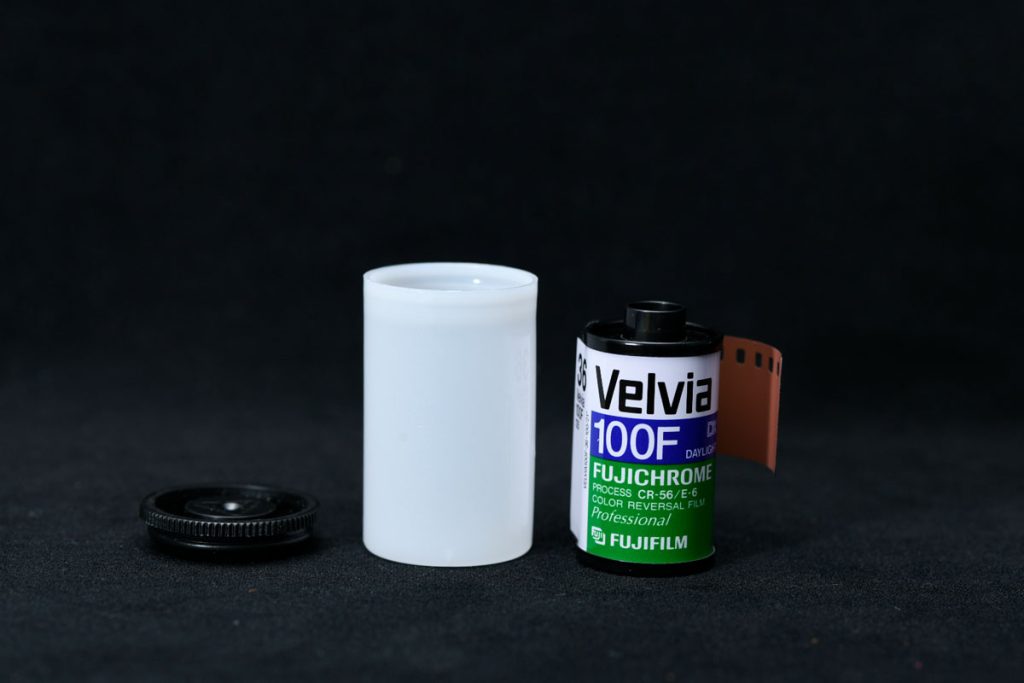
Loading the RTS II is like any other SLR of that time. The take-up spool has several slots for the leader. Feed the leader to a sprocket. This is easier than trying to line up a small slit.
A final check is to make sure both rows of perforations are lined up with the sprockets. Catching a loading mistake while you can still see the film saves you a frame or two rather than losing the entire roll.
When closing the back of the RTS II, make sure you watch the rewind knob and confirm the film is actually feeding. You do this by advancing to frame 1 and watching the white line on the rewind knob. The line should turn with each stroke of the advance lever.
To reach frame 1, you have to advance through a series of blank frames, and along the way, the shutter speed is set to 1/60 and is locked, meaning it won’t change based on the camera’s speed dial. I imagine the reason for this is so the user can quickly shoot the blank leader frames. After frame 1 is shot, the shutter speed is changed back to what is set on the dial.
The film back is pretty standard for SLRs of this time. Like most film backs of the time, it opens by pulling on the rewind knob. It also has a small holder for the end of the film box. The back is also removable, mainly for maintenance or to run the Data Back D-4 for date and data imprinting. I haven’t personally used the Data Back D-4.
The RTS II uses a center-weighted TTL metering system with an SPD sensor. It can read light levels from -1 to +19 EV at ISO 100. It uses a single PX28 battery and has accurate exposure readings. I have found it very reliable.
The performance of the exposure meter depends on a number of factors, the type of battery used in particular. Using silver oxide batteries is recommended, since self-discharge in alkaline batteries is more likely in colder conditions. Contax sold an external power pack to keep the battery at body temperature and alleviate self-discharge.

C/Y Mount Lens System
The lenses are the main draw of the Contax RTS system. That said, the body is not an afterthought. The RTS II is a solid, well built camera that I enjoy using, and that matters. If you don’t like the body, you probably won’t enjoy the glass either.
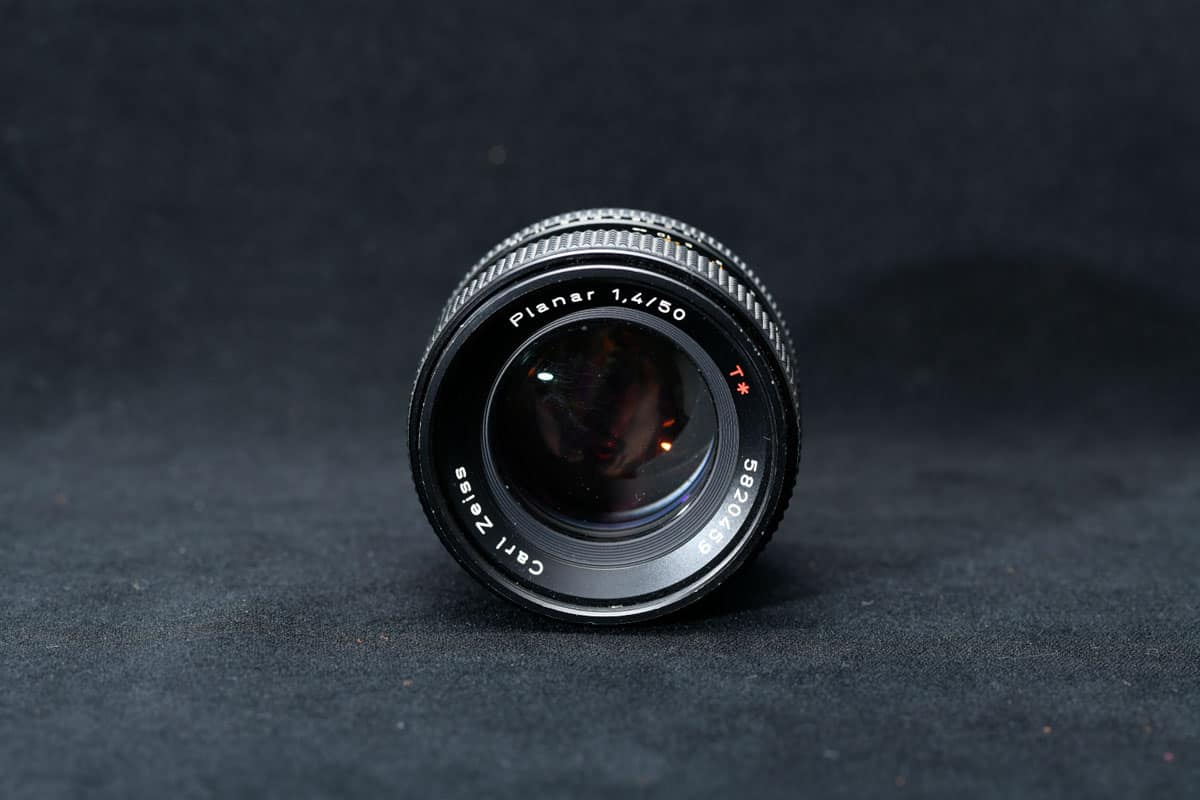
Zeiss Planar 50mm f/1.4 Lens
The Zeiss Planar 50mm f/1.4 lens is the crown jewel of the C/Y mount system. As Zeiss’s top-of-the-line 50mm offering, it features a refined 7-element, 6-group Planar design.
The Planar design is a staple of Zeiss lens designs, with its origins dating back to the late 1800s. The Planar design allows for crisp, vivid images and is coupled with a T* anti-reflection coating. The mounts and exterior of the lens are of all-metal construction, a standard that was discontinued by most lens manufacturers in the early 1980s.
Like most other 50mm f/1.4 lenses, it has pleasing out-of-focus backgrounds. When wide open, the lens renders images with a fair amount of character, leaning toward character over clinical precision. The 6-blade diaphragm shows through as hard, geometric highlights once stopped down. The bokeh and backgrounds are quite pleasing even at close minimum focus distances. The bokeh and backgrounds become more stark and edgy as subjects are placed further away from the lens.
The T* coating allows for excellent contrast and color fidelity, and chromatic aberration at f/1.4, though noticeable, mostly clears up by f/2. Similarly, vignetting and corner sharpness improve with a slight stop down.
At the maximum aperture of f/1.4, center sharpness is decent, but not best-in-class. Period lenses, like the Canon nFD 50mm f/1.4, outresolve it. Modern lenses outright surpass it. Stopping it down to f/5.6 tightens it up. Of the four lenses that I have for this system, it’s the most used.


Related: An Honest Review of the Contax T2
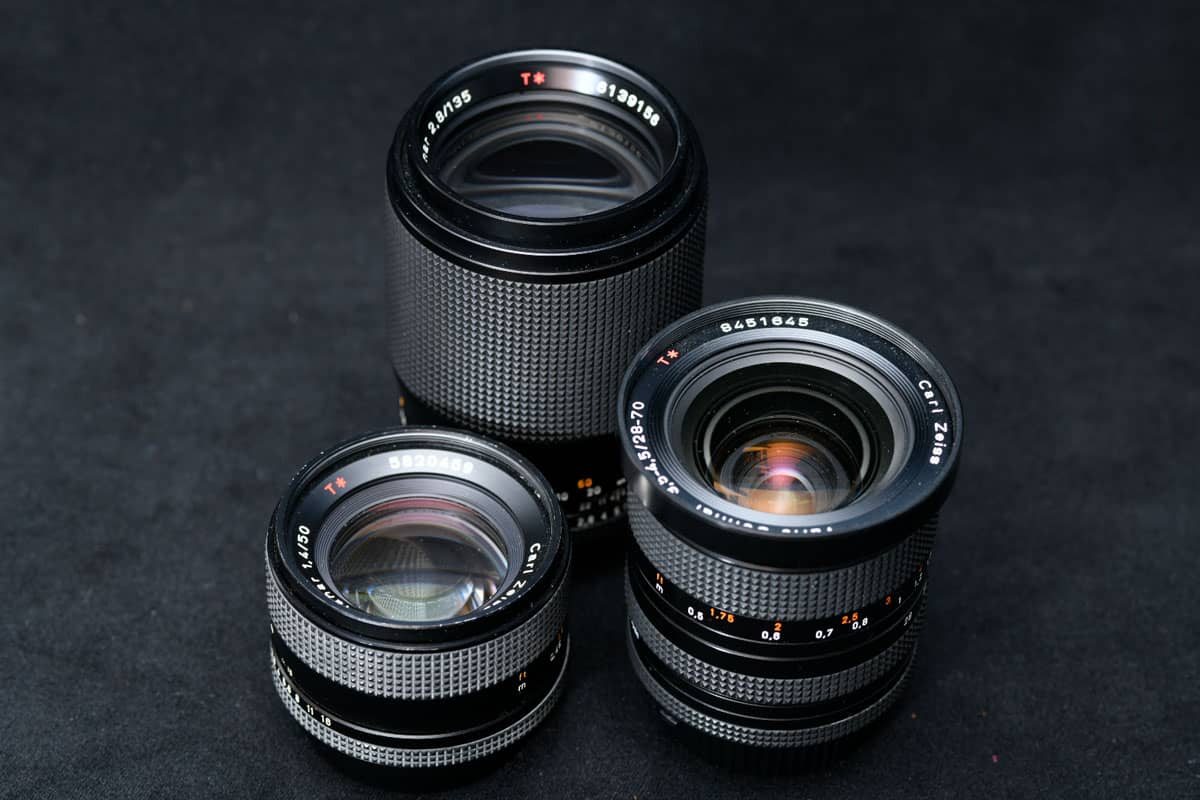
Zeiss’s 35mm f/2.8 Distagon Lens
Zeiss’s 35mm f/2.8 Distagon is an old but extremely well-regarded design. Wide-angle lenses for SLRs of this era used a retrofocus design, which moves the rear element back from the film plane so the mirror can flip up without hitting anything.
Controlling distortion was a major concern for these lenses. For a retrofocus lens, distortion is well controlled on this one and not an area of major complaint.
From my use of the lens, it holds contrast and sharpness well for a wide-angle lens. The periphery of the images shows less than average light falloff at f/2.8. Images remain sharp all the way to the corners of the frame at wider apertures and, based on my use of the lens, exhibit excellent sharpness and contrast.
It exhibits noticeable flare when used in situations where the background is very much brighter than the subject. In such cases, it is wise to guard against the backlit conditions that cause flare.
This lens has very good sharpness and contrast throughout the aperture range (f/2.8 to f/11), with sharpness peaking in the f/5.6 to f/11 range. It is known to have low CA, even in out-of-focus areas. When this lens is used for a variety of short- to medium-range photography situations, it excels at capturing very sharp images. Excellent documentary lens.
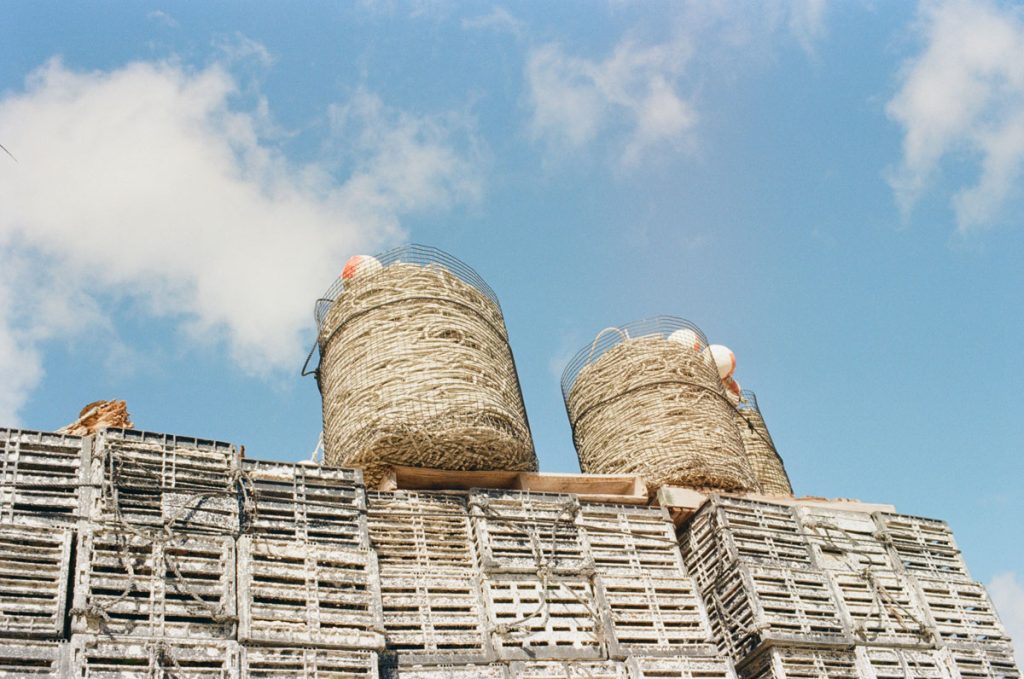
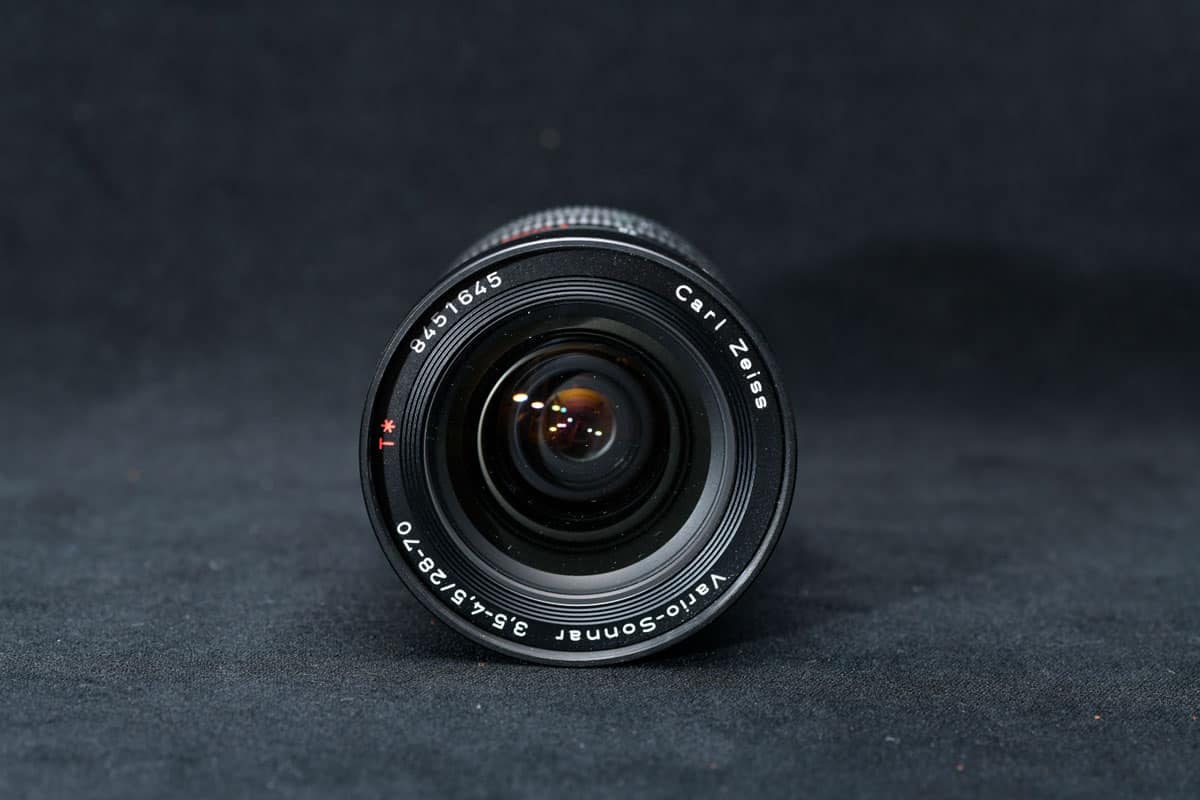
Vario-Sonnar 28-70mm Lens
The Vario-Sonnar 28-70mm (find on eBay) is the final lens of the kit, and it is built to a standard most zooms from that era don’t reach. Zeiss made this lens to provide photographers the best of both worlds: the image quality of a prime lens with the convenience of a zoom.
The Vario-Sonnar 28-70mm has a similar build and weight to that of the Zeiss 50mm Planar, and has two independent, interlocking, precision-adjustable rings for focus and zoom. The lens also has a built-in macro function.
The lens is usable wide open and sharpens up nicely across the frame by f/5.6 to f/8, with fairly consistent performance through the zoom range. Color and contrast are where it is strongest.
Bokeh is the weak point, busy rather than smooth in complex backgrounds, which suits a documentary look more than a shallow depth of field one.
This lens has not been used a lot, but based on what I have read, it is a really good all-around lens that may even excel at different types of photography.

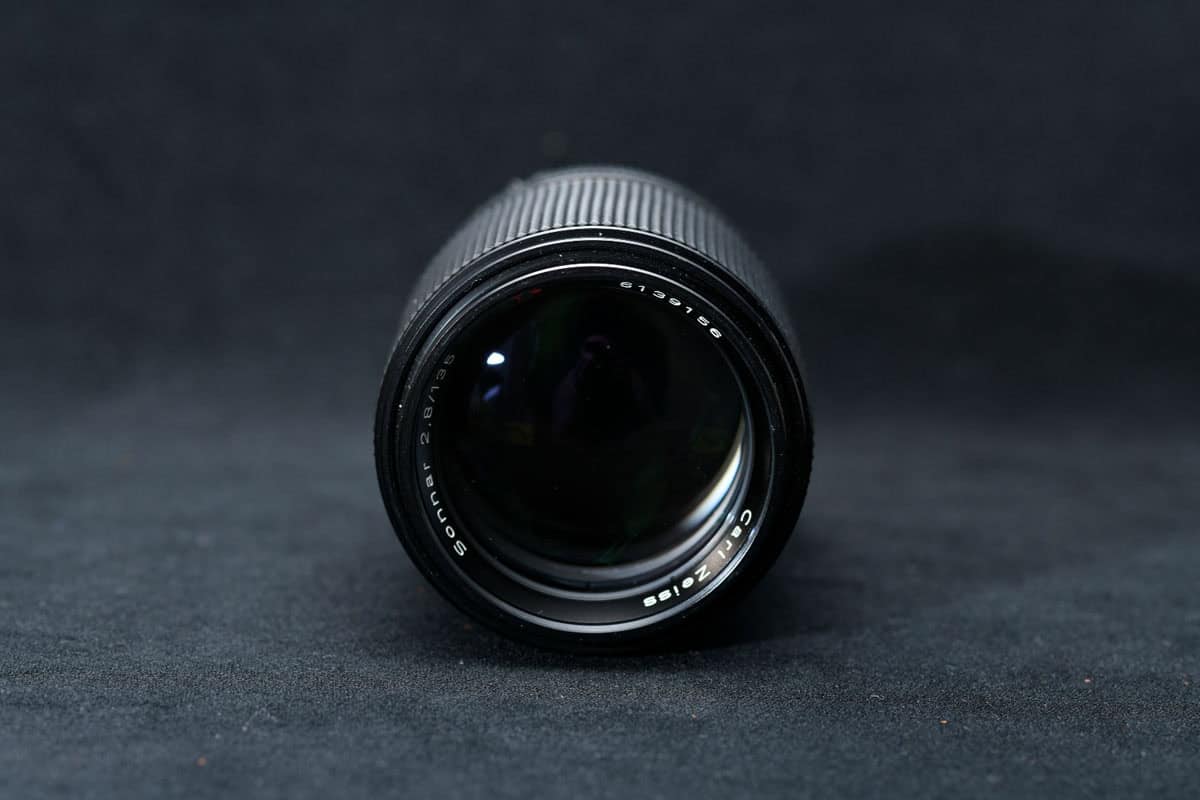
Zeiss’s 135mm f/2.8 Sonnar Lens
I also own Zeiss’s 135mm f/2.8 Sonnar. It is a design going back to the rangefinder era, and it uses five elements in four groups.
It is fairly sharp in the center even wide open. There is a good deal of color correction in the lens, and the aperture is large enough to create a pleasing bokeh wide open.
It is very smooth, but the six-blade aperture doesn’t contribute to circular bokeh. The edge of the bokeh starts to develop hard edges, and the aperture starts to become uneven by f/4.
The best apertures at which to use this lens are wide open or stopped down to f/5.6. Bokeh really only maters if the background or foreground is important to the image, and in those cases, an aperture of f/5.6 or smaller would be beneficial.
This lens has not been used a lot and has only been shot while scouting for other work. The images show good contrast and sharpness, and good color, similar to the other Zeiss lenses I have. It probably isn’t something I can review at length, but I can say what little I know.
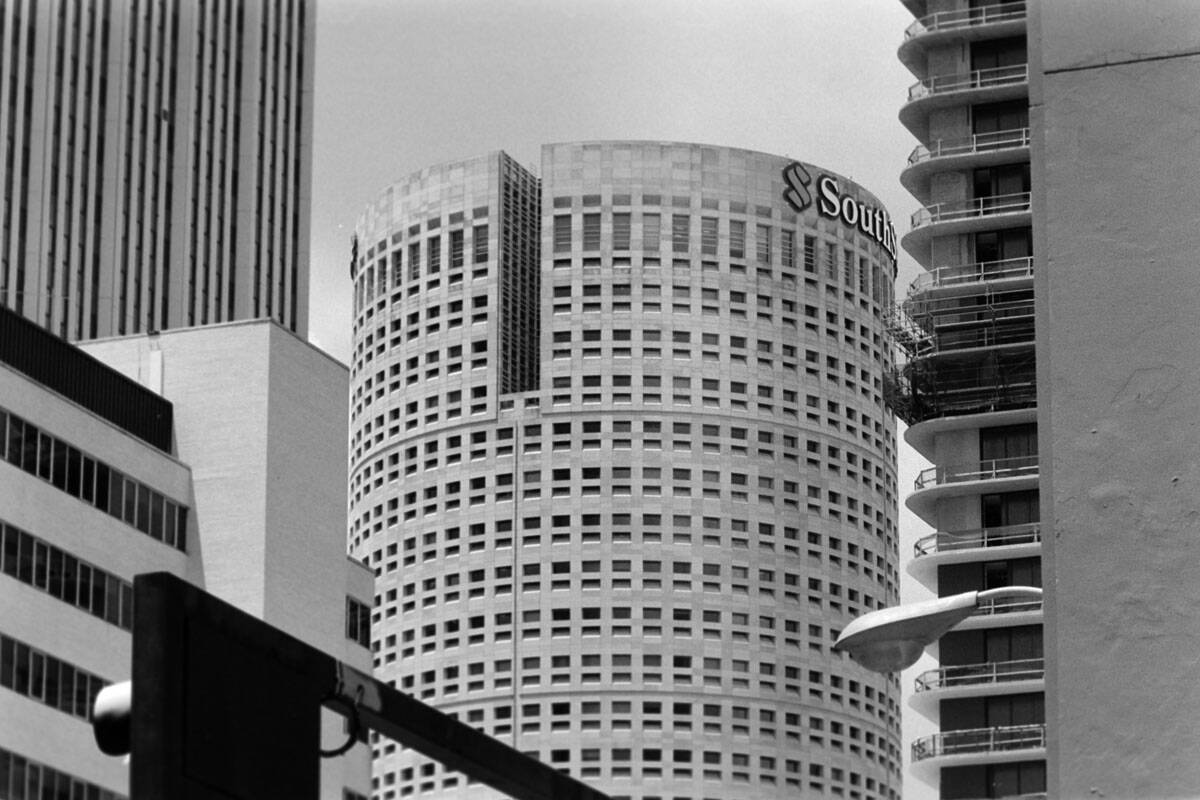
What It Actually Does: Using the Contax RTS II
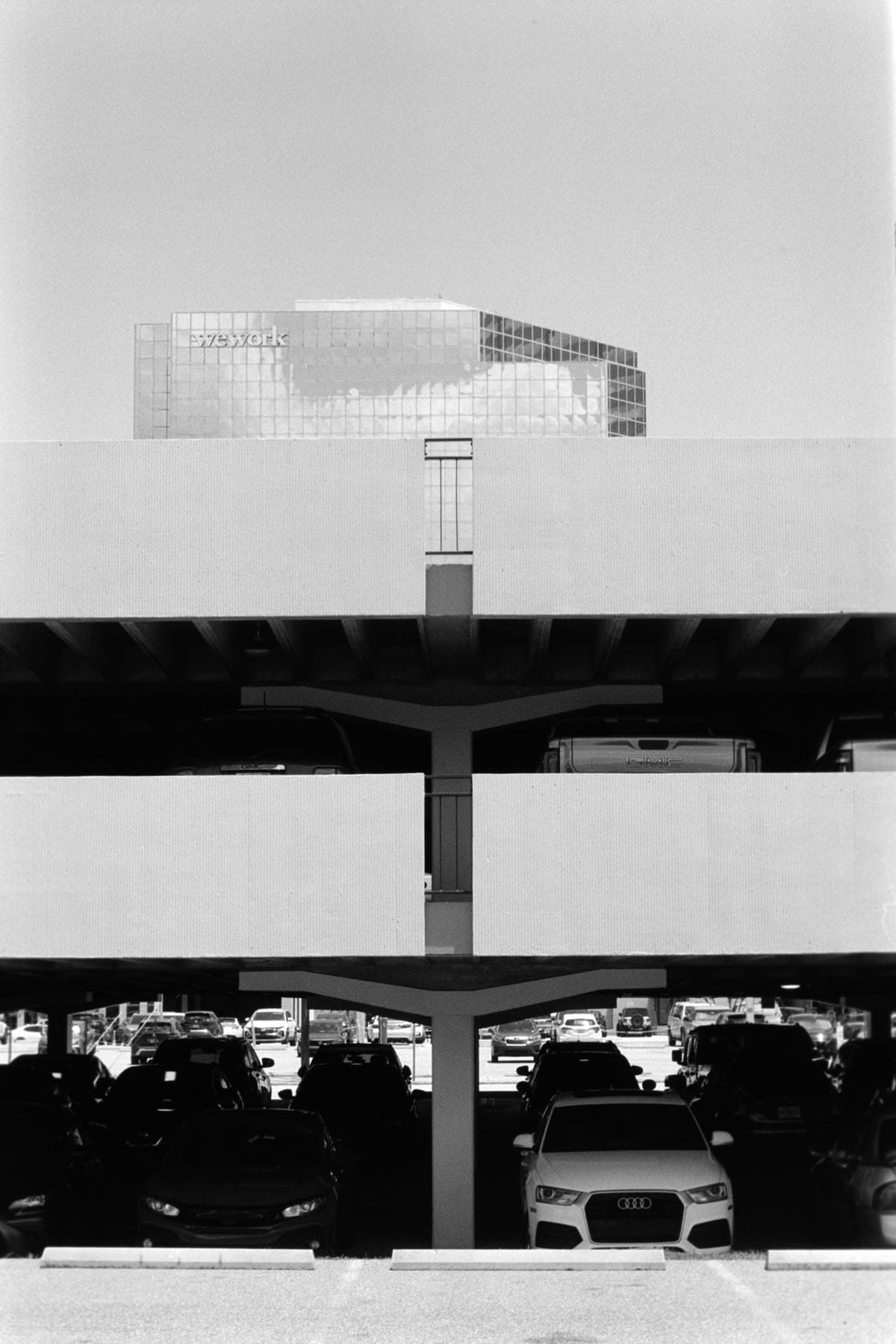
I have only shot the Contax RTS II on a couple of projects so far: “After the Cigar,” a documentary about Ybor City’s last operating cigar factory, and “Dead Flea,” a project about flea markets in the Tampa Bay area, plus a few rolls during a photo walk to Tarpon Springs and other miscellaneous rolls just to test the camera.
I would say I have about eight rolls of film shot with the camera, so it’s still really early for this camera and me, but it is already really fun to use. There is really nothing remarkable about its specs that makes it special; it is really the size that makes it special.
For an SLR, it is surprisingly small and light, about 735g/1.6lbs without the battery. The smaller size makes it really comfortable to shoot with all day and causes less strain than some of the larger bodies I have used.
The controls are also really nice and ergonomic; nothing is really buried in menus. The only exception to this is the meter reading system. Most cameras of its time have a half-press shutter release to read the meter, but this camera has an exposure check button. When pressed, this button illuminates the LEDs in the viewfinder, which then display the exposure info. I really wish I had known about this feature before using the camera, because it takes some getting used to. I really wish the manufacturer had put in a half-press shutter button, because that is something all other cameras have.

I’ve shot with weirder camera designs and, to be fair, the controls take only a very minor, momentary adjustment. The body is pretty good looking; I’ll give credit to Porsche Design Studio for doing their job. Anything with a camera design that catches the eye is always nice; it encourages you to take pictures and gives you that extra reason to take your camera with you.
When it comes to the viewfinder, as long as you aren’t shooting in pitch black, you can easily do manual focus. It is rated at 97% coverage with 0.87x magnification, and it is noticeably brighter than Contax’s mid-range 139 and 137 bodies.
Focusing is also quite easy because of how bright the viewfinder is. However, the base screen is a microprism and lacks a split image, which can be a deal breaker for some, especially if you are used to that method of focusing.

Where It Falls Short
All modern cameras have negative aspects, and the RTS II has its share.
Of these, the most prevalent is mirror slip. The mirror on this camera is held in position with a sticky substance, which, over the years, breaks down and allows the mirror to slip down or forward. If the mirror slides down too far, it can obstruct the lens element and/or jam the mirror return mechanism, preventing the viewfinder from returning to its normal status.
Some owners report that a temporary fix, until the adhesive breaks down to the point that the mirror slips further, is to cycle the shutter and/or replace the batteries. Others report that the mirror is properly positioned and sticks down for a number of years.
The only permanent solution to this problem, and all others associated with this camera, is to have the camera serviced by an experienced repair person. The cost of this service varies from very little to a considerable amount, depending on the condition of the camera and how long it has been since the camera was serviced.
A heat gun can be used to temporarily repair this problem by repositioning the mirror, but the same problem will occur again, and the repair will only buy a short time before the mirror needs to be repositioned again.
If you are considering the purchase of this camera, listen for the mirror to return to its normal position after each shutter cycle and make sure it does so. Be prepared to have a CLA (Clean, Lubricate, Adjust) performed on the camera, no matter what the seller tells you.
The shutter release is incredibly sensitive and fires at the mere touch of the button. Users tend to believe they have misfired a shot, as this happens unexpectedly. It is simple to learn to work around this issue, but users tend to change their style of shooting and how they hold the camera.
The metering system is center-weighted, meaning that the RTS II is unable to utilize different metering systems as later cameras can. If you are coming from a later model Contax body or from any other modern camera, you will have to get used to older systems and their lack of features.
Should You Buy a Contax RTS II?
If you are happy with the system you are committed to, I wouldn’t recommend switching mounts just for the RTS II. The Nikon F3, Pentax LX, and Canon New F-1 are also excellent bodies and can rival the RTS II in its category.
The main reason to choose the RTS II over them is the Zeiss glass. If you want to shoot Zeiss lenses on a body made for them, and the RTS II’s specs and handling suit the way you work, this is a truly premium body in this mount, and you can enjoy it for years. If you don’t care about the Zeiss lenses, the other bodies can do the job.
This model isn’t lacking in specs either. Most selling points for this model are highly subjective, and the final call on this one is up to you.
If you choose to purchase this model, you should budget some extra money for deeper cleans and maintenance, as the electronics in this model are quite old. Additionally, the mirror assembly in this model is also prone to slipping, which is quite common with used models. If possible, try to look for a seller that has recently serviced the camera. Also try to test the camera to see if the mirror assembly returns properly.
In my opinion, this camera has a lot of personality and character. With age come some defects, but with regular servicing it holds up rather well compared to its rivals.
Thank you so much, Derrick! You can find more of Derrick’s work on his website, Substack, and Instagram.
Leave your questions about the Contax RTS II below in the comments, and you can pick one up for yourself at KEH Camera or on eBay.


Shoot It With Film on Instagram


Leave a Comment