

Written by Jennifer Stamps
With brand-new Polaroid cameras on the market and vintage models still going strong, diving into instant photography can feel a little overwhelming at first.
That’s where this guide comes in. Whether you’re just starting out or looking to better understand your options as a Polaroid photographer, you’re in the right place.

A Very Brief History of Polaroid
Let me nerd out here a little. These dates are not crucial, but they help understand the big picture and why it can be a little confusing when purchasing Polaroid cameras and film.
- 1929: Edwin Land (the founder of Polaroid) started to research and develop synthetic polarizers.
- 1932: Land and his professor at Harvard created Land-Wheelwright Laboratories to research and manufacture synthetic polarizers.
- 1934: Land-Wheelwright Laboratories signed contracts with two companies: Eastman Kodak Company for polarizing filters for cameras and American Optical Company for polarizing lenses for sunglasses.
- 1937: Polaroid Corporation was born.
- 1948: The Model 95 was born – the very first Polaroid camera.
- 1949: Ansel Adams became an artistic and technical consultant to Polaroid.
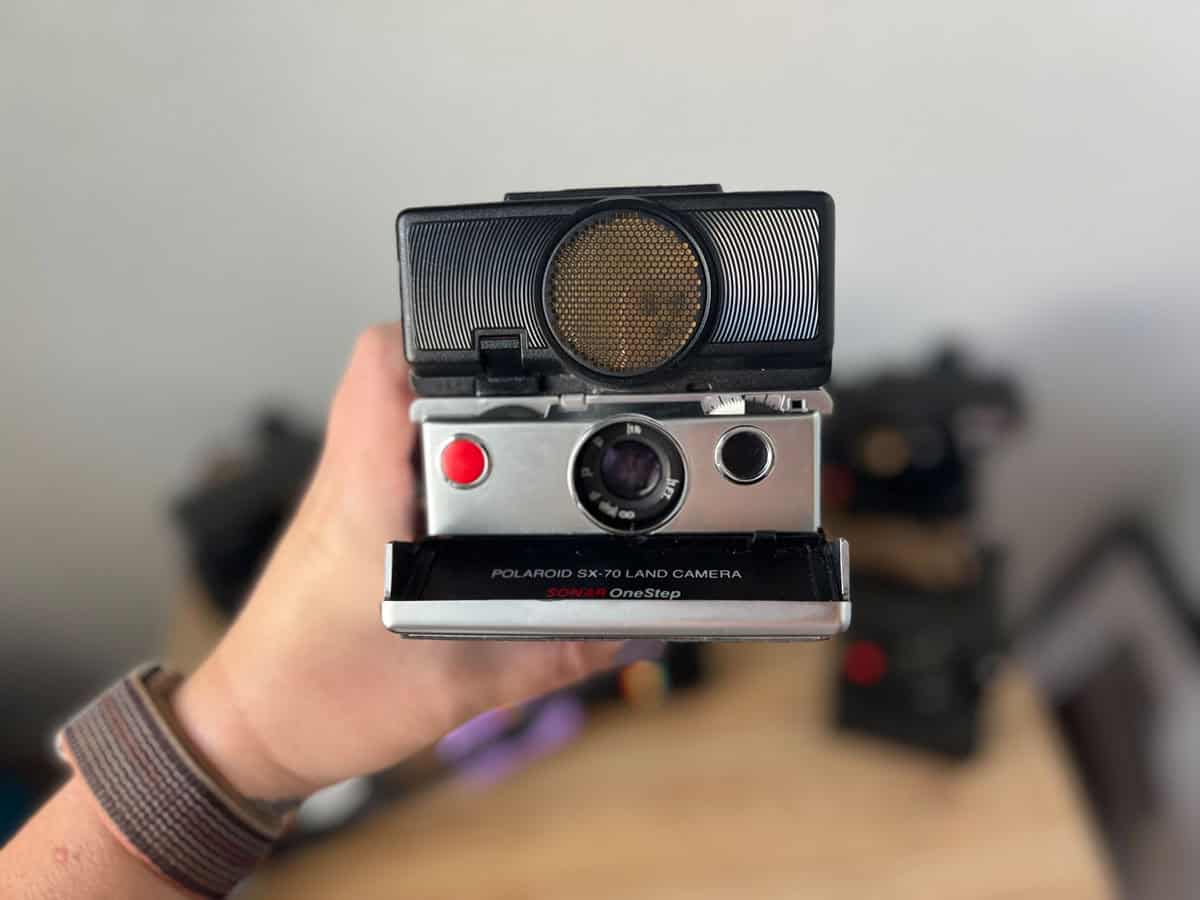
- 1972: Polaroid created the Polaroid SX-70 Land Camera.*
- 1981: The first 600 film Polaroid camera was created.**
- 2001: Polaroid went out of business.
- 2005: Polaroid is acquired by a business that buys failing businesses and keeps some production going.
- 2007: Production of cameras stop.
- 2008: Production of film stops.
- Later in 2008: A single Polaroid plant was purchased by Florian Kaps, André Bosman, and Marwan Saba (to keep the film alive) and the company Impossible Project was born. (This group went to great lengths to bring Polaroid back to life, and I will always be grateful for them!)
- 2017: Impossible Project turns back into Polaroid – the company we know today.
* The first camera Polaroid created that still has film made today.
** Also cameras that still have film made today.


Current Polaroid Cameras
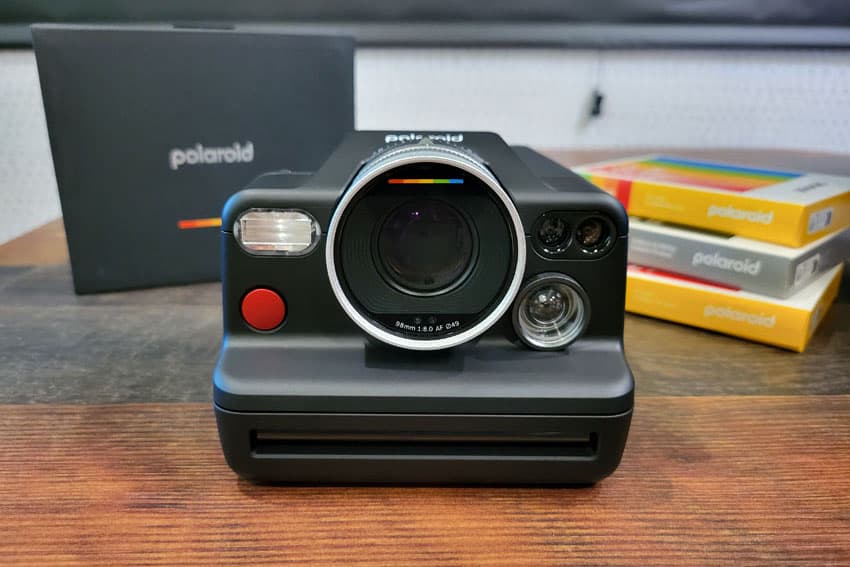
Polaroid is currently making these cameras (as of May 2025):
- Polaroid Now and Now+: Point and shoot Polaroid cameras with minimal settings. The Polaroid Now+ can connect to the Polaroid App for more settings and creative control. (Read about the Polaroid Now+ here.)
- Polaroid Flip: Point and shoot Polaroid camera with a flip up flash bar. Connects to the Polaroid App for more settings.
- Polaroid I-2: The most advanced Polaroid camera with aperture and shutter speed control in camera. (Read about the Polaroid I-2 here.)
- Polaroid Go: Mini Polaroid camera, point and shoot style with minimal settings. (Read about the Polaroid Go here.)
Current Polaroid Film
Thankfully, Polaroid is still making film for vintage cameras – although not all vintage cameras. The only vintage cameras that Polaroid is still making film for are the SX-70 cameras and 600 cameras.
- Polaroid 600 Film: These are for your vintage Polaroid 600 cameras (the ones they started making in 1981). These packs of film contain a battery in them since the vintage 600 cameras did not have a battery pack. ISO 640
- Polaroid SX-70 Film: These are for your SX-70 camera (the ones they started making in 1972). These packs of film also contain a battery in them. ISO 160
- Polaroid i-Type Film: These are for new Polaroid cameras (the ones I listed above) along with other modern Polaroid cameras, including the new One Step (which they no longer make). They do not have a battery pack in them, so you cannot use these in vintage cameras. ISO 640
- Polaroid Go Film: The only camera you can use this film for is the Polaroid Go.
- Polaroid 8×10 Film: For use with 8×10 cameras with a Polaroid film holder and processor.


Where to Buy Vintage Polaroids
There are quite a few places that sell refurbished vintage Polaroid cameras these days, such as KEH Camera. A quick Google search will give you dozens of options. You’ll typically pay a minimum of $150 for a 600 camera and minimum of $350 for a SX-70 camera. Usually, those cameras come with warranties and you know they’ve been taken care of professionally.
If you want to go a more frugal route, you still have options.
eBay is a great place to buy vintage Polaroid cameras. You can get into bidding wars or select the “buy now” option. Make sure you read the description fully. There are a lot of people who sell Polaroid cameras on eBay that know nothing about the history.
If you’re unsure it’s in working condition, you can ask. Just ask the seller, “Have you put a new film pack in the camera? Did it eject correctly and expose properly?” If they don’t know, you might be able to haggle a bit and get the camera for even cheaper – just be aware that you could be buying a non-working camera.
Thrift stores are a fun place to look for cameras. You can ask your local thrift shop to see when they usually put out their new items and plan to be at the store when they put them out. You can also ask if they have any Polaroids or to set them aside for you. Doesn’t hurt to ask.
If you go the in-person thrift shop route, make sure you go with a 600 film pack and SX-70 film pack so you can test if it works.


Obsolete Cameras
Here are some of the cameras (not all) that are more/less obsolete because Polaroid is no longer making film for them (for now). How cool would it be if Polaroid started making peel apart film again?!
Polaroid Spectra Cameras – these came out in the 1980’s and were very popular. They took Spectra film which is slightly wider than the standard 600 film. You can find some refurbished Spectra cameras out there – just make sure they’ve been modified to shoot 600 or i-Type film.
Polaroid Land Cameras – these are the original Polaroid cameras that took pack film or peel apart film. There are companies that are making peel apart film, but they go out of stock very quickly. I personally don’t have any experience with them, but One Instant is one of those companies that makes peel apart film for the vintage Polaroid Land cameras.
Buying Expired Polaroid Film
Oh, expired Polaroid film is so fun to shoot! Sometimes, you get absolutely perfect shots with years-old film. And sometimes, you don’t. For me, that’s part of the joy. When purchasing expired Polaroid film, I look for a few things:
- The expiration date – as long as it didn’t expire 10+ years ago, there is a good chance that the chemicals are not all the way dried up and you can still get an image on the photo.
- How it was stored – if you’re buying on eBay from a photographer who either does not need or want the film any more, there is a good chance it was cold stored. If it was cold stored, they’ll usually list that it was.
- 600 vs iType – sometimes you can get a pack of four-year-old expired 600 film, but the battery is dead. That doesn’t mean the film is dead. You can always shoot it in an iType camera (or transfer the negatives from the dead pack of film to a newer, empty-pack of 600 film using a dark room bag).


Where to Get Vintage Polaroid Cameras Repaired
Say you got a gorgeous, nearly mint SX-70 Polaroid for $40 at the thrift store, but it isn’t working… where would you get it repaired? I would DM @drsx70 on Instagram. True story: he refurbished my SX-70 Sonar, and it’s been perfect ever since.
Here are some other places that repair or refurbish vintage Polaroid cameras:
- Retrospekt – they repaired 600 and SX-70 cameras and can also convert SX-70 cameras to take 600 film
- MiNT – they can repair and refurbish SX-70 cameras
- Brooklyn Film Camera – can repair SX-70 and SLR-680 cameras
- Instant Camera Guy – he can repair any 600 or SX-70 camera


Additional Polaroid Tips from Someone Who’s Been There
Always store your Polaroid film in the refrigerator — never the freezer. Before loading a pack into your camera, especially on a hot or humid day, let it sit out for a few minutes so it can acclimate to room temperature.
Never put Polaroid film through a CT scanner at the airport. It will ruin your film — seriously. I learned the hard way. This stubborn, “I’ll be fine” photographer lost a few packs to airport security. Don’t be like me. Just ask for a hand check. It’s worth the extra few minutes.
After taking a photo, let it sit in the camera slot for a few seconds before removing it. Then, tuck it away in a dark place to develop — my go-to is my back pocket. You don’t need to be too precious with it, but exposing developing film to light can affect the final image (sometimes in cool ways, sometimes not — you decide!).


So, yeah… I really love Polaroid.
I bought my first Polaroid camera in 2014 — a Polaroid Sun 660 — and I shot so much Impossible Project film. That camera went everywhere with me. When I say I’m forever grateful to the people who revived instant photography through the Impossible Project, I mean it.
There’s a special kind of joy in Polaroid photography. It takes me back to simpler times and gives me something tangible, right away. A memory you can hold.
I hope this little guide has helped you feel ready to dive into the world of Polaroid. Happy shooting!


Thank you so much, Jen! Jennifer is a regular contributor here at Shoot It With Film, and be sure to check out her other articles, like How to Create Your Own Photography Zine: Step-by-Step Guide and Organizing Your Film Negatives, Scans, and Instant Film.
You can also check out more of Jennifer’s work on her website, Instagram, and Etsy shop.
Leave your questions about Polaroid cameras below in the comments, and you can pick one up for yourself on Amazon, KEH Camera, or eBay.


Shoot It With Film on Instagram


Leave a Comment