

How many different film stocks have existed throughout the years? The answer is probably far more than you’d expect.
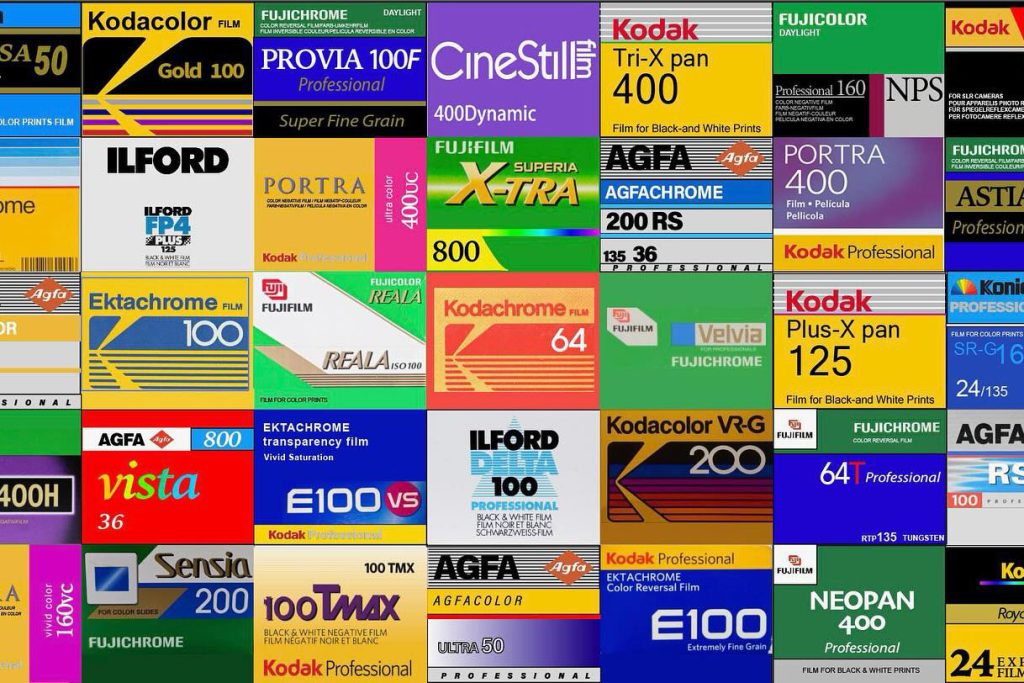
Every Film Ever is an project dedicated to documenting the history of film stocks, from familiar favorites to obscure and long-forgotten emulsions. We talked with founder Lenny Alvarez about his inspiration for the site, the process of building an archive of thousands of films, and why preserving the history (and even the packaging!) of film photography matters.
Tell us a little about Every Film Ever.
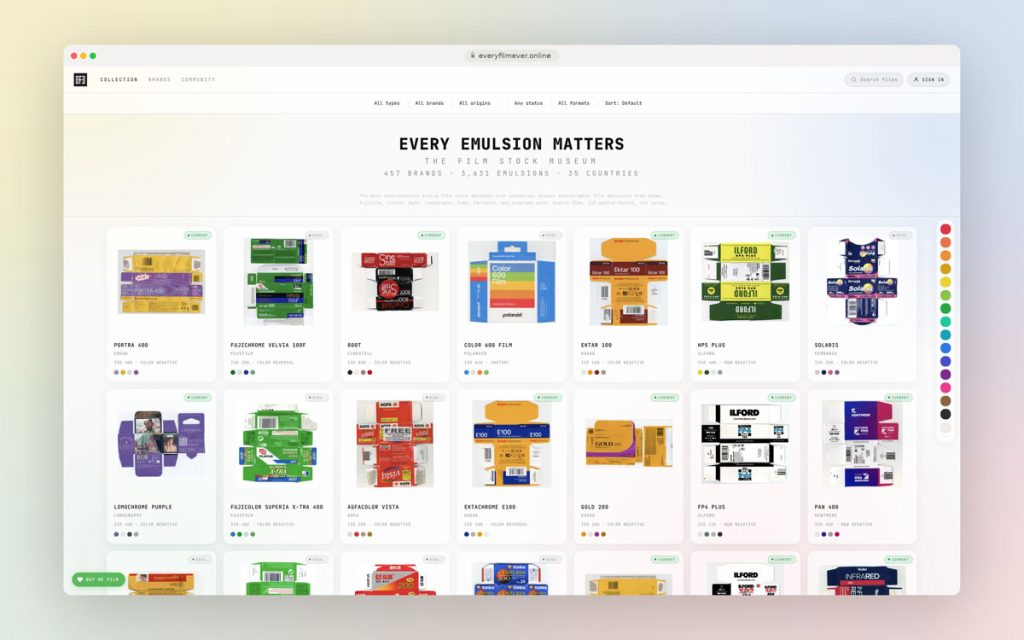
Every Film Ever holds most of the film stocks that were ever made. I wanted it to be an archive, something that preserves the knowledge, but wrapped in something beautiful and easy to use.
Knowledge exists on the internet and you can always find it eventually, but preserving it properly means making it easy to reach and enjoyable to interact with. So it was built for that, and honestly for the geekiness of it, too.
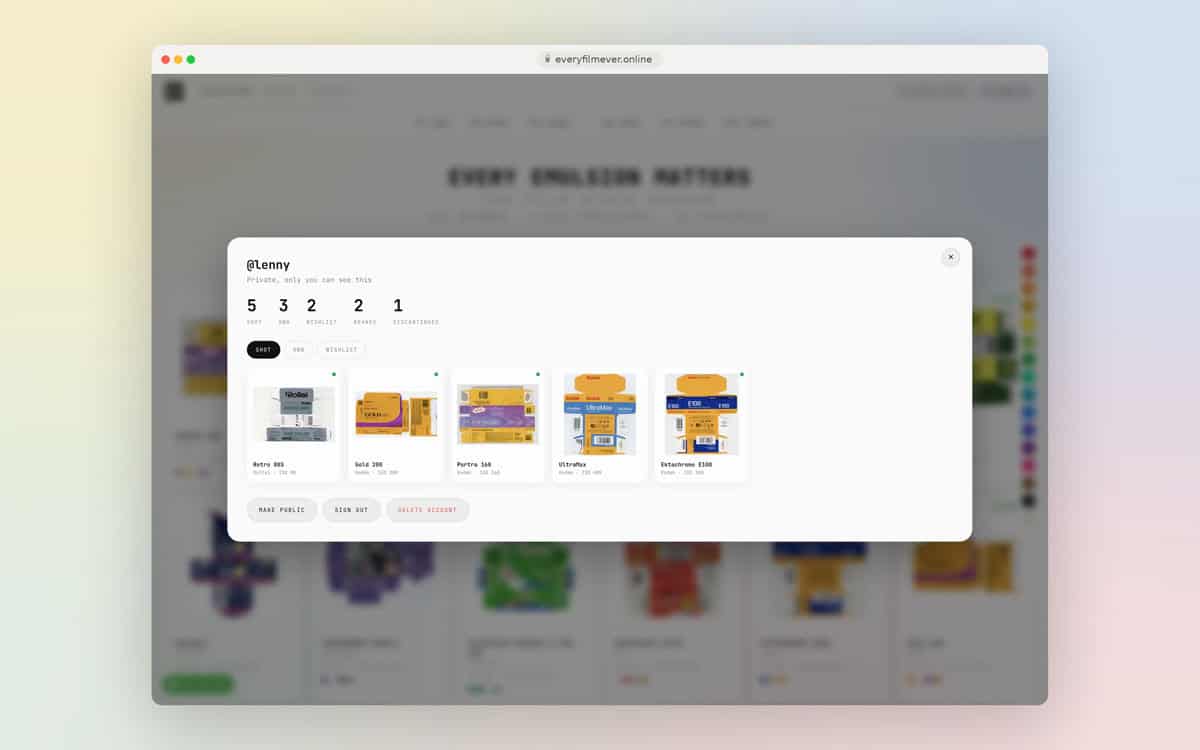
The packaging and the aesthetics of film are something really special to me. So the site lets you look at all of it, but also save what you liked, see examples shot on a stock, even buy it, and open a profile to mark what you’ve shot with. It’s not a social network in any way, but I did want it to be a bit more than just a museum.
What’s your background, and what inspired you to create Every Film Ever?
My name is Lenny Alvarez. I’m a film photographer and an engineering student, though the photography defines me far more than the engineering does.
I started about seven years ago and never shot digital at all, I went straight to film. I learned to develop and scan with my friend Jonathan Jakoby. Then, started printing and got completely addicted, spending every free hour in the darkroom.
We ran a lab out of the house for a while, developing for friends. Over a hundred rolls a month with no professional machine. It was amazing until it became a nightmare.
Now, I shoot commissioned work, brand campaigns, album covers, hospitality, and Jonathan and I teach analog photography through workshops and courses. People come in with nothing and leave having developed and scanned their own film. That part matters most to me. I really dislike gatekeeping; I think it ruins the things that are actually good.
Alongside that, I have a strong pull towards technology, and my projects sit between the two. Every Film Ever came out of exactly that, and so does HALIGHT, the app I’m building now. (You can learn more about HALIGHT and get on the waitlist here.)
What got me started was that most of the analog knowledge online is scattered. It’s in forum threads, on Reddit, in books. I wanted to combine my love for this world with the technical side I enjoy putting into things, and pull it all into one place.
I should also name the thing that inspired the form of it. I came across a site that catalogs Chinese cigarette packaging, every single one, laid out like a museum. It stuck with me, and I thought film deserved the same treatment and nobody had done it. I’d rather say that openly than have people wonder, because the two do feel similar in spirit.
As for why it matters: it’s part of the whole story. So many of these films have genuinely strange histories behind them, and it feels like a waste not to write that down. We’re living in a world where maybe forty films are still being manufactured, and I’m being generous with that number. Knowing where we came from thirty years ago feels like part of the identity for a lot of the analog photographers I know.
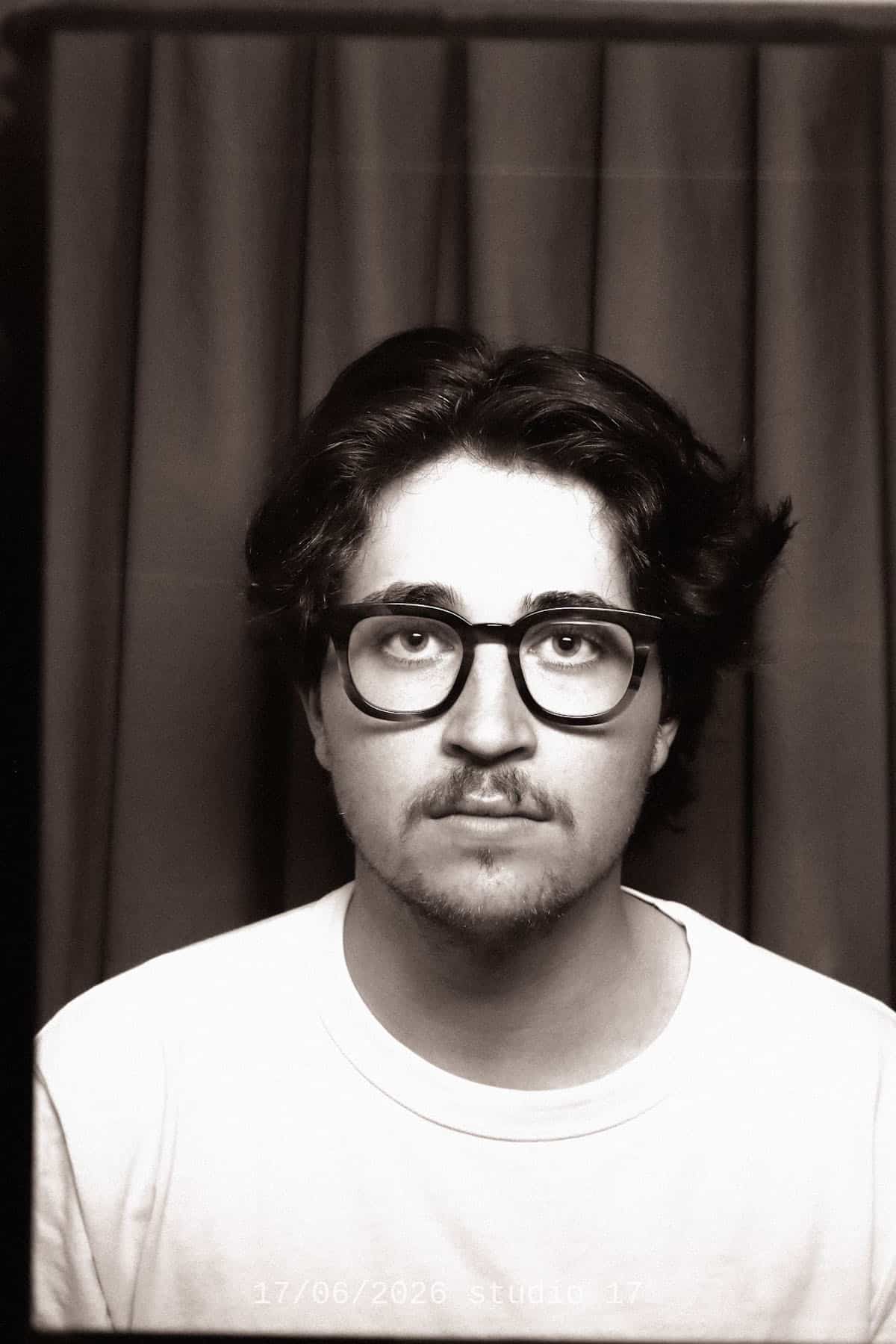
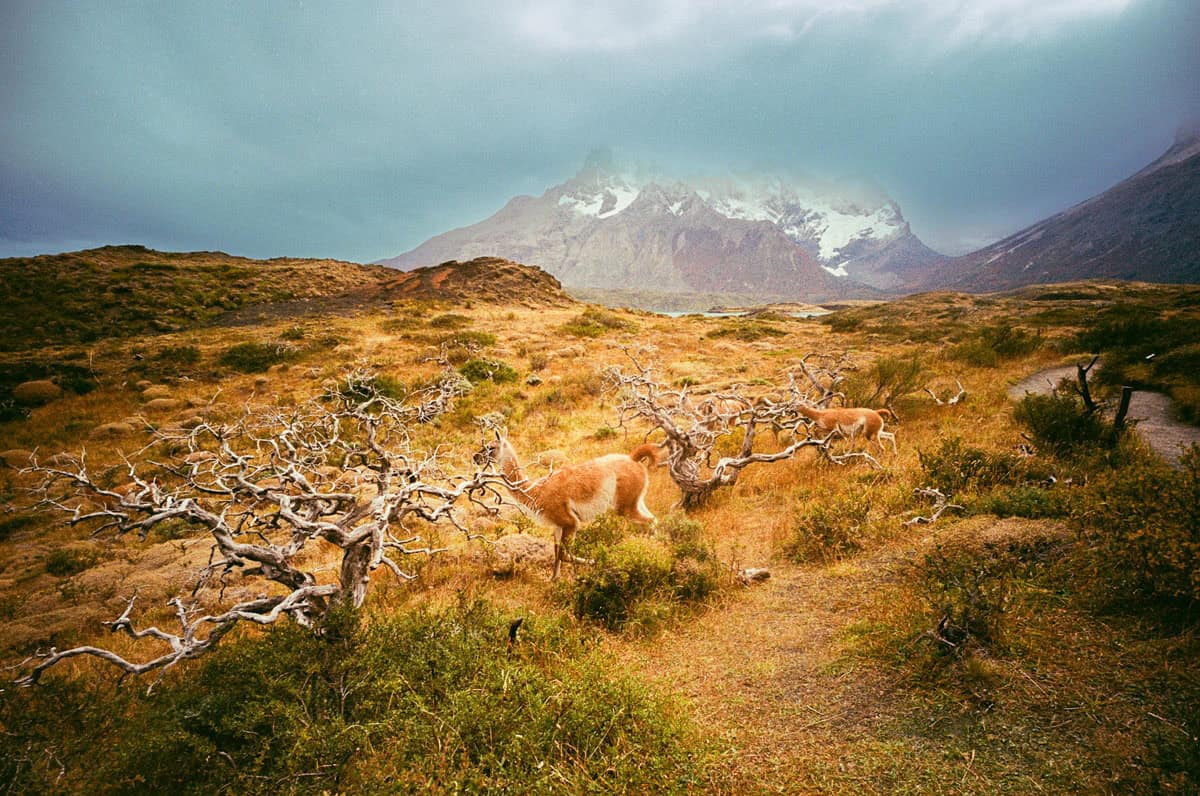
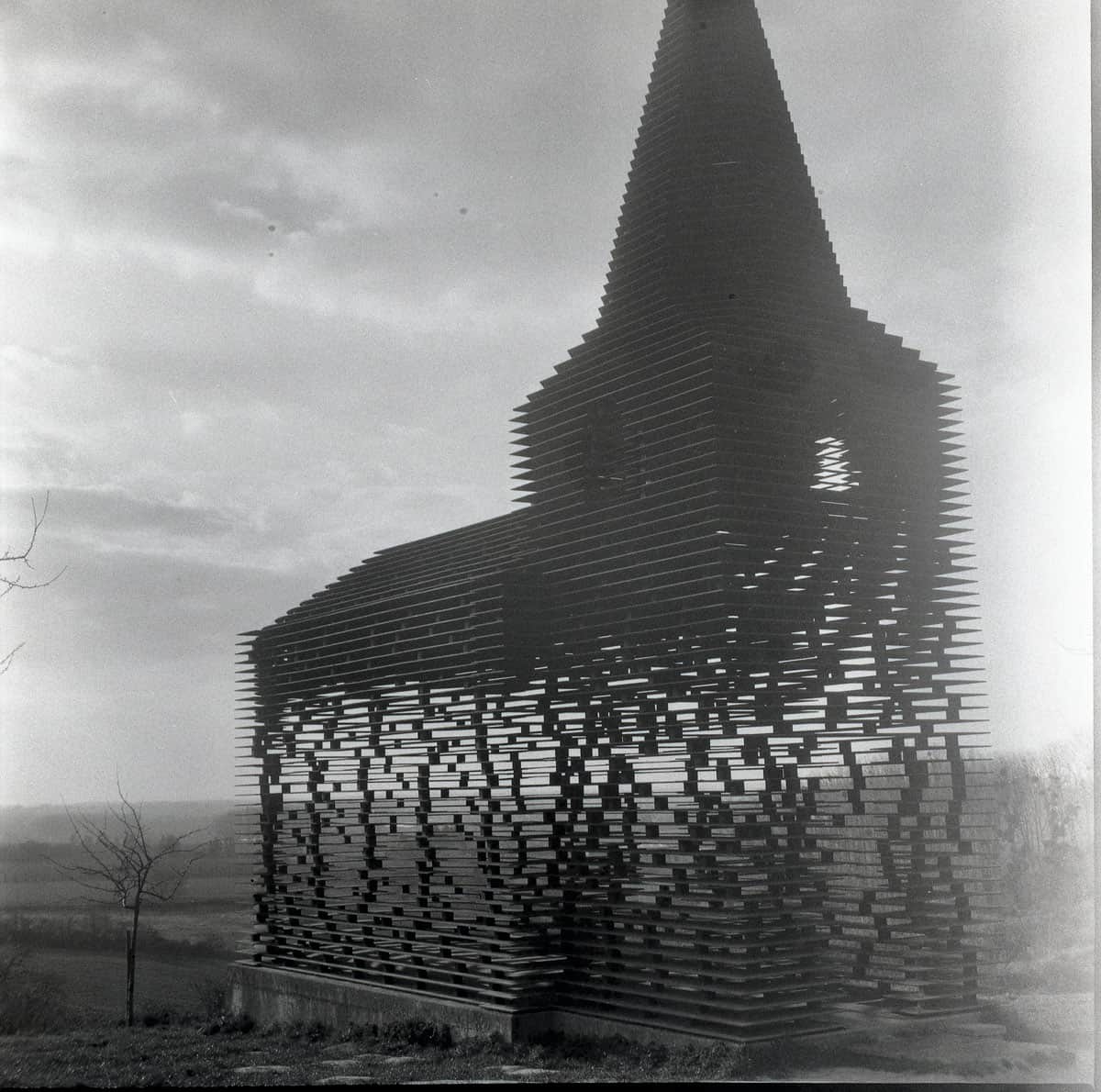
What’s your process for documenting film stocks?
The research was relatively simple, actually. Most of the analog knowledge online is sitting in forums, on Reddit, and in books, and if you dig enough it’s all there. That’s how I found a few incredible databases, which of course I credited. It felt like finding a box of gold in an attic. Genuinely exciting.
The packaging images come from those same databases, credited on every page. The bulk is the DX Database, just over three thousand of them, plus around four hundred high resolution scans from dekuNukem’s Film Packaging Archive. The rest come from manufacturers and retailers, each credited on the film’s own page. Out of 3,631 films, only eight have no image at all.
I’ll be upfront about one more thing, since it comes up: I used AI tools to help build the site, and I don’t see a reason to hide it. What the tools couldn’t do is know that Rollei Retro 80S is a Belgian emulsion originally made for military use, or that LomoChrome Purple is C-41 and not a slide film, or decide in the first place that film packaging was worth preserving. There were 151 wrong entries in the data that got corrected because someone who actually shoots film sat and looked at them. That part is me.
What are some of the features on the site?
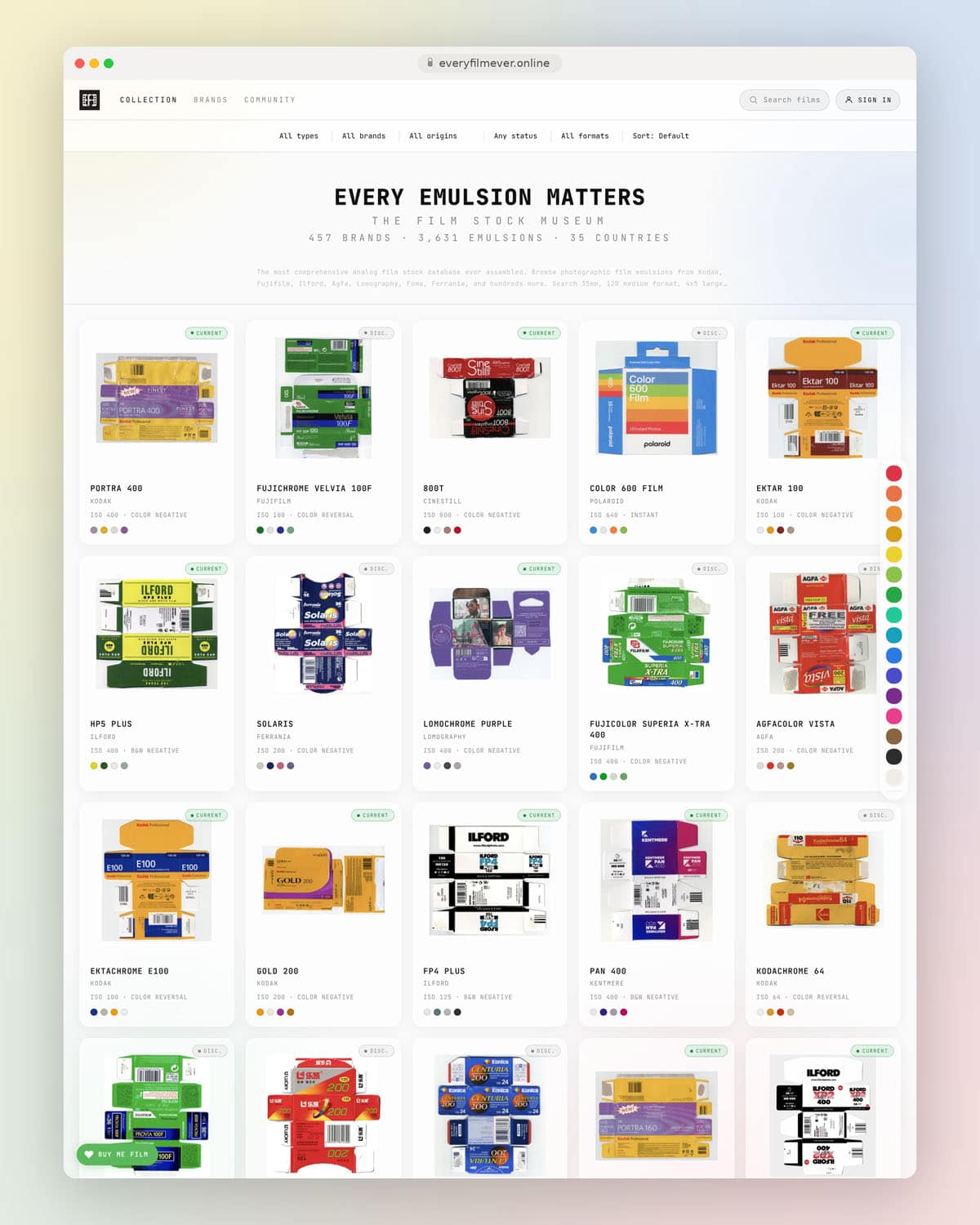
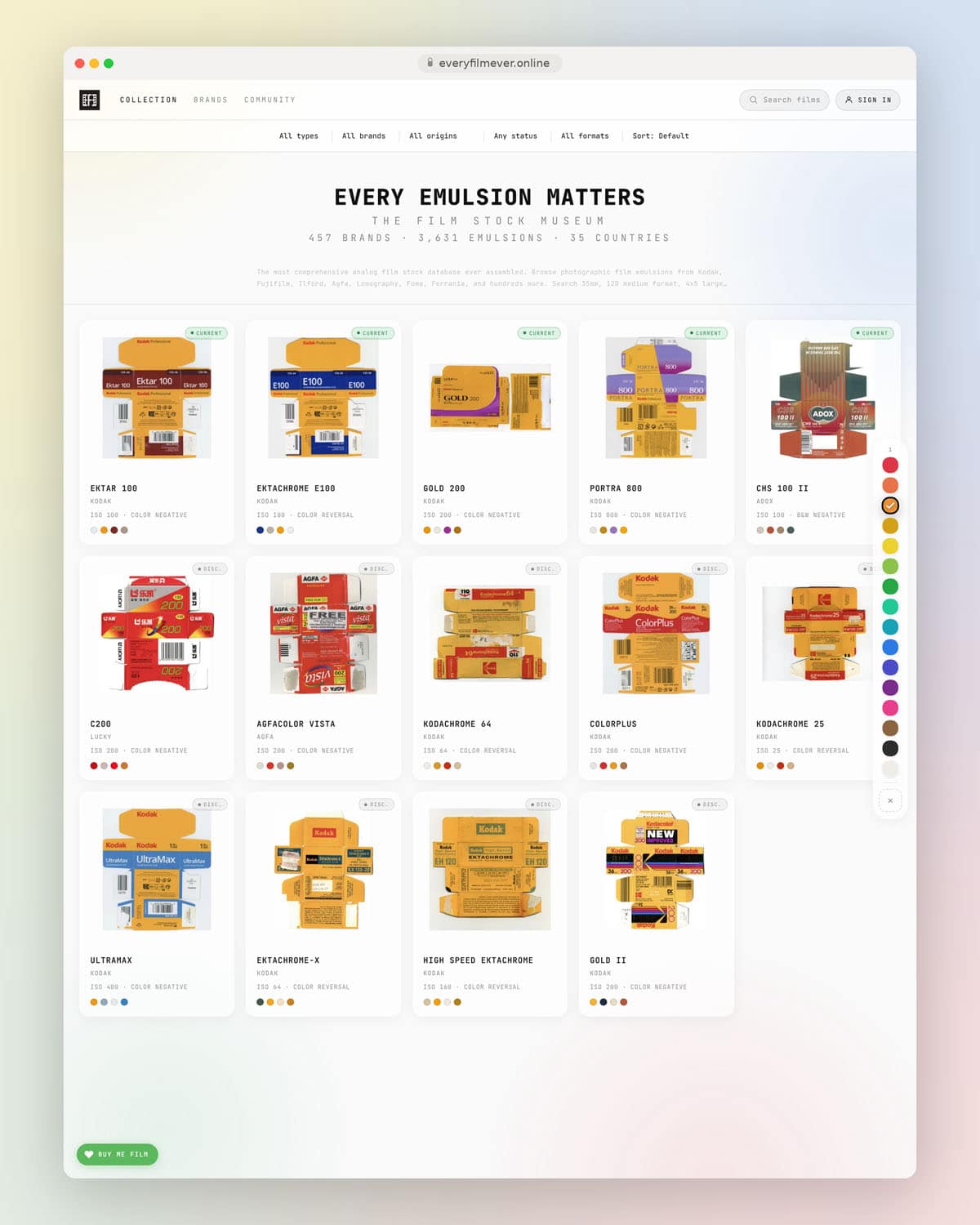
Sorting film stocks by color felt essential from the very beginning. The way I see it, the site isn’t only for analog photographers, it’s for anyone who likes design and aesthetics. That’s what the color filter is for.
If you’re just passing through, it’s genuinely fun to filter everything down to the colors you like. It’s easy and it’s nice, and maybe it keeps people around a bit longer to wonder about things. Honestly, the color sort was a feature I added for fun.
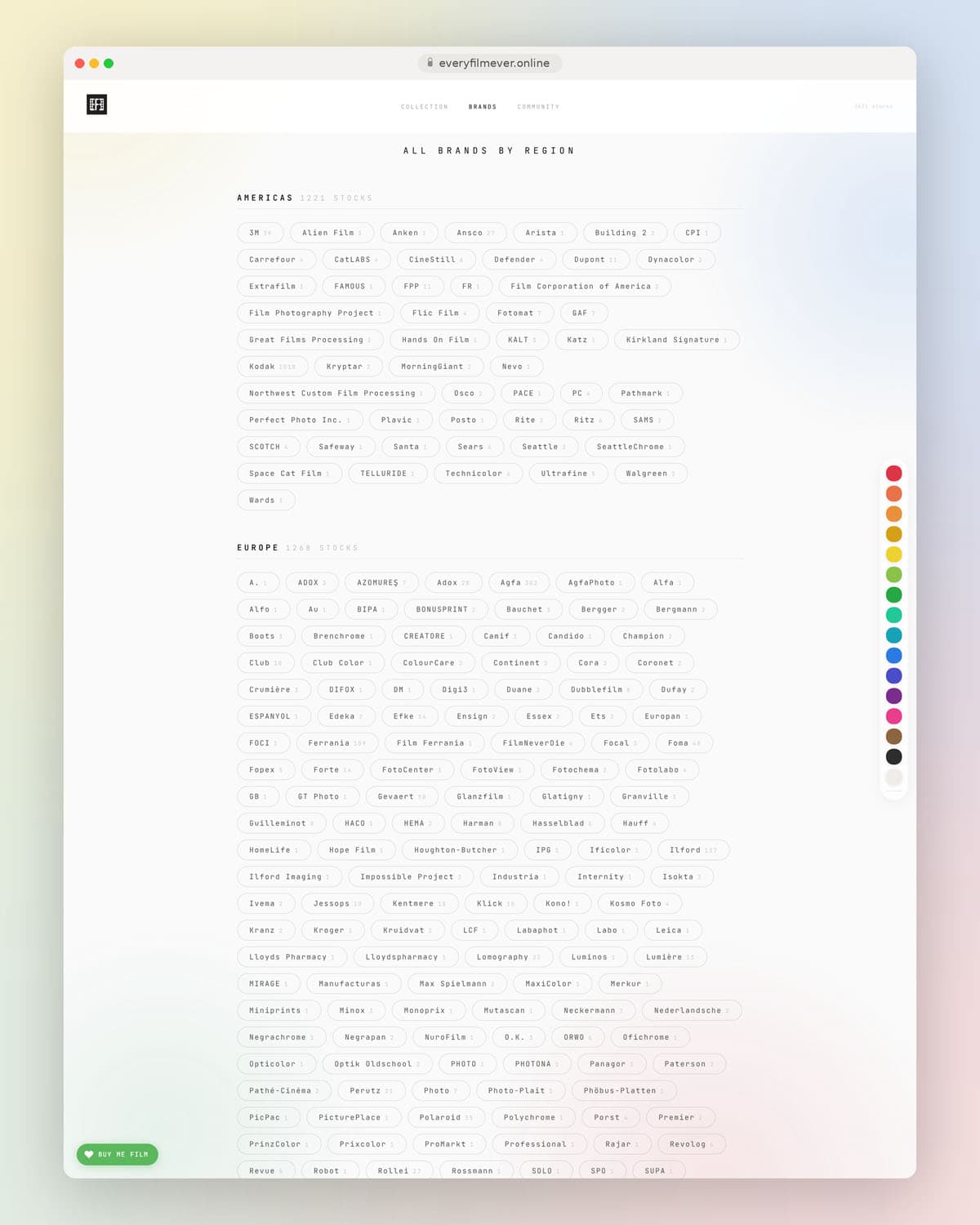
Beyond that you can filter by brand, by country, by whether it’s still in production or long gone, by format, and by color or black and white. All of it is there to let people dig around as much as they want.
There are no ads on the site. I want people to stay long enough to get curious and maybe start shooting a little more.
Tell us more about the film stocks on the site.
There are 3,631 films in there right now, across 457 brands and 35 countries, and it only keeps growing. I just added personal accounts, and I plan to keep expanding it with whatever features I think of or people suggest.
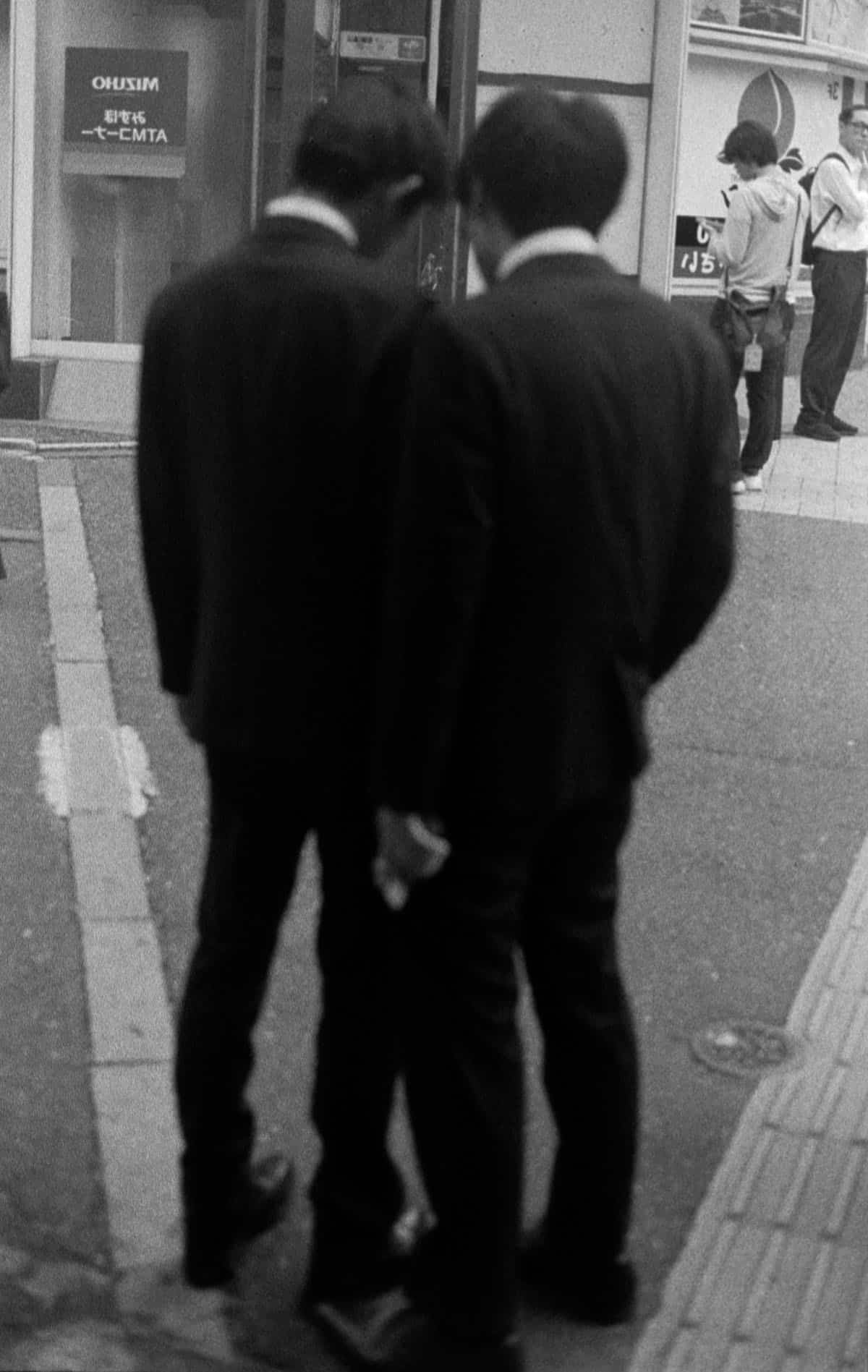
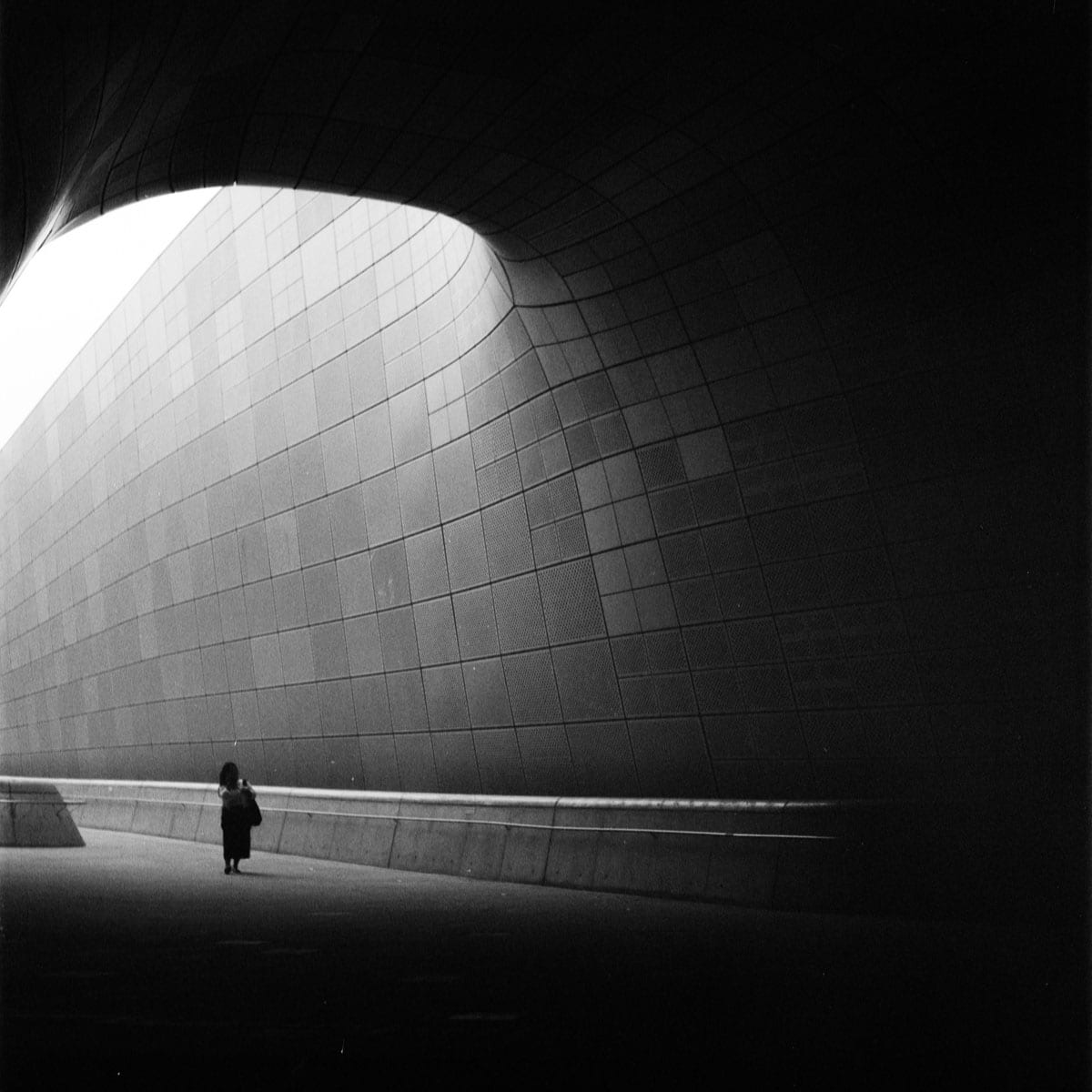
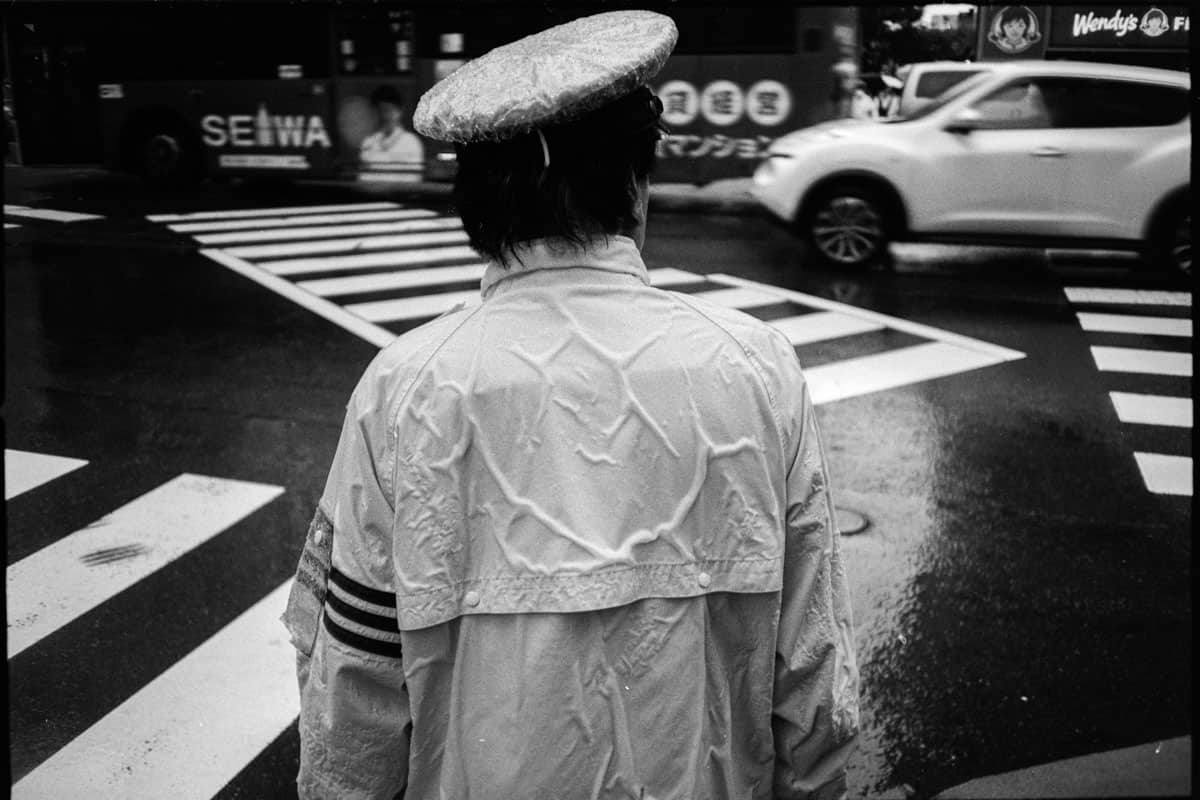
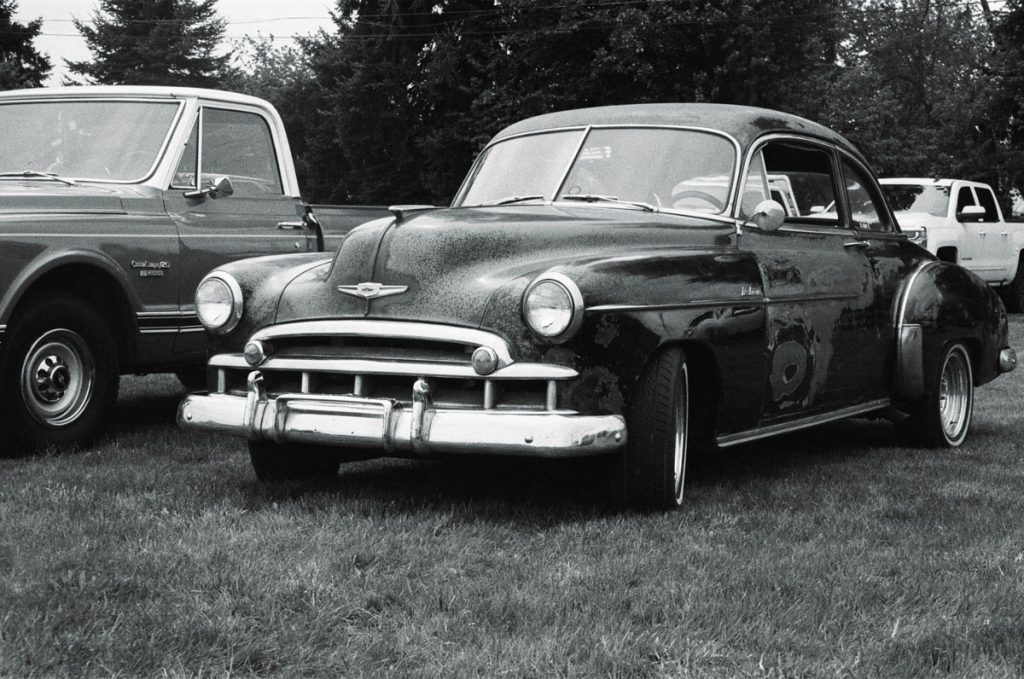
My favorite film has to be Rollei Retro 80S. It’s a Belgian emulsion originally made for military use, and because of that it has extraordinary contrast and very fine grain. It’s my go-to whenever I can get my hands on it, and I usually buy it in bulk. Most of the black and white frames in the folder below are shot on it.
As for the rare ones, I found a Hello Kitty film on there. That was funny. You can talk for hours about Aerochrome and all the special stuff, but the beauty is in the silly things.
How is Every Film Ever different from the other film archives out there?
What I’m doing is going wide. dekuNukem’s Film Packaging Archive is one of the sources I built on, and it’s credited throughout the site, and they go deep. Proper high resolution scans of the actual boxes, the physical object preserved properly.
I’m trying to list every film that ever existed, with the specs and the history, so you can find things and compare them. FP-Archive’s scans make my entries far better than they would have been on their own. It’s not the same job, and it’s definitely not a competition.
More broadly, the way I see it, my work was making the knowledge accessible. The databases already exist, I’m not reinventing the wheel, I’m just making it accessible in a more tangible way. The goal was to combine my love for this world with the technical, nerdy side I like putting into things.

What has surprised you most since launching the project?
Two things. The amount of information surprised me. It’s incredible to see how much of it exists, and honestly the process of pulling it all together was really nice.
And the feedback. A lot of beginners were excited to have somewhere to geek on. And professionals who missed films they used to shoot loved it too. I’m glad it reaches that many different kinds of analog photographers.
How can film photographers be part of the project?
Mostly, I’d just love people to use it. Go in, wander around, find the film you shot when you were starting out.
If someone wants to actually take part, there are two easy ways. Every film page has a Report It link that opens an email to me with that film in the subject line, and honestly that’s the most valuable thing anyone can do for the archive. With 3,631 entries there are mistakes only the person who actually shot that stock would catch, and every correction I’ve had from someone like that has made the site better.
You can also leave a review on any film, so the pages slowly fill up with what a stock is actually like to shoot instead of just specs.
And anyone who wants to follow along can find me at @lennyal.
Beyond that I’m open to everything. If there’s something other film photographers want to do together I’d be glad to.
Thank you so much, Lenny! You can connect with Lenny on Instagram here, and leave your questions about Every Film Ever below in the comments!
Leave a Comment
Shoot It With Film on Instagram


Blog Comments
Stephen Peterson
August 28, 2026 at 12:50 pm
Please explain to me why shoot film and then scan it to print digitally versus just taking the photo digitally?
It just doesn’t make sense to me, a film user since 1952.
Thanks,
S
John Smith
September 3, 2026 at 1:16 am
The combination of the DX Database and the Film Packaging Archive is such a thoughtful way to document film stocks. I especially liked the emphasis on recording the packaging alongside the technical details—those visual references are invaluable when trying to identify an older or unfamiliar roll. How do you decide which details are most important to preserve when a film stock has very little documentation?
Colin Vettier
September 11, 2026 at 3:49 pm
Too bad this requires a Google sign in 🙁 but really cool.