

Written by Artem Feofilov
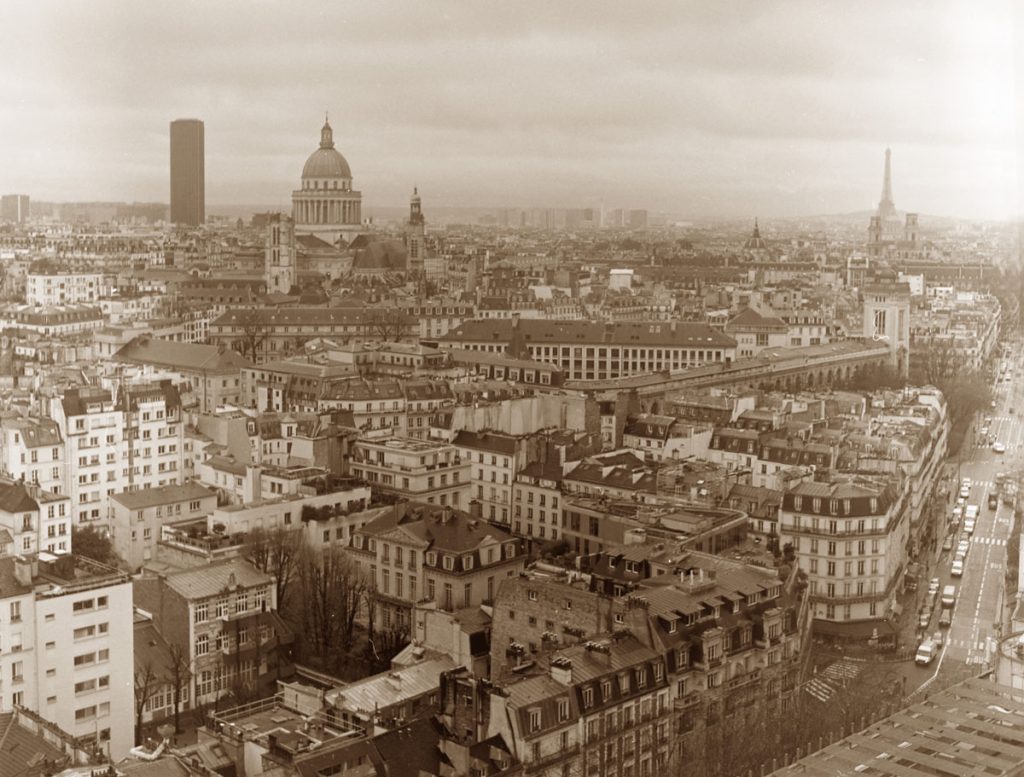
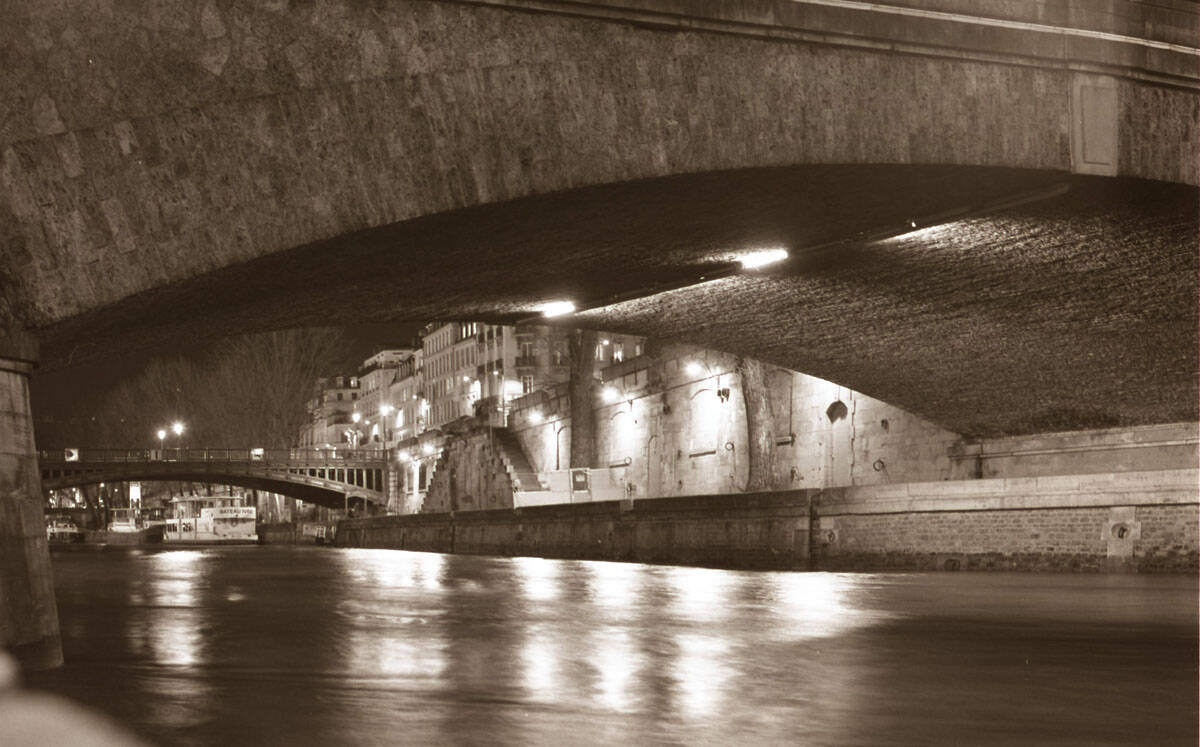
I love Paris in the spring time
Frank Sinatra
I love Paris in the fall
Despite the epigraph, we have mixed feelings towards Paris. We came here in August 2011 because I’ve got a contract with Sorbonne, and the first acquaintance was a disaster – renting an apartment, bureaucracy, problems with language, nothing resembled our impressions of visiting this city as tourists.
But, the time passed by, we found an apartment, got our residence permits, learned the language and understood what to visit and what to avoid. Then, I got a permanent position, we settled down to the South of Paris, and started enjoying living in France.
This is just one thread that leads to the story I want to tell.
A Love of Analog
The second thread is linked to our inclination to “old school/analog” perception of the world.
Don’t get me wrong, I started reading e-books back in 1996 when I’ve got my first personal computer. I have gigabytes of digital music on my hard drives, and I’ve been working with data processing for a quarter of the century. But, we found that listening to vinyl music adds something to the experience – you enjoy opening the envelope, reading the lyrics and watching the 30cm photos, you clean the dust, lower the needle and you do not skip the tracks.
The same is for analog photos – it’s needless to tell in this community that taking analog pictures is different from working with digital cameras. You do not take the camera out of the bag unless you see that the picture is really worth it. You compose carefully and push the button.
Later on, you develop the film without knowing for sure that the result will satisfy you – lots of things can go wrong, from stubborn film not wanting to get into spiral to problems with chemistry. Then, you hang the film to dry it and see that technically it looks OK, but you don’t know whether it is what you wanted.
Finally, you scan and edit it and get 6 keepers out of 12 shots if you are lucky. But, this way you remember all the shots you’ve done.

Exploring Paris Flea Markets
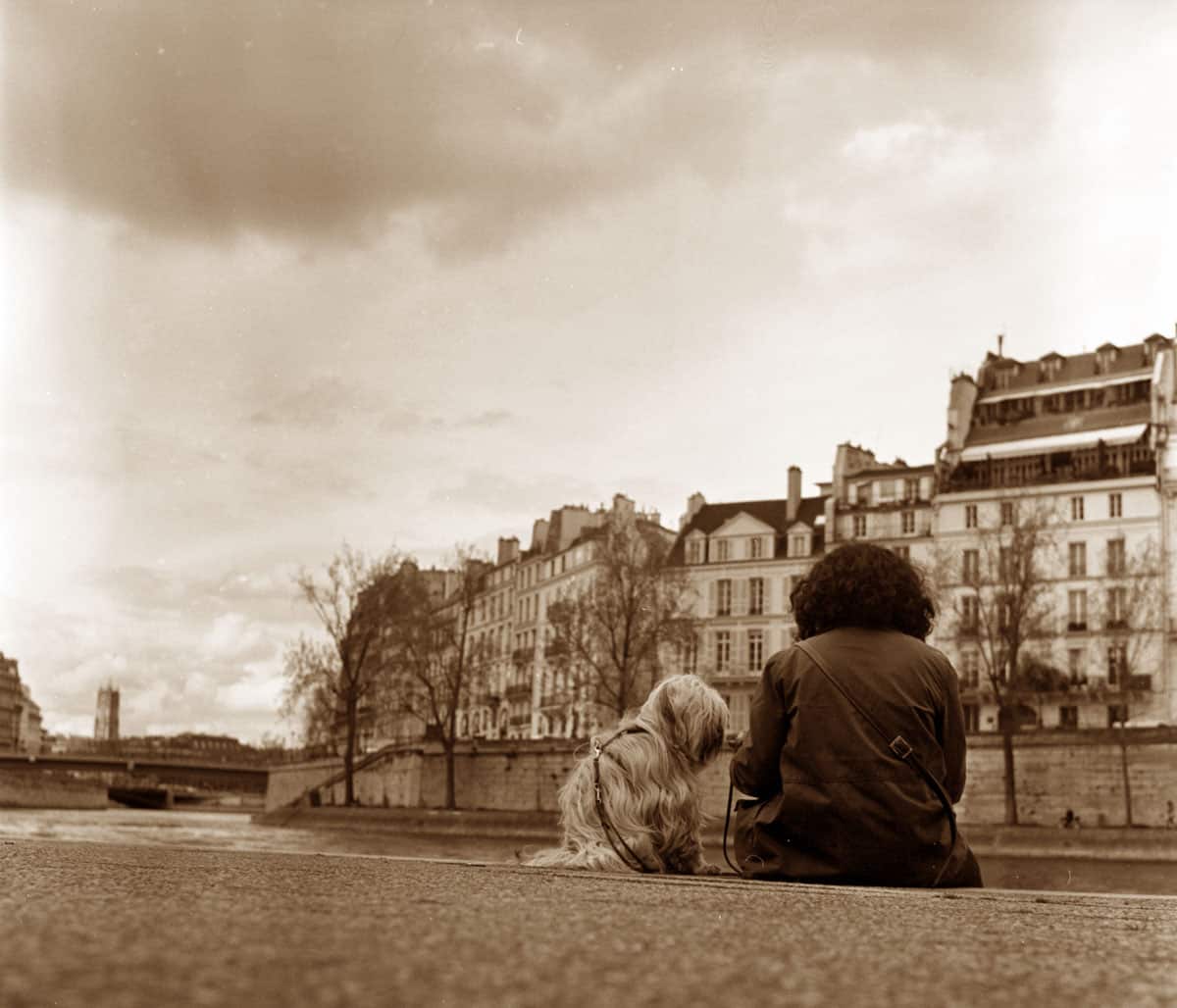
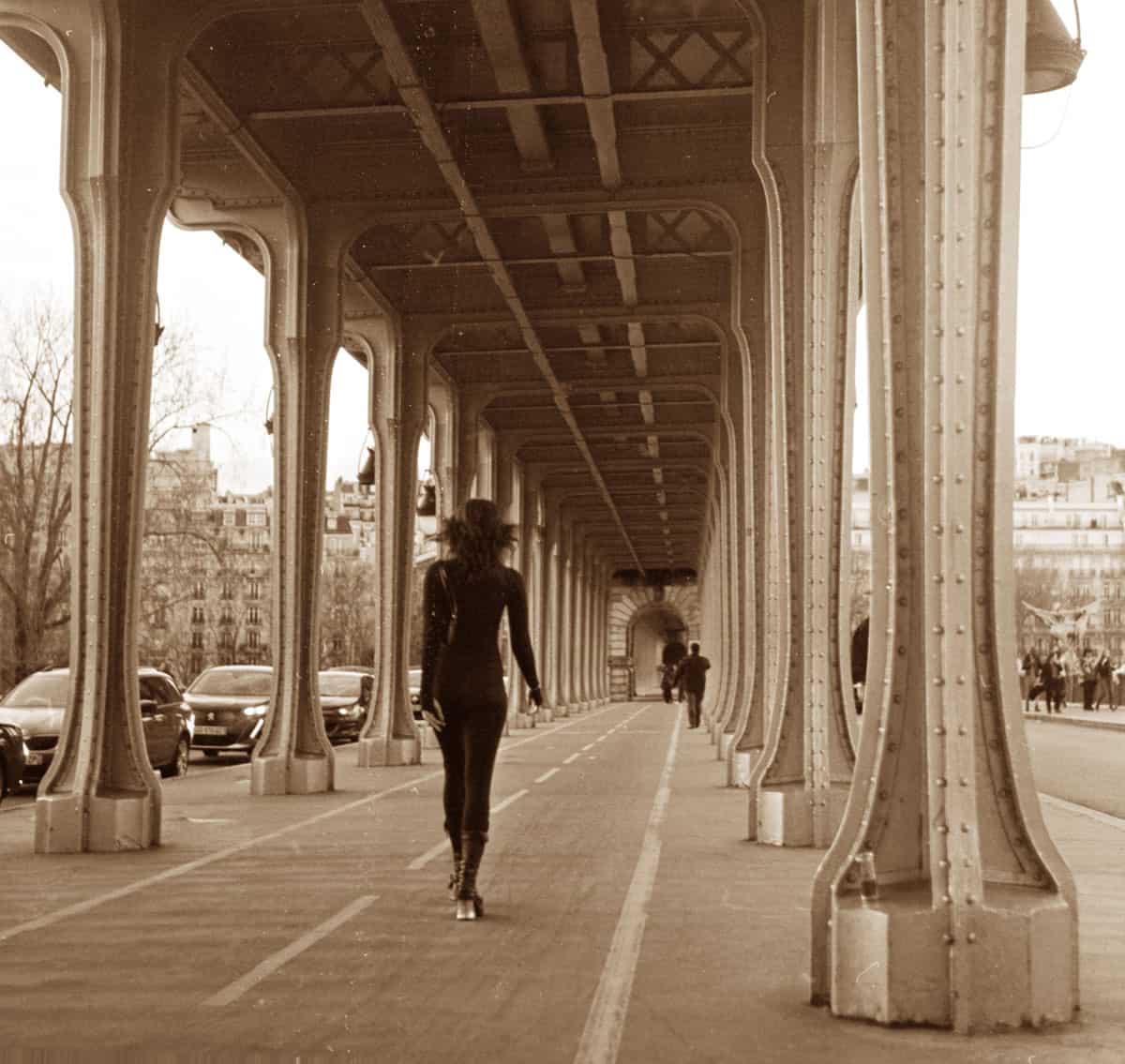
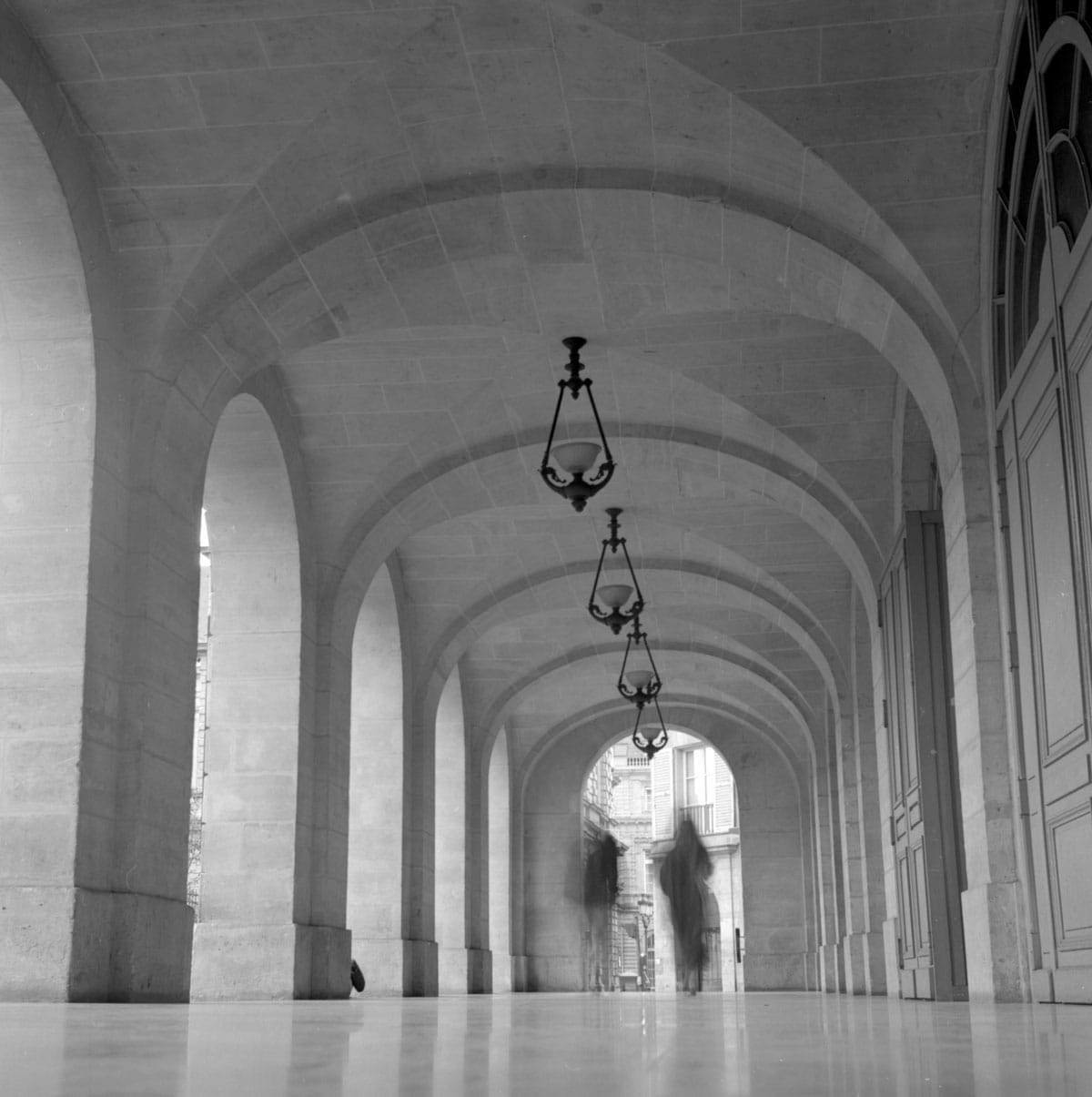
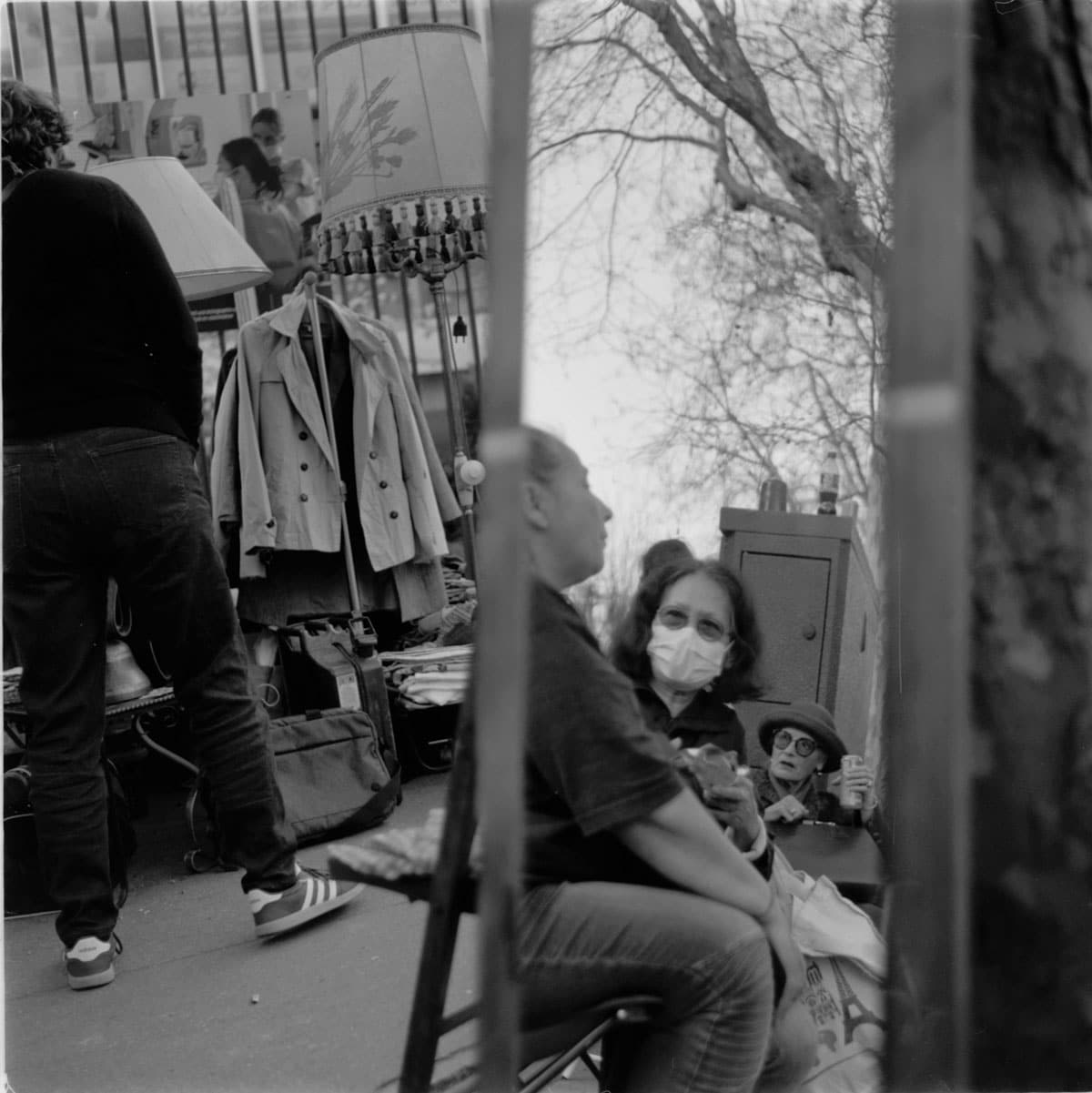
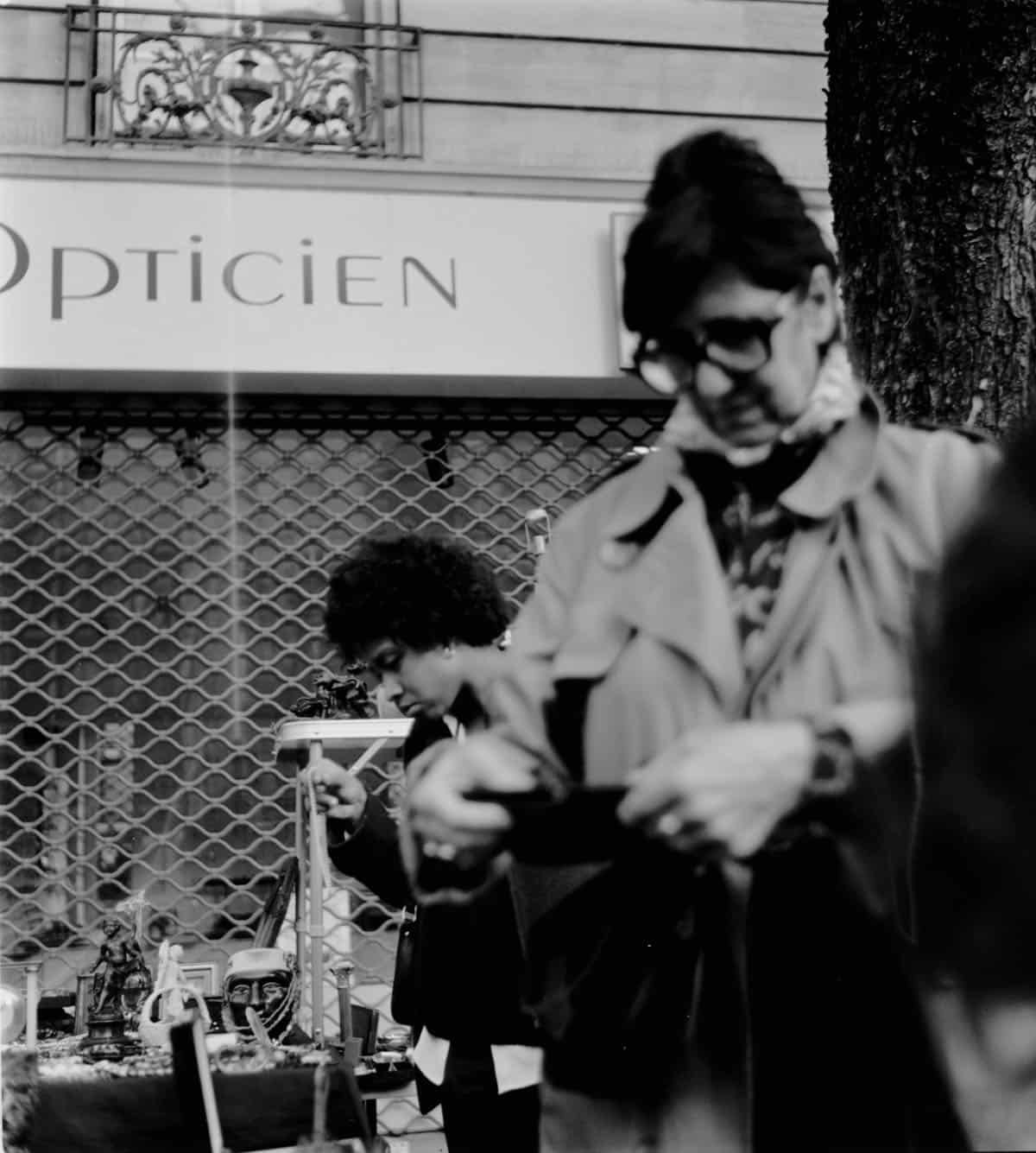
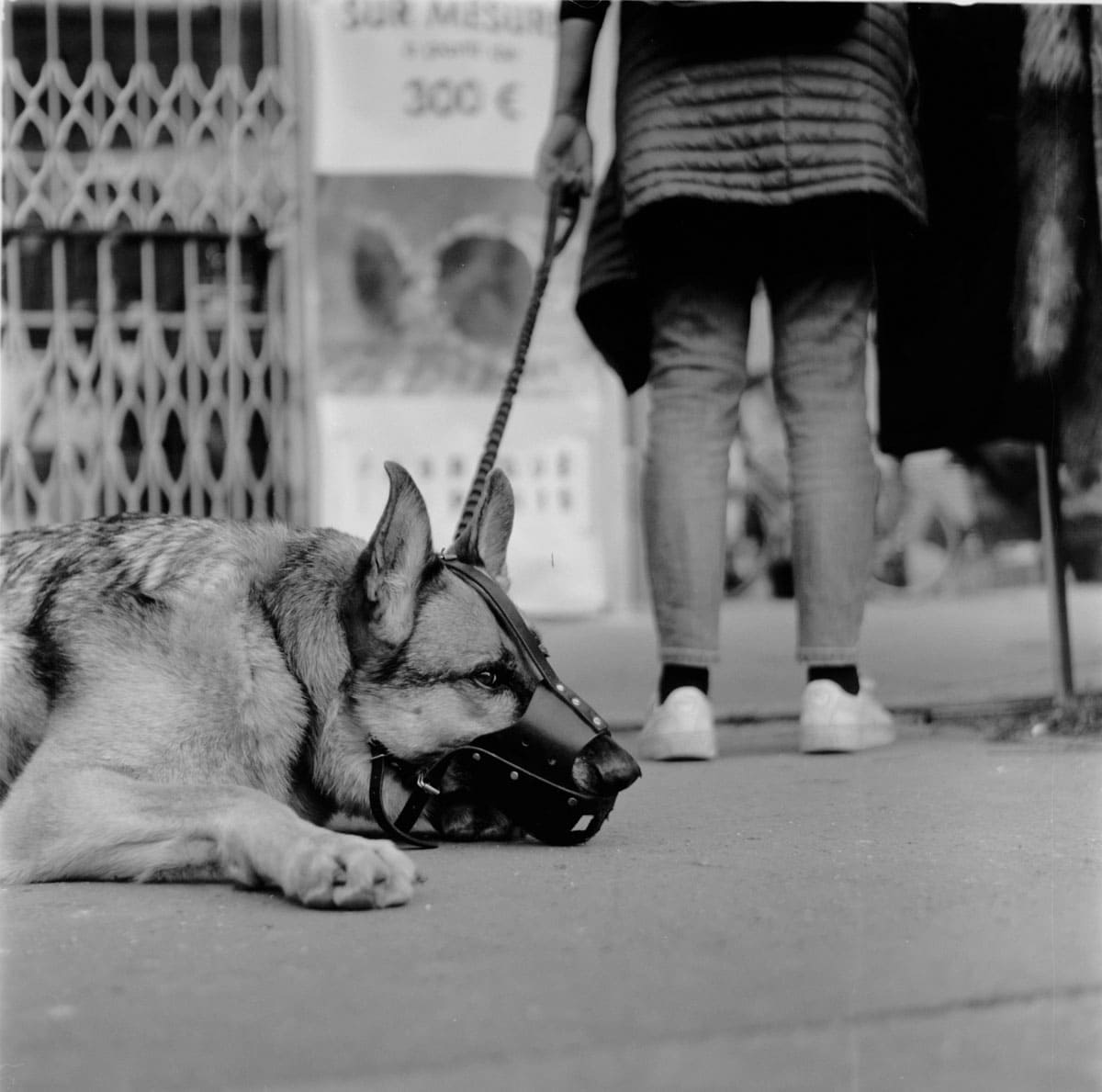
The third thread is linked to our two hobbies – biking and visiting flea markets. We live in 22km from the heart of the city, and, sometimes, we just jump on our e-bikes and make a tour. If we are lucky, we pass by a flea market and stop by.
Flea markets in France are very different, offering from next-to-trash to next-to-museum selection of items. Sometimes, you may find a real gem like a set of carved wooden chairs dated by the beginning of the previous century in decent state for less than 100EUR.
With respect to our “analogue hobbies,” the flea markets offer a limited selection of vinyl disks (repeating themselves almost everywhere, with few exceptions) and sometimes old photo cameras.
Finding a Time Capsule
This time we’ve hit two birds with one stone.
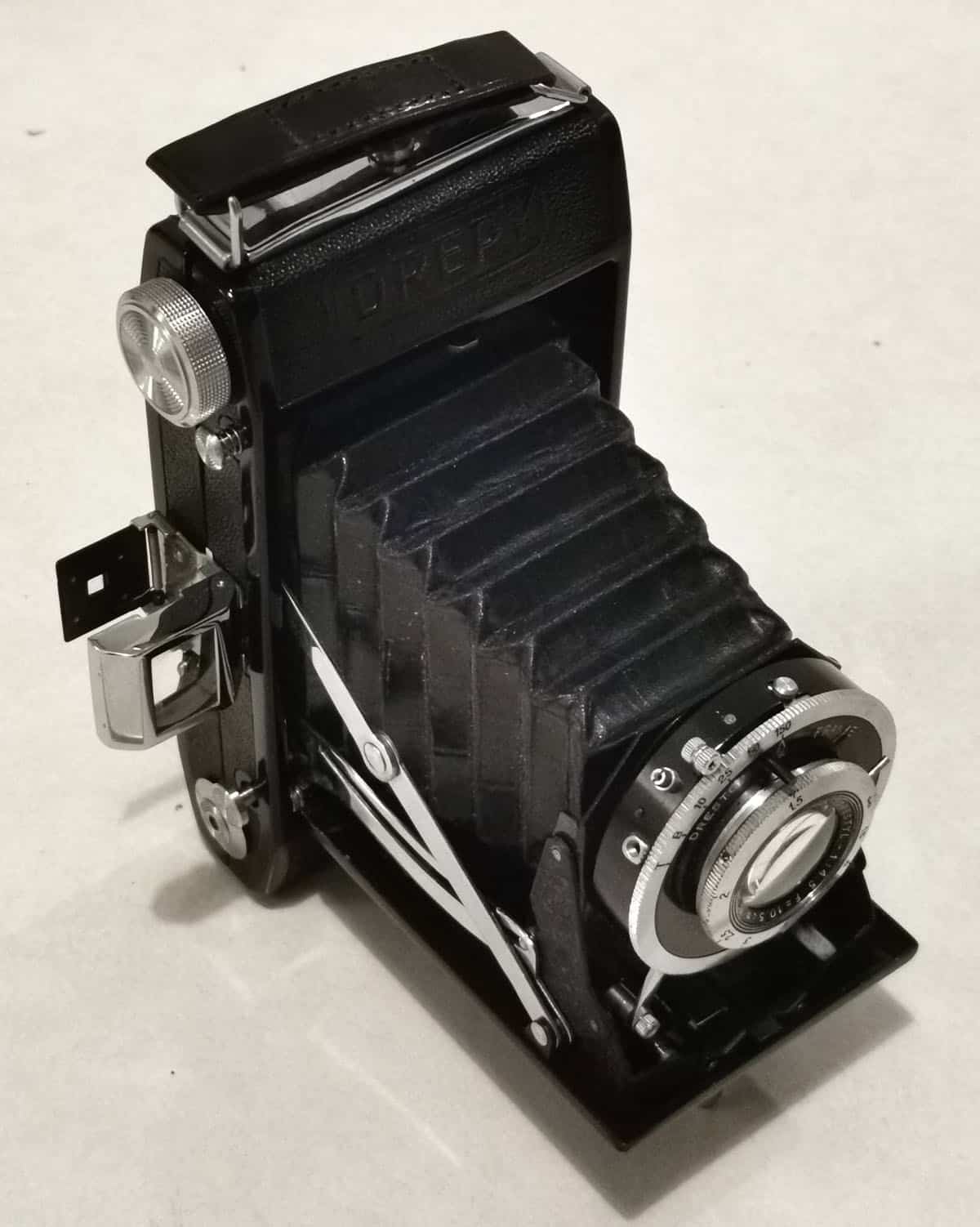
First, we noticed a couple of unknown vinyls and got them from the sellers: a talkative slightly drunken mustached man in his fifties and a young couple sitting in the van. Then, I noticed an unusual camera sitting in a brown leather case on their table.
Both the camera and the case were in unusually good shape given the apparent age – no fungus, no mold, no rust. The mechanism seemed to work, too.
But, the selling point for me was that I saw that the film counter showed “2” in the small window. For those of you who are not familiar with the medium format cameras of that era, I need to say that the numbers are printed on the back of the paper separator of the film itself, so if you see the number, the film is inside.
The sellers were surprised to learn that that their camera contained a potential time capsule, but they didn’t bother and didn’t change their intention to sell it. So, for the price of a lunch for two in a cheap place, we’ve got the camera.
Developing the Images
When we came home, I extracted the film from the camera – it was Kodak Verichrome Pan 620.
Since the sensitivity was not indicated, and the conditions of shooting/storage were not known, I decided to use a stand developing process. In this case, you dilute a tiny amount of a developer in water, just right to let the chemistry do the job slowly and be dumped after. The stand developing process takes about one hour and requires little to no agitation. It works well for the scenes when you need to have detailed shadows without burning whites. It also works well for the unknown films.
The only problem was that the nearly 70 year old film was extremely stiff and kept the memory of all these years sitting tightly rolled. It just didn’t want to get into spiral even after being soaked in lukewarm water for a couple of hours. Finally, I just put a paper towel between the layers of film to let the developer do its job.
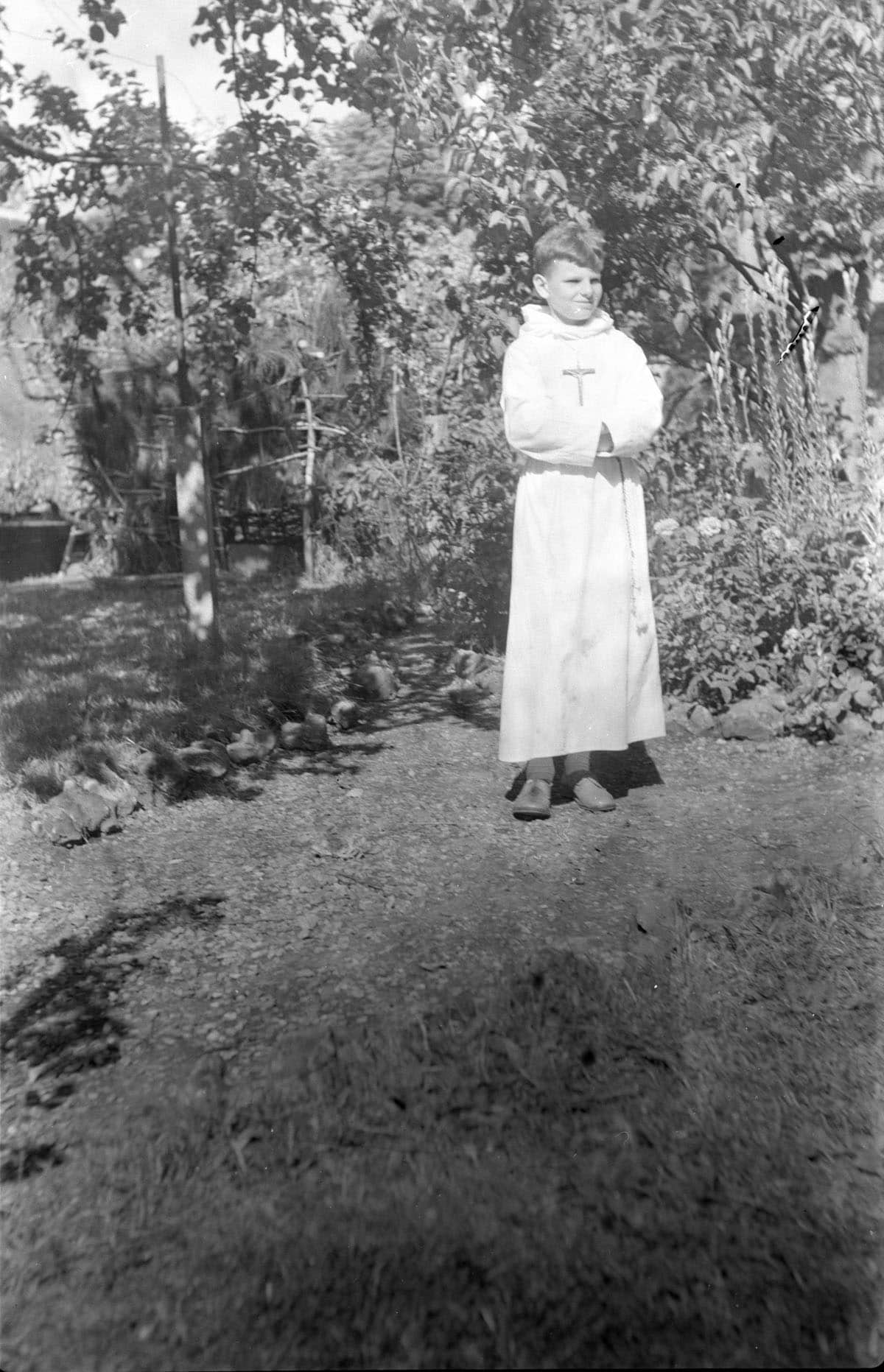
When I pulled the developed film out of the developing tank, we saw the images with a naked eye, without any need of scanning and editing the curves.
Decoding the Images
When I did the scans, we realized that this is a real time machine. Let’s try to decrypt the images and assign them to the time period, event and place.
The time frame is defined by the following parameters: the “Drépy” camera was manufactured from 1945 to 1953; it was the “French response to the Germans,” an in-house design based on German so-called “clap cameras” of the Voigtlander type.
Those days, the price of the camera was the equivalent of one month and a half salary of a qualified worked, and one can feel this – it’s solid built, the material quality is high and the bellows are light-tight after all these years.
I checked the speed accuracy – it’s on the slow side, but one should have expected this. Based on the lens clarity and the mechanics I’d say that the camera will shoot gain.
The film is Kodak Verichrome Pan 620; its production began in 1956 and didn’t end until 1995.
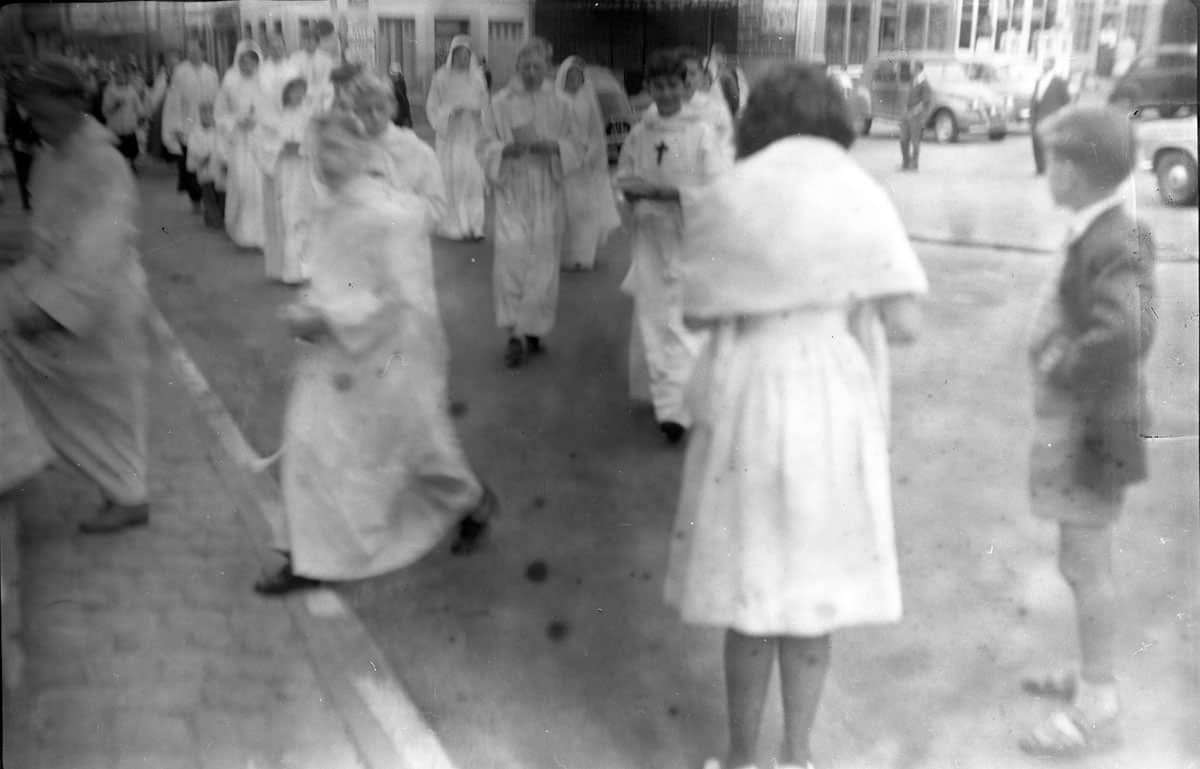
Next, there are cars in the square; the Citroën 2CV is clearly identifiable with a license plate that appears to be on a light background—this is from before 1963. The corrugated hood on the Citroën is from before 1960. Overall, this was an iconic car, very typical for France in the 50s and 60s.
The men in suits also suggest the 1950s rather than the 1960s, when the dress code became relaxed. The boy in shorts and sandals with socks is also from the 1950s. The woman in a knee-length skirt indicates that we’re in the second half of the 1950s. Before, the skirts were below the knee and in the 1960s, they were above the knee. There might be also a 1-3 year offset between the capital and the province, but most probably we’re still in the 1950s with this skirt.
If we put all these dates together, we get somewhere around 1957–1959.
Now, what kind of event is this? Clearly a religious one, but which one? Judging by the colors in the courtyard photo, it’s spring or summer. A communal celebration — First Communion — is typically held around the time of Catholic Easter.
The belt/garment resembles a monastic order like the Franciscans, but to go further, we’d need to consult experts to determine in which schools or regions of France religious traditions were still strong during those years. France is not really a very religious country; there are plenty of churches, but you don’t see many parishioners.
As for the location — based on a vegetation and sunshine, I’d say that it’s northern or central France, and these are the regions with a strong Catholic tradition back in the 1950s.
So, here we have this completely unexpected trip down memory lane. We can only guess why a good camera with undeveloped film was put on a shelf, or why the boy in the photo didn’t inherit it and start using it. I could have suggested a few storylines, but they will be highly speculative. You may suggest your own in the comments.
Gear used:
Rolleiflex 1950 + EpsonPerfection5870 or PentaxK20D in macro-mode for scanning
Thank you so much, Artem! You can find more of Artem’s work on his website here.
Leave your comments and questions below in the comments!

Leave a Comment
Shoot It With Film on Instagram


Blog Comments
Alistair
July 24, 2026 at 11:08 am
I found an old film. When processed there was a picture of a grave stone amongst others. I was able to trace the family and send them the 40 year old negatives.
Artem
July 26, 2026 at 5:00 am
I tried different face searching services, but the boy’s face never appeared in the results. Since the camera has not been used, there’s a high chance that the next shot of the same person available online corresponds to a man in his 40s 🙂