

Written by Tyler Mattas
Well, I’m back. The guy that’s usually only tangentially talking about film is here again to keep putting the digital in “Shoot It With Film” – but at least there will be no mention of watches this time.
In trying not to go too far afield, at least most of the lenses referenced in this article are film-era, vintage lenses originally designed for film cameras. The test shots are mostly digital though, for expediency (and wallet’s) sake and also to factor out the film’s character and focus on what the point of the article is actually about: the lens’s character…. and the points made there apply to any medium you happen to be shooting.
It’s also worth noting that I originally wrote this topic seven years ago for my personal blog, and this journey through lens performance and the discovery of the magic sauce of vintage glass is what ultimately lead me to film shooting.

The Camera Gear Myth
There’s this annoying myth that gets circulated among photographers, and it’s believed equally by a large majority of amateurs, wannabe pros, and actual pros. The myth is often quoted as “it’s not the equipment, it’s the photographer using it” – i.e. how good a photograph any given capture is comes down entirely to skill; the capture equipment is irrelevant.
This myth even seems to have spread to the non-photographer general public, as I can’t even count how many times I’ve been on a job or walking around with a real camera and people hand me their cell phone with the always identical words of wisdom, “Here, you take the shot, you’re the professional.” It makes me wonder what form of magic they think I possess that’s going to make their cell phone suddenly start taking better quality photos?
As pervasive as this “logic” seems to be, ironically, you’ll not see a single photographer spouting this drivel putting their money where their mouth is and shooting exclusively with $10 disposable cameras from Walgreens. Why don’t they? Because deep down they know that equipment does actually matter. In fact, it matters a lot.

On the flip side of this myth is a minority of people that know equipment matters, but have gone to the other extreme and declared that the more expensive and new the equipment is, the better the images produced.
These are the folks whose gear acquisition syndrome have them buying new camera bodies every time Sony’s bi-monthly new model release hits the market and filling their bag with every overpriced Leica lens they can find on eBay (A+++ MINT EX++ from Japan, of course). These are the people that sell their kidneys to buy the fastest primes available, simply because they’re the most expensive primes available, therefore must be the best.


The Gear Reality
Neither group is right. As in many other areas of life, the average person doesn’t want to dive into the weeds and really understand the nuances of gear performance. They want simple rules to live by – rules like “gear doesn’t matter” or “more expensive = better.”
Spoiler alert everyone saw coming: these rules don’t work.
Before the screaming and gnashing of teeth begins, I’m not saying that giving a random person on the street a $7,000 camera/lens combo is going to result in them taking good photographs. But giving a professional a cell phone or a Holga is certainly going to result in subpar images that aren’t nearly as nice as they could have been if proper equipment was used.

My Journey with Lens Quality
Since I’m nothing like the average photographer, I’ve been interested in the deep nuances of gear performance (particularly lenses, since bodies really don’t matter when shooting film) from the get-go.
The photography community typically has one consideration and one consideration only when it comes to evaluating the image quality a lens produces: sharpness. It seems to be the only quality of a photograph most folks can see.
Ask the average photographer how any given lens performs and eleven times out of ten you’ll get a comment about how sharp it is or isn’t, and not much more. However, it didn’t take me long to notice that even among equally sharp images, some simply looked nicer than others… more real, had more depth, looked like a window to reality that I could reach out and touch, rather than a fake, digitized proxy of it.
Sharpness had nothing to do with it and it was obvious that this additional image quality trait of “realism” was something overlooked by most of the rest of the photography world.

Eventually, my search for some answers led me to Yannick Khong’s blog and his posts on photo theory. While some of his science isn’t always accurate, the bottom line conclusions he draws are solid:
It went on like this for years: Nikon, Canon, Pentax, Olympus, Panasonic, Fuji, Sony, etc… they all seem to be so similar on paper and sharpness. Every article online even went to compare lenses on 1:1 pixel level close up to clearly demonstrate the superiority of a lens over the other. While, I’ve rarely questioned the cost of Nikkor lenses, I’ve always asked myself: Why do Zeiss lenses cost so much? Why do Canon L lenses cost so much? When you start reading about them, some photographers describe something intangible that can’t really be noticed on side-by-side images but in the displayed body of work produced with these lenses, as if the photographed subjects suddenly felt more alive than with “sharper” “more perfect” optics. At first, I thought it was a question of dynamic range but then it wasn’t really it. I didn’t know it was due to micro-contrast then. Now, I shall explain it to you.
– Yannick Khong
I’m not going to dig into the hows and whys here, because Yannick has already done that, which you can read up on here. But the bottom line was that someone had given a name to the aesthetic I was pursuing, “micro-contrast,” and also confirmed that it was indeed rooted in equipment selection.

Here’s what really happens when images are captured… once the photographer is good enough to expose and compose well, how the image is actually rendered is out of their hands and entirely a product of two (or three) things: the film (or sensor and processor) and the lens.
Completely unsurprisingly, some films, sensors, processors, and lens glass get it more right than others – and no amount of photography skill can change that. This is a reality most photographers don’t want to face because it hurts their egos to admit that something other than their own mad skillzzzz significantly impacts how nice an image looks.
Some even go so far as to deny that these image traits exist – that 3D pop and micro-contrast are a figment of the imagination. They’ll claim that lighting or shallow depth-of-field is what makes a subject “pop” (because these are factors that their mad skillzzzz can control). These photo takers can be found in large numbers on Facebook and photography forums posting razor thin DOF images taken with Sigma ART lenses that are as lifeless and fake looking as anything taken with a cell phone.


Know Thyself (Or in This Case, Thy Gear)
Once your huge, photographer ego is crushed and you realize that no level of photography skill will bring out these image traits without the right equipment, how do you go about determining which equipment will produce the most deep and real looking images and under what conditions?

Let’s remember the two (or three) pieces of equipment that determine how an image is rendered: film stock, camera sensor, camera processor, and lens.
Given that essentially all currently produced film works in the same way and only varies in color science and all digital camera bodies on the market use Sony sensors, except for Canon, those elements of equipment selection turn out to be non-factors.
That leaves processors and lenses as the only variables that determine whether an image is rendered in a life-like manner.
While camera processors vary in their ability to recreate accurate colors, with 12 or 14-bit RAW files being the norm for any level digital camera an enthusiast would consider purchasing and monitor/TV/phone LCD screens only being able to reproduce an 8-bit gradient (with a handful of 10-bit slowly emerging), any processor should be more than capable of rendering the fine tonal gradation necessary for excellent micro-contrast and a life-like image.
That leaves the lens as the sole determining factor in whether the photographs produced with each shutter click look life-like and 3D or digital and flat – no photography skills involved.

So how do you find the right lenses?
By looking at the results. And I’m not talking about MTF charts or someone on YouTube comparing 800% zooms of a brick wall to examine corner sharpness and distortion. I’m talking about whole images and each lens’s combined body of work under varying conditions. There’s a reason Yannick has over 80k images on his Flickr page, most of them test images of nothing interesting but varying light or random round objects.
So you go out with the lens and you shoot, and shoot, and shoot some more (see why this wasn’t done with film at current prices?). You shoot under harsh midday light. You shoot under ideal golden hour light. You seek out difficult, subtle, and complex light and shoot that. Then you go shoot artificial light at night. Throw in some shots directly into the sun to learn about flare performance as well.

In between shooting hundreds of your own images, you go online to your photo repository of choice and wade through the thousands of images other photographers have shot with the same lens. No YouTube reviews. No DXOmark lab tests. No 9000% corner crops. No having some third-party tester or gear reviewer giving you your opinion on the lens.

After many months of this, you and the lens will have bonded enough that you’ll begin to have a good idea of its strengths and weaknesses, how it renders colors, which conditions it produces excellent images in (if any) and which conditions it doesn’t.
There are no shortcuts or easy rules to lens selection. This is the dedication to learning the nuances of your gear that separates real(ly neurotic) photographers from people who just take pictures.
Finally Some Pictures & 5 Lenses Worth Your Time
So what have I learned so far going through this process with the 50+ lenses I currently own?
Well, it’s still (and always) in progress. But here’s an image based discussion of some of the first few lenses I fell in love with, what they’re good at, and what they aren’t good at.
Keep in mind, the point of the commentary and images is to demonstrate the lens’s rendering and how it performs in aspects most people never consider, not to show off the best composed images I’ve taken with it, discuss the usability of the focal length, rate the quickness of the autofocus, etc. If you want that kind of lens review, you missed the point of the post and should head back to DPReview as quickly as possible to discuss the sharpness of the three pixels in each corner.
1. The Zeiss 16-35mm f4 Lens
Although it’s still true that more expensive isn’t always better, it’s also not a coincidence that my current #1 favorite lens is also the most expensive on this list (although still reasonable as far as modern, autofocus zoom lenses go).
The Zeiss 16-35mm f4 is the only lens I’ve run across so far that does it all and does it under any condition. Unlike the rest of the lenses on this list, it doesn’t trade optical perfection for micro-contrast. Images are clean and tack sharp even wide open.
In spite of the price, this lens is actually a prime example of more expensive not being better when compared to its 150% more expensive sister lens, the Sony GM 16-35 f2.8. Aside from being one stop faster and *sexy voice* shaarrrper, the GM renders more lifeless images in every way for well over double the price. But if you look up a review, you’ll simply be inundated with talk of how shaarrrp it is.
Find the Zeiss 16-35mm f4 on Amazon or at KEH Camera.
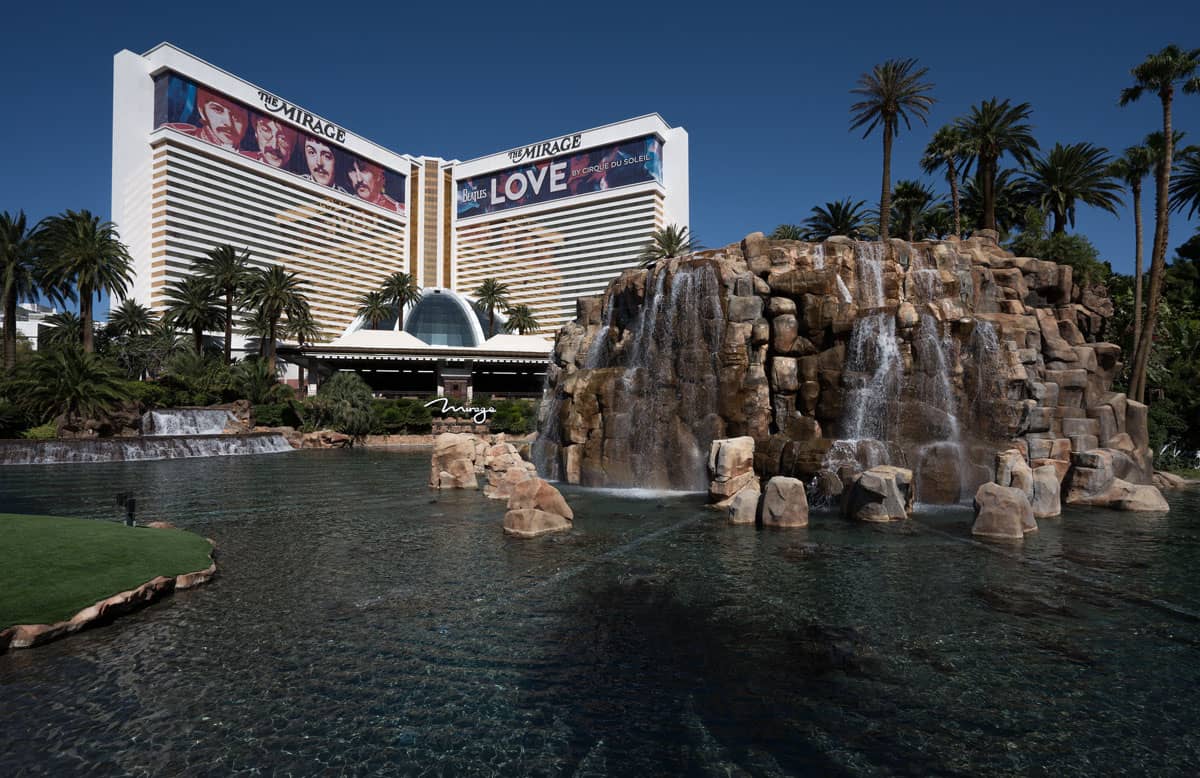




2. 7Artisans 25mm f1.8
7Artisans is a Chinese lens manufacturer specializing in very inexpensive, fully manual lenses that are essentially knock offs of vintage designs, mostly from Zeiss and Voigtlander.
On the 7Artisans 25mm f1.8, you get all the micro-contrast, 3D pop, and character of those lenses without spending several hundred dollars to buy a beat up, 70 year old original from eBay. Almost half of the images in my “3D pop” album on Flickr were taken with this lens. Everything it captures, it renders beautifully. For the price, this lens should probably be sharing the top spot, but it does have some quirks.
Find the lens on Amazon or at KEH Camera.





3. Konica Hexanon AR 40mm f1.8
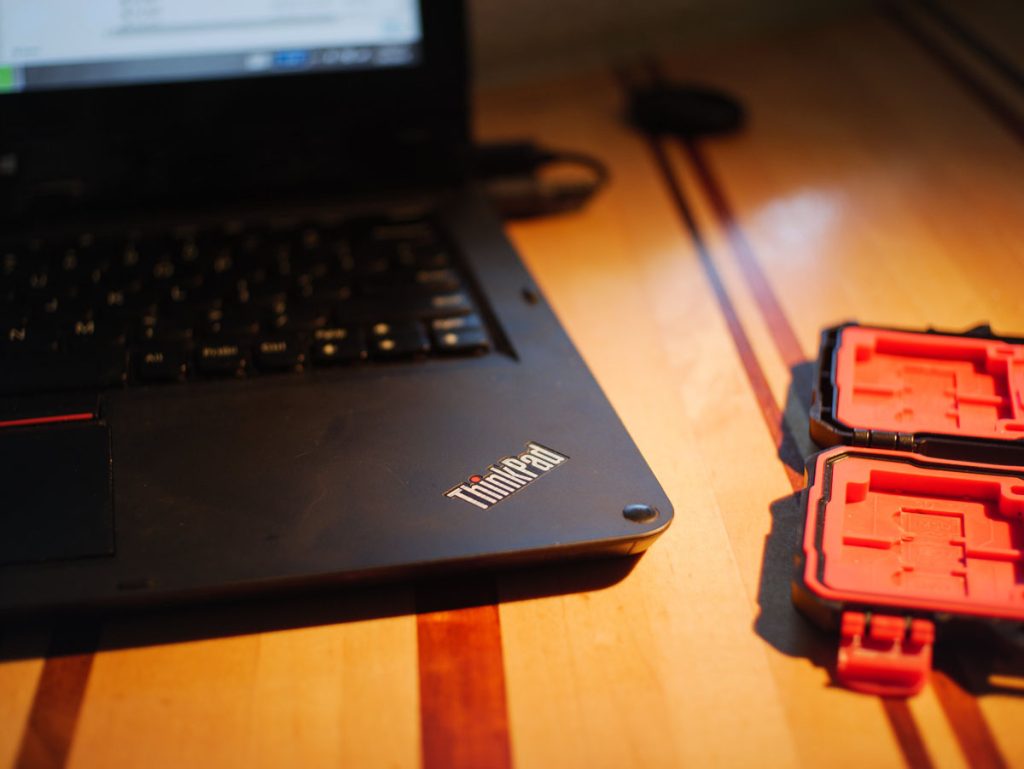
Although it doesn’t factor into the image rendering, a good part of why I use the Konica Hexanon AR 40mm f1.8 lens so frequently is its incredibly small size and light weight. I use it equally adapted to Sony for digital and on my Konica AR body which has the fun feature of mid-roll switchable full or half frame.
The good news is, it’s dirt cheap. The bad news is, prices are going up as word gets out about what a hidden gem it is.
Find the Konica Hexanon AR 40mm f1.8 at KEH Camera or on eBay.






4. Pentax SMC M 50mm f1.4
The Pentax SMC M 50mm f1.4 is certainly Pentax’s best 50mm and probably tied with the Zeiss 50mm f2 Planar as my favorite 50mm on any mount.
My copy has the defect of not quite being able to hit infinity focus, which prevents it from being on my camera for 90% of my walk-around photography like it otherwise would be.
This lens has a mild dreamy look at f1.4 (not nearly as much as the 7Artisans) but is sharp and clean by f2.
Find the Pentax SMC M 50mm f1.4 at KEH Camera or on eBay.





5. Pentax SMC-M 135mm f2.8
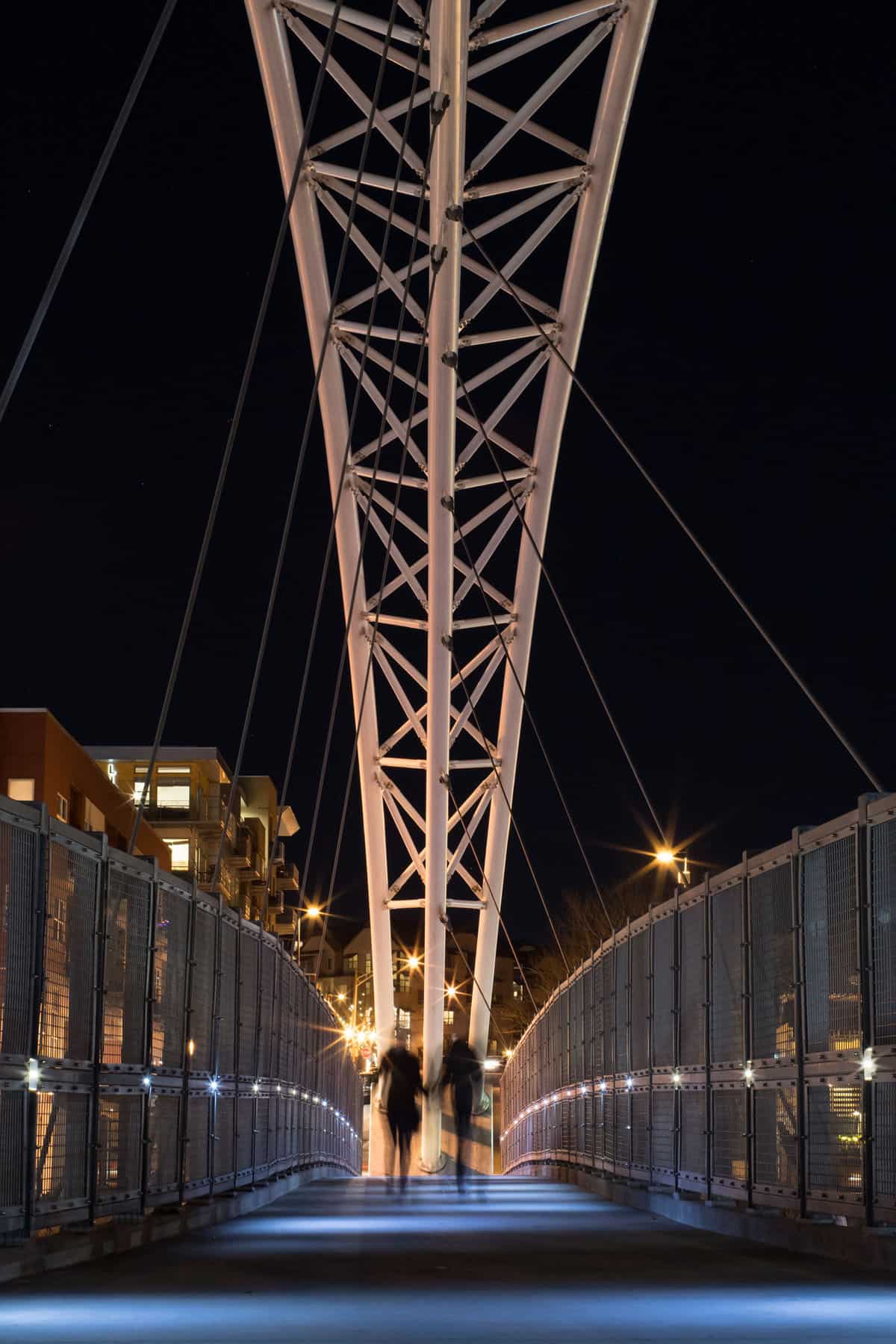
I threw the Pentax SMC-M 135mm f2.8 lens in specifically because I can already hear the complaints from the same micro-contrast deniers that say only light and DOF can create “pop”… they’ll now start complaining it’s all a function of focal length because something about compression and blah blah blah.
It’s a never ending shell game to avoid admitting that equipment matters. So here’s a highly “compressing” telephoto lens that also displays excellent micro-contrast and thus 3D effect.
Pro-tip: flattening the image elements themselves isn’t what “compression” means (although 3D pop haters try to use it that way); compression means compressing the dead space between the elements so that foreground and background appear close together… but both the foreground and background elements themselves should still display good 3D pop.
Find the Pentax SMC-M 135mm f2.8 at KEH Camera or on eBay.




Moral of the Story
In spite of what most of the internet is telling you, better equipment will improve your images regardless of your skill level.
And the good news is, that better equipment can often be had quite cheap, particularly when it comes to film camera lenses.
On the flip side, shooting with poor equipment will result in poor images and no amount of mad skillzzzzz, scanning technique, or Lightroom presets is ever going to overcome a lens’s lifeless rendering.
Thank you so much, Tyler! Tyler is a regular contributor here at Shoot It With Film, and be sure to check out his other articles, like What Makes a Good Film Camera Part II: Why Craftsmanship Matters and What Makes a Good Film Camera? It’s Not as Simple as It Seems.
You can also find more of his work on Instagram here, and find his eBay store here.
Leave your thoughts about craftsmanship and what makes a good film camera below in the comments!




Leave a Comment
Shoot It With Film on Instagram


Blog Comments
Eddy
October 16, 2026 at 11:20 am
Gear is only a part of it. It is how well you know your gear and what you do with it. I have gotten good images on a disposable expired film camera. Digital cameras are computers that work for you. With Histograms, white balance, photo shopping a turd to look good. And the fact digital images need to be photoshopped and I still don’t get why digital images are made to look like film . It still boggles my mind. If digital is so great everyone should have great images without photoshop, hanging in museums everywhere and made into household named photographers. In film . You have to work for the camera.
Dave Lewis
October 16, 2026 at 12:05 pm
After reading this article I checked out my Asahi Pentax K1000. It has the SMC-M 50mm 1.2 and I wonder if Tyler has experience with this lens.